Atomic Bombings of Hiroshima and Nagasaki
Also called: Hiroshima bombing, Nagasaki bombing
The United States dropped atomic bombs on Hiroshima and Nagasaki. More than 200,000 people died in the two cities that year, and Japan surrendered soon after.
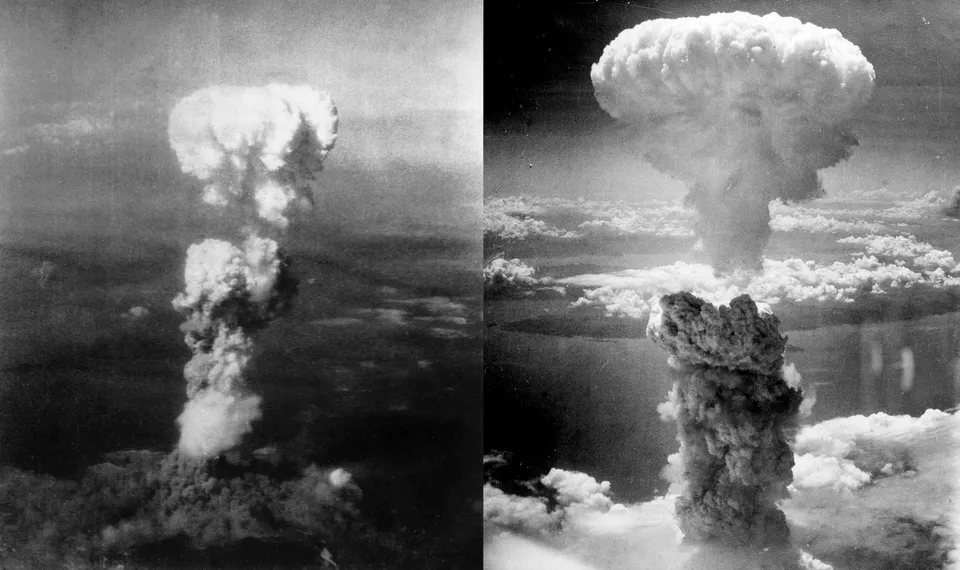
George R. Caron / Charles Levy · Public domain · Source
When Japan did not accept the Potsdam Declaration, Truman decided to use the atomic bomb. On 6 August a B-29 dropped a uranium bomb (Little Boy) on Hiroshima, and on 9 August a plutonium bomb (Fat Man) on Nagasaki. In between, on 8 August, the Soviet Union declared war on Japan and invaded Manchuria.
Both cities were destroyed in an instant; by the end of 1945 some 140,000 people had died in Hiroshima and some 70,000 in Nagasaki, by common estimates. Tens of thousands of Koreans, many brought to Japan as forced labourers, were also exposed. The effects of radiation lasted for decades, and the bomb cast the long shadow of the nuclear arms race and the Cold War.