Conflict16 April – 8 May 1945

Fall of Berlin and German Surrender

Also called: Battle of Berlin, VE Day, Victory in Europe Day

Soviet forces took Berlin and Hitler killed himself. Germany surrendered unconditionally on 8 May, ending the war in Europe (VE Day).
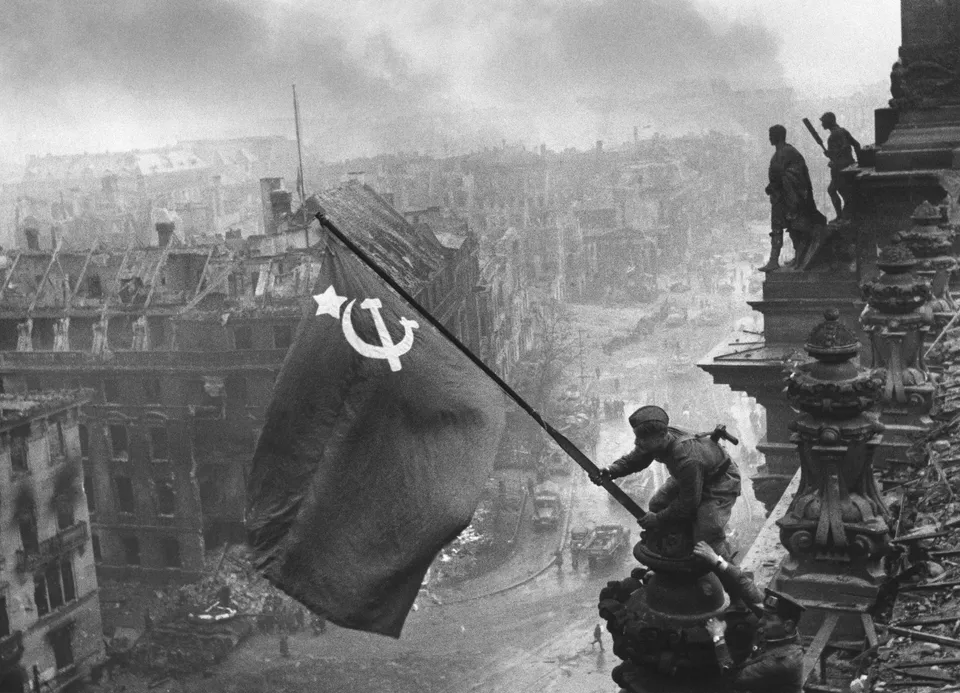
“Raising a Flag over the Reichstag” — Yevgeny Khaldei, 2 May 1945

Yevgeny Khaldei / Adam Cuerden · Public domain · Source

On 16 April 1945 some 2.5 million Soviet troops under Zhukov and others crossed the Oder and attacked Berlin. On 25 April American and Soviet troops met on the Elbe at Torgau, and Berlin was encircled.

Hitler killed himself in his bunker beneath the Reich Chancellery on 30 April, and the Berlin garrison surrendered on 2 May. German commanders signed the unconditional surrender at Reims on 7 May and at Berlin-Karlshorst on 8 May. The West marks Victory in Europe on 8 May; the Soviet Union, because of the time difference, on 9 May.

The map in 1945

OpenFreeMap © OpenMapTiles © OpenStreetMap contributors

States and rulers at the time
Soviet Union · victor — Leader Joseph Stalin
Germany · surrendered
Places
Berlin

People

  • Georgy Zhukov1896 – 1974

    commander · Marshal of the Soviet Union who directed the defence of Moscow, the Stalingrad counter-offensive and Kursk, and took Berlin

  • Adolf Hitler1889 – 1945

    related figure · Nazi leader and Führer of Germany (1934–1945) who started the Second World War and perpetrated the Holocaust; he killed himself as Berlin fell

Before and after

Earlier
1944 Normandy Landings

Related works

  • Film: DownfallDramatizedFilm · 2004 · Oliver Hirschbiegel · Der Untergang

Dramatized works (films, dramas, novels) may differ from the historical record.

Themes that include this event

  • World War II1939 – 1945

    From the invasion of Poland to the surrender of Japan — the largest war in human history, across Europe, Asia and the Pacific