Conflict23 October – 11 November 1942

Battle of El Alamein

Also called: Second Battle of El Alamein

British forces under Montgomery defeated Rommel’s German–Italian army at El Alamein in Egypt, turning the tide in North Africa.
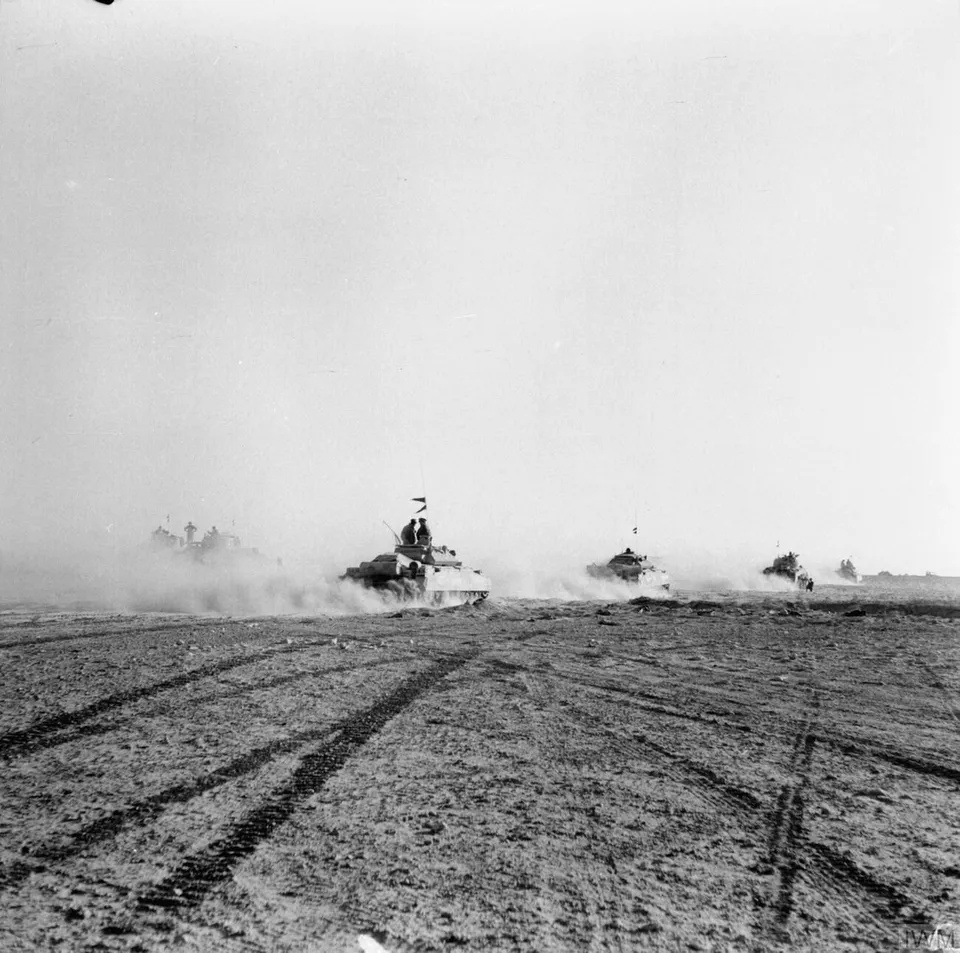
British tanks move up to engage the German armour after the infantry cleared gaps in the minefield, El Alamein, 24 October 1942

Gladstone (Sgt), No 1 Army Film & Photographic Post-Work: User:W.wolny · Public domain · Source

In North Africa Rommel’s Afrika Korps had pushed deep into Egypt towards the Suez Canal. On 23 October 1942 Montgomery’s British Eighth Army launched a great offensive at El Alamein and by early November had driven the Axis forces back.

On 8 November Anglo-American forces landed in Morocco and Algeria (Operation Torch), and the Axis army, caught between them, surrendered in Tunisia in May 1943. Churchill said of the victory: “It is not even the beginning of the end. But it is, perhaps, the end of the beginning.”

The map in 1942

OpenFreeMap © OpenMapTiles © OpenStreetMap contributors

States at the time
Great Britain · victor
Germany · defeated
Italy · defeated
Places
El Alamein

People

  • Bernard Montgomery1887 – 1976

    commander · British general who defeated Rommel at the Second Battle of El Alamein and commanded the ground forces in the Normandy landings

  • Erwin Rommel1891 – 1944

    commander · German field marshal, “the Desert Fox”, who led the Afrika Korps; implicated in the plot against Hitler, he was forced to take his own life

Before and after

Later
1943 Battle of Kursk

Themes that include this event

  • World War II1939 – 1945

    From the invasion of Poland to the surrender of Japan — the largest war in human history, across Europe, Asia and the Pacific