Conflict12 – 13 April 1861

Bombardment of Fort Sumter

Also called: Battle of Fort Sumter

Confederate guns shelled the federal Fort Sumter in Charleston Harbor for 34 hours and forced its surrender; Lincoln’s call for 75,000 volunteers began the Civil War.
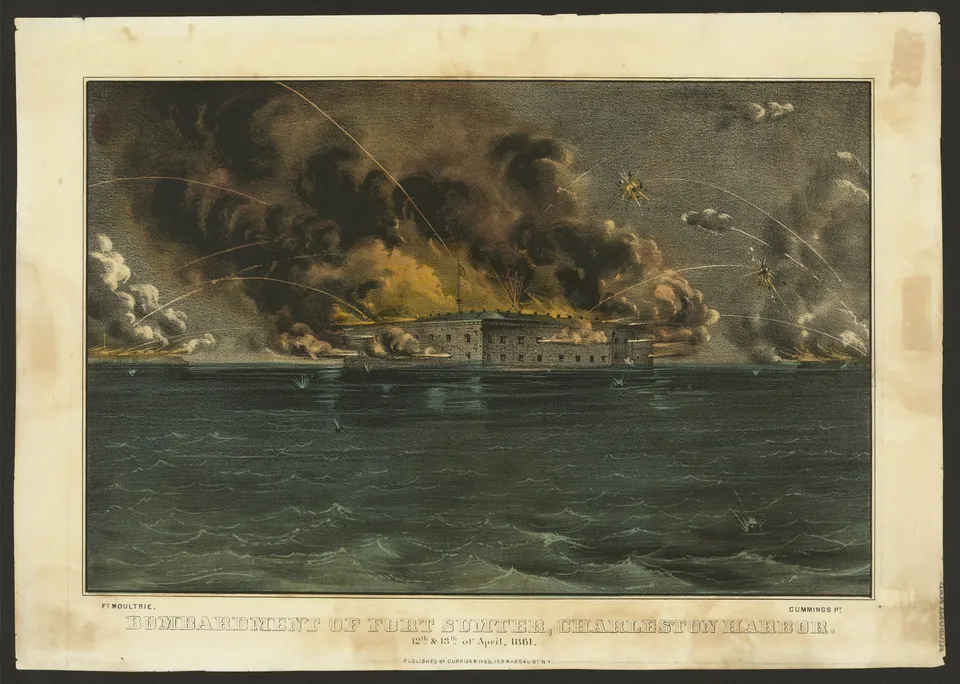
Bombardment of Fort Sumter, 12–13 April 1861 — Currier & Ives hand-coloured lithograph, 1861, Library of Congress

Currier & Ives. · Public domain · Source

Even after South Carolina seceded, Major Robert Anderson’s federal garrison held Fort Sumter in the middle of Charleston Harbor. When Lincoln announced that he would send only provisions, the Confederacy demanded the fort’s surrender and, refused, General Beauregard’s batteries opened fire before dawn on 12 April 1861.

The fort surrendered on 13 April and the garrison left on the 14th. No one was killed by the bombardment, but two Union soldiers died when a gun exploded during the salute at the evacuation. On 15 April Lincoln called for 75,000 volunteers to put down the rebellion; the North rallied to the flag, and four more Southern states, Virginia among them, seceded.

The map in 1861

OpenFreeMap © OpenMapTiles © OpenStreetMap contributors

States and rulers at the time
United States · surrendered — President Abraham Lincoln
Places
Fort Sumter, Charleston

People

  • Abraham Lincoln1809 – 1865

    related figure · 16th US president (1861–1865) who preserved the Union in the Civil War and issued the Emancipation Proclamation; assassinated just after the war ended

  • Jefferson Davis1808 – 1889

    related figure · Mississippi politician, former US secretary of war and senator, and the only president of the Confederacy (1861–1865)

Before and after

Themes that include this event

  • The American Civil War1850 – 1865

    From the Compromise of 1850 to Lincoln’s assassination — a nation divided over slavery fought four years of civil war, preserving the Union and ending slavery