The East India Company’s Bengal Opium Monopoly
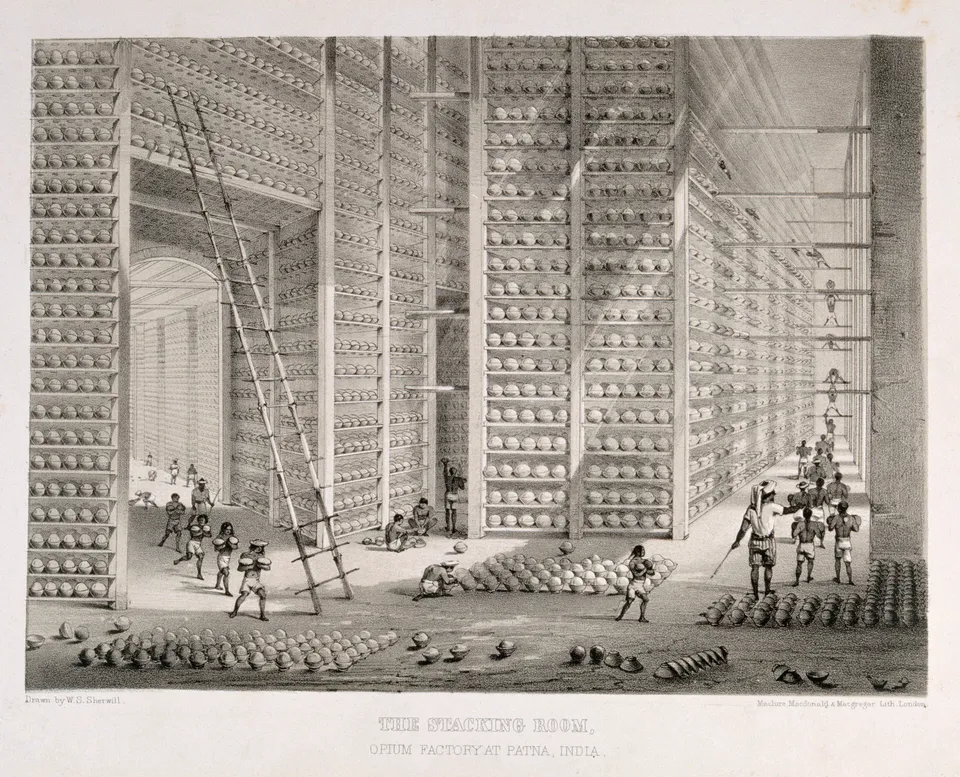
In 1773 the British East India Company made Bengal opium a monopoly, auctioned at Calcutta and smuggled into China. Silver that had flowed out for tea began to flow back as payment for opium.
Public domain · Source
By the 18th century tea had become Britain’s national drink, but China bought few British goods, so tea had to be paid for in silver. Vast amounts of silver flowed into China every year.
In 1773 the East India Company, which ruled Bengal, made opium production there a monopoly. Opium made at factories such as Patna was auctioned at Calcutta and carried to the China coast not by the Company but by "country traders". Since the Qing had banned opium imports in 1796, it was handed to Chinese smugglers from receiving ships anchored at Lintin Island in the Pearl River estuary.
From the late 1820s opium outsold tea and the flow of silver reversed. By 1838 nearly 40,000 chests a year were arriving; addiction spread in China and the rising price of silver weighed on peasants who paid their taxes in it. This interlocking flow of British tea, Indian opium and Chinese silver is known as the "triangular trade".