The Children of Loki and the Binding of Fenrir
Also called: Fenrir, Fenris wolf, Gleipnir, Týr’s hand, Children of Loki, Jörmungandr, Hel
A legend handed down over the centuries.
A Norse myth told most fully in Gylfaginning of Snorri’s Prose Edda. The gods cast out or confined Loki’s children by a giantess — the wolf Fenrir, the serpent Jörmungandr and Hel — and bound Fenrir with the magic fetter Gleipnir, at the cost of Týr’s right hand.
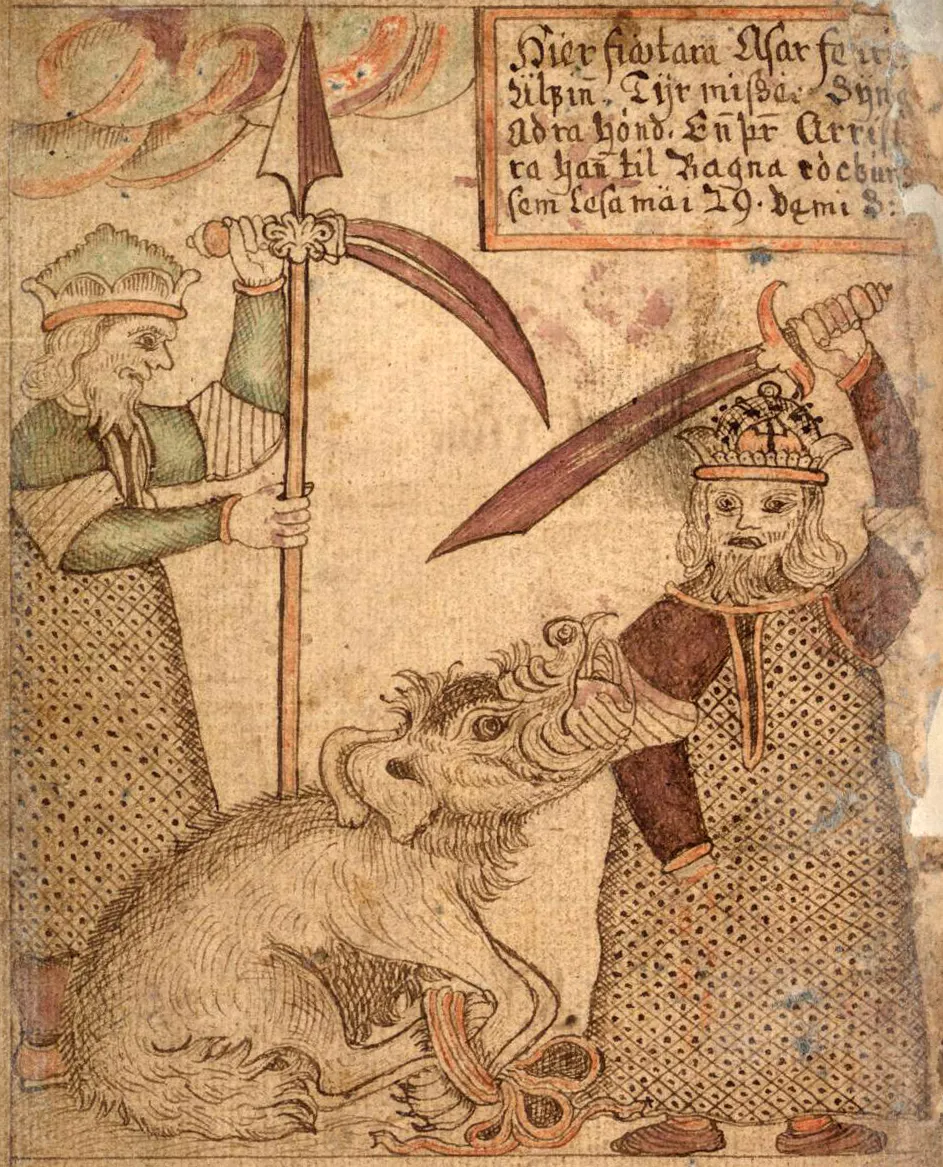
Jakob Sigurðsson [2] · Public domain · Source
This Norse myth is told most fully in Gylfaginning, part of Snorri Sturluson’s Prose Edda, and alluded to in several Eddic poems. The cunning god Loki had three children by the giantess Angrboða. Warned by prophecy that they would bring great harm, the gods acted: Odin threw the serpent Jörmungandr into the sea, where it grew until it encircled the world and bit its own tail (the Midgard Serpent), and Hel, half living-coloured and half corpse-coloured, was sent to Niflheim to rule those who die of sickness and old age.
The wolf Fenrir was raised among the gods, and only Týr dared approach to feed him. As he grew terrifying, the gods tried to bind him with the chains Lœðingr and Drómi, but he broke them both. Then the dwarves made the fetter Gleipnir, fine as silk, from the sound of a cat’s footfall, the beard of a woman, the roots of a mountain, the sinews of a bear, the breath of a fish and the spittle of a bird — which is why, Snorri adds, these things no longer exist.
Suspecting a trick, Fenrir demanded that someone put a hand in his mouth, and Týr put in his right hand. When the fetter would not break, the wolf bit the hand off. The gods fastened Fenrir to a rock and propped his jaws with a sword, and there he remains bound until Ragnarök.