Clay Seated Buddha of Buseoksa, Yeongju
Also called: Buseoksa Clay Buddha
A Goryeo Buddha modelled in clay, enshrined in Muryangsujeon at Buseoksa. The largest and oldest surviving clay Buddha in Korea, it carries on the Unified Silla style.
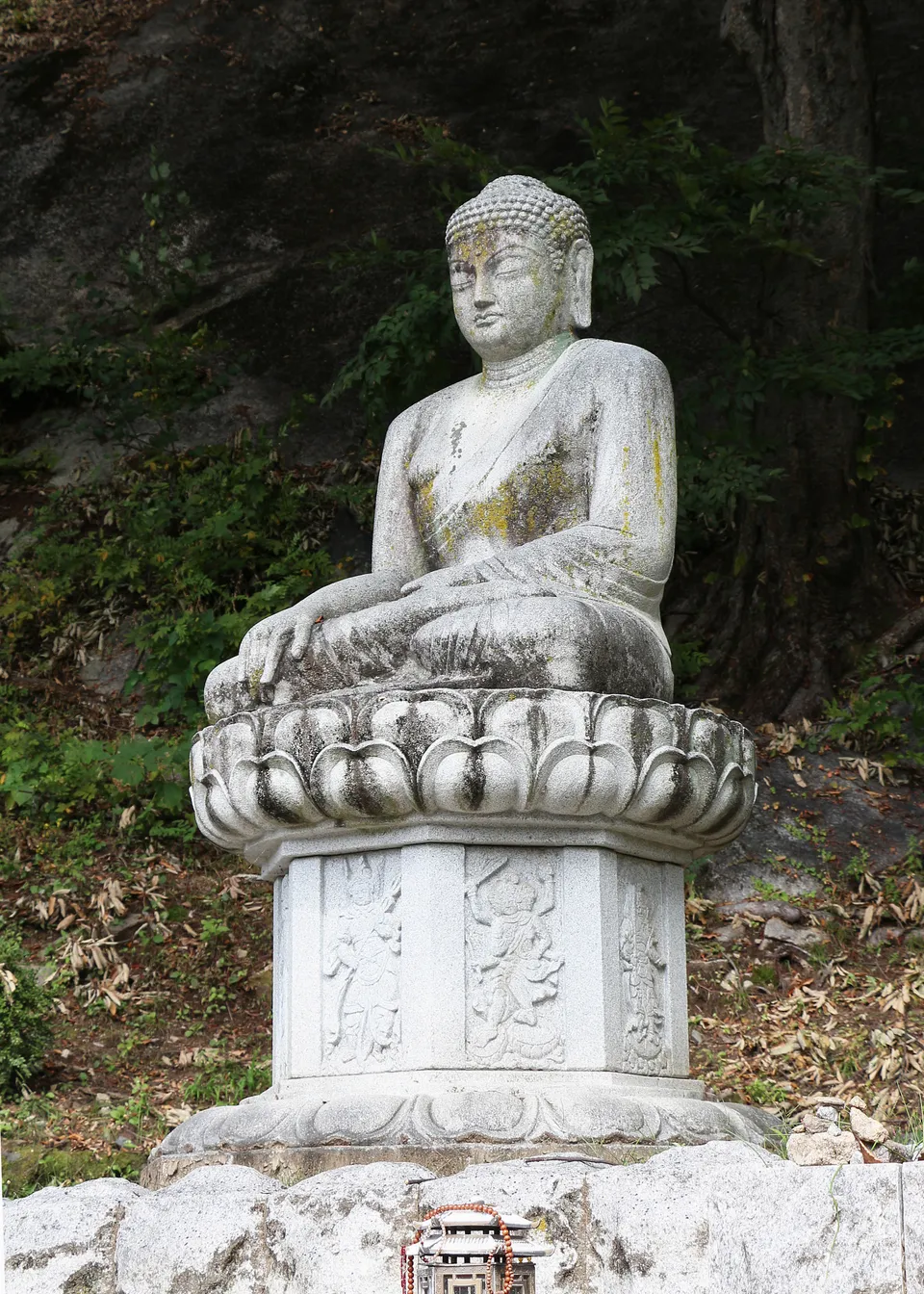
Enshrined in Muryangsujeon at Buseoksa, this 2.78 m figure is a sojobul, a Buddha modelled in clay — the largest and oldest of its kind to survive. It is dated to Goryeo, and its composed face, imposing body and robe baring one shoulder carry on the Unified Silla style typified by the main Buddha of Seokguram.
Muryangsujeon is the hall of Amitabha, so this is an Amitabha — yet its hands make the earth-touching gesture of Sakyamuni at his enlightenment. It sits not in the middle of the hall but on the west side facing east, expressing the belief that Amitabha dwells in the Pure Land of the West. A National Treasure, it is the emblem of Buseoksa together with the jusimpo-style Muryangsujeon.