Cai Lun Improves Papermaking
Also called: Invention of paper, Cai Lun paper
Cai Lun, a eunuch of the Later Han court, made cheap, good-quality paper from tree bark, hemp scraps, rags and old fishing nets and presented it to the emperor in 105.
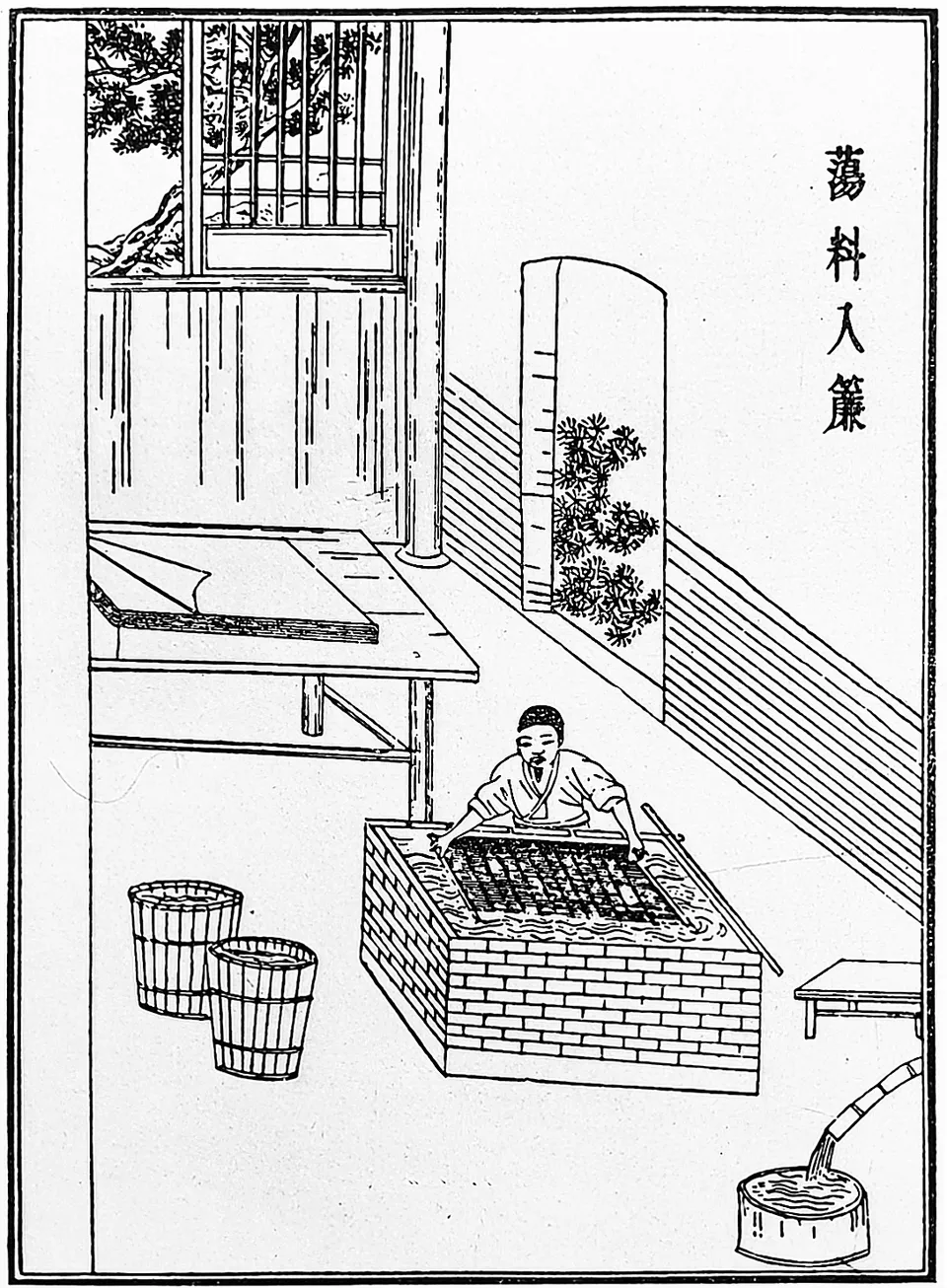
Unknown author from the time of Ming dynasty · Public domain · Source
Until then the Chinese wrote on strips of bamboo or wood, or on silk; the strips were heavy and silk was costly. Paper found in Western Han tombs shows that it already existed, but it was too coarse for writing. In 105, under Emperor He of the Later Han, the eunuch Cai Lun presented a paper made from tree bark, hemp scraps, rags and worn-out fishing nets that was good to write on, and people called it "Marquis Cai’s paper".
Paper greatly widened the spread of records and learning and is counted, with the compass, gunpowder and printing, among China’s Four Great Inventions. Papermaking passed through Korea to Japan (the Goguryeo monk Damjing is said to have taught it there in 610), to the Islamic world after the Battle of Talas in 751, and to Europe around the 12th century.