Calvin’s Reformation in Geneva
Also called: Calvinism, Predestination, Presbyterianism
Returning to Geneva in 1541, Calvin built a strict godly community and taught predestination and the calling of daily work; backed by merchants and craftsmen, Calvinism spread as Huguenots, Beggars (Geuzen), Puritans and Presbyterians.
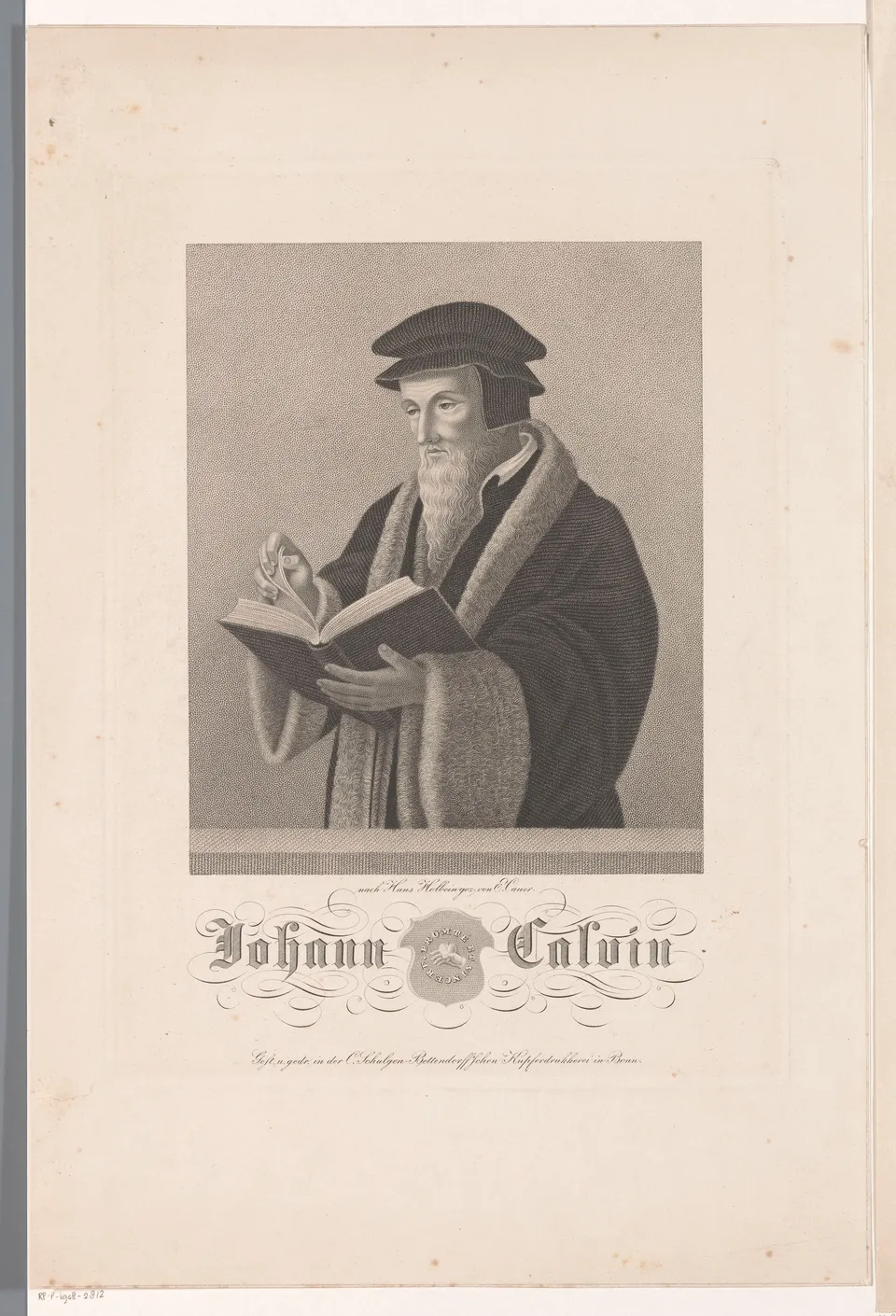
In Zurich, Zwingli had begun a reformation independent of Luther. Driven from France, Calvin published the Institutes of the Christian Religion at Basel in 1536; he helped reform Geneva, was expelled for a time, and returned in September 1541. He drew up church ordinances and set up a Consistory of pastors and elders to oversee citizens’ faith and morals, running a strict godly commonwealth that policed even dancing and gambling.
Calvin taught predestination — that God has chosen in advance those to be saved — and held that diligent work and the wealth it brings are signs of fulfilling one’s calling. This doctrine of vocation won the support of the commercial classes, and Max Weber later traced the spirit of capitalism to it. Calvinists chose presbyterian church government by elders instead of bishops.
Through pastors trained at the Geneva Academy (1559), Calvinism spread to the French Huguenots, the Dutch Geuzen, the Scottish Presbyterians under Knox and the English Puritans. Around the same time in Joseon, Ju Se-bung founded Baegundong Seowon (1543), opening the age of the literati’s private academies.