Western Schism
Also called: Great Western Schism, Papal Schism, Council of Constance
From 1378 to 1417 rival popes sat in Rome and Avignon, splitting the Western Church in two (for a time in three). The Council of Constance ended it by electing a new pope.
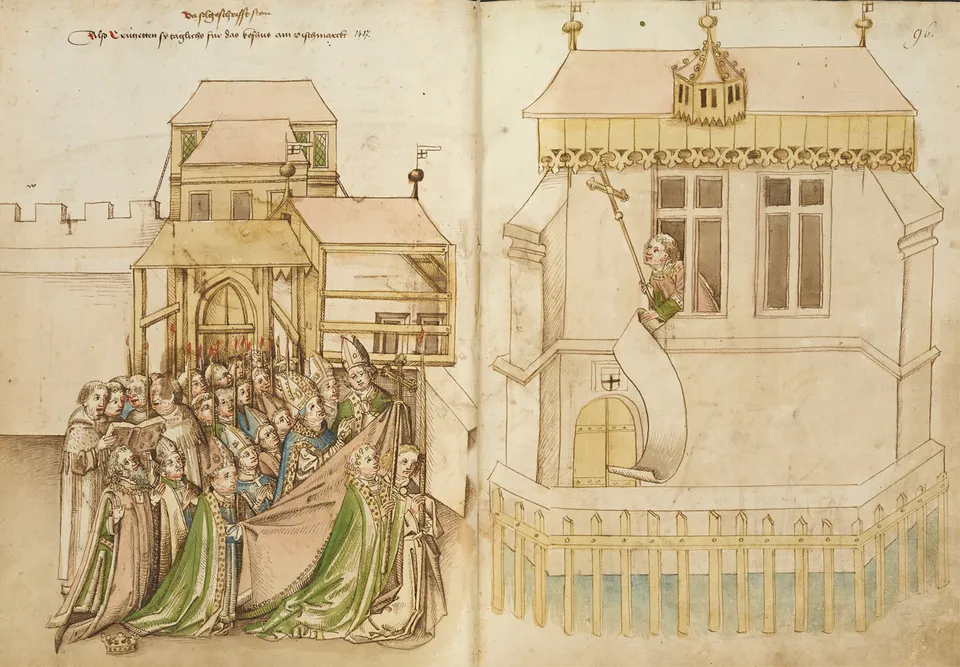
Chronik des Ulrich Richental · Public domain · Source
When Pope Gregory XI died in Rome in 1378, the Italian Urban VI was elected under pressure from the Roman crowd. The French cardinals then declared the election invalid and set up Clement VII, who returned to Avignon. France, Scotland and Naples followed Avignon, while England and most of the Holy Roman Empire backed Rome, dividing Europe in two. In 1409 the Council of Pisa deposed both popes and elected a new one, but neither stepped down, leaving three popes.
The Council of Constance (1414–1418), convened at the urging of the German king Sigismund, removed all three and in November 1417 elected Martin V, ending the schism. The council also condemned Wycliffe and Hus as heretics. The claim that a general council stands above the pope (conciliarism) gained ground, and papal authority fell sharply, preparing the soil for the Reformation. A year before the schism began (1377), the Jikji was printed with metal type at Heungdeoksa temple in Cheongju, Goryeo.