Russia under Catherine the Great
Also called: Catherine II, Pugachev’s Rebellion
Catherine II, who took the throne in a palace coup in 1762, styled herself an enlightened despot but after Pugachev’s Rebellion strengthened noble privilege and serfdom, and fought the Ottoman Empire to win the Black Sea coast and Crimea.
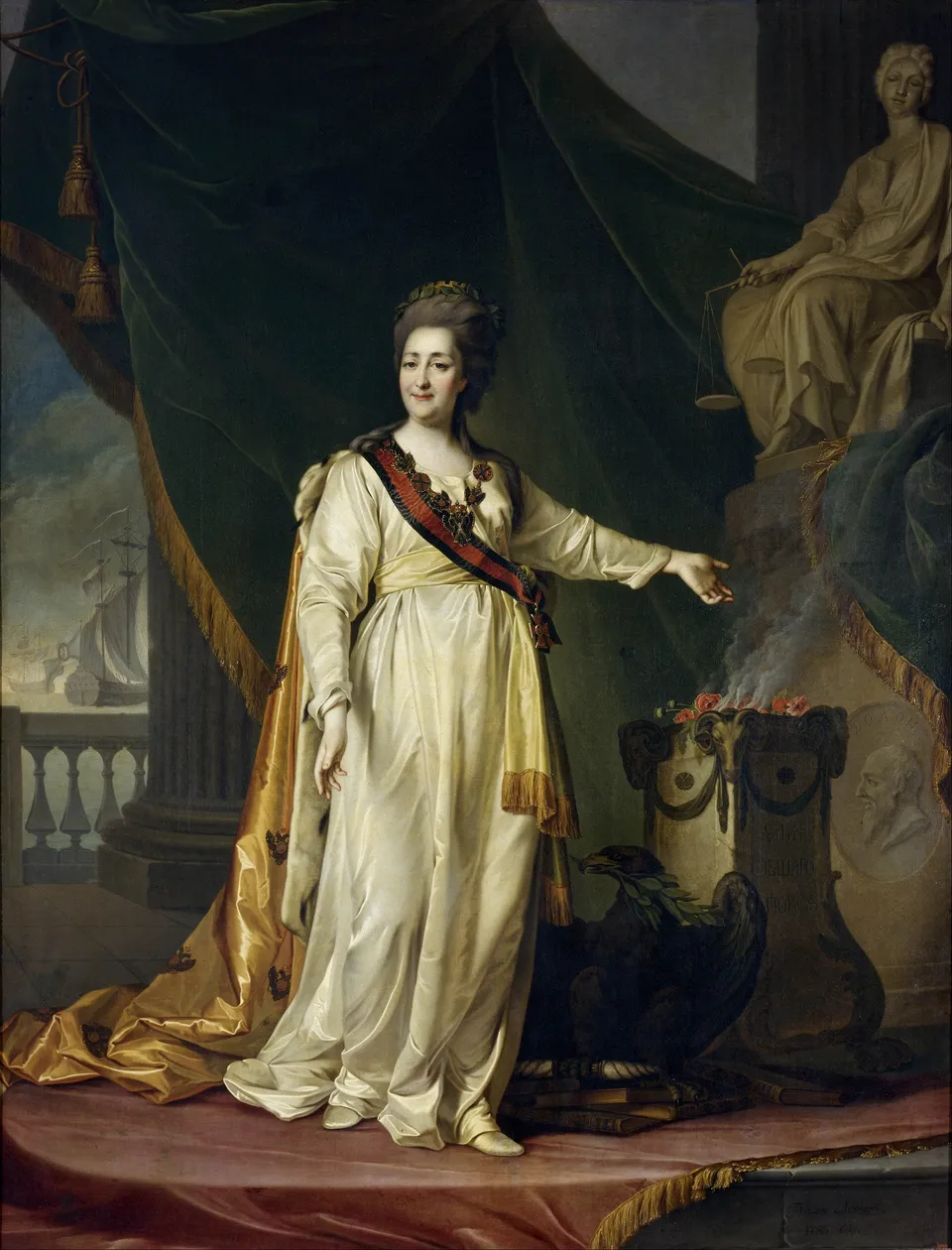
Dmitry Levitzky · Public domain · Source
Born into a minor German princely house, Catherine overthrew her husband Peter III in a coup by the guards and became empress in July 1762. She corresponded with Voltaire and Diderot, issued an “Instruction” inspired by Montesquieu and convened a Legislative Commission (1767), and encouraged schools and the collecting that became the Hermitage Museum.
But after the great peasant revolt led by the Cossack Pugachev in 1773–1775, she confirmed the nobles’ privileges with the Charter to the Nobility (1785) and made serfdom heavier still. Abroad she fought the Ottoman Empire, reaching the Black Sea by the Treaty of Küçük Kaynarca (1774) and annexing the Crimean Khanate in 1783, and she led the way in the three partitions of Poland. At the same time in Joseon, King Jeongjo (r. 1776–1800) pursued reform, founding the Gyujanggak library and the Jangyongyeong guard and building Hwaseong Fortress in Suwon.