The Chicxulub impact and the end of the dinosaurs
Also called: K–Pg extinction, Cretaceous–Paleogene extinction
Sixty-six million years ago an asteroid about 10 km across struck what is now the Yucatán Peninsula, Mexico. Dust and soot darkened the sky, and the non-bird dinosaurs and about three-quarters of all species vanished.
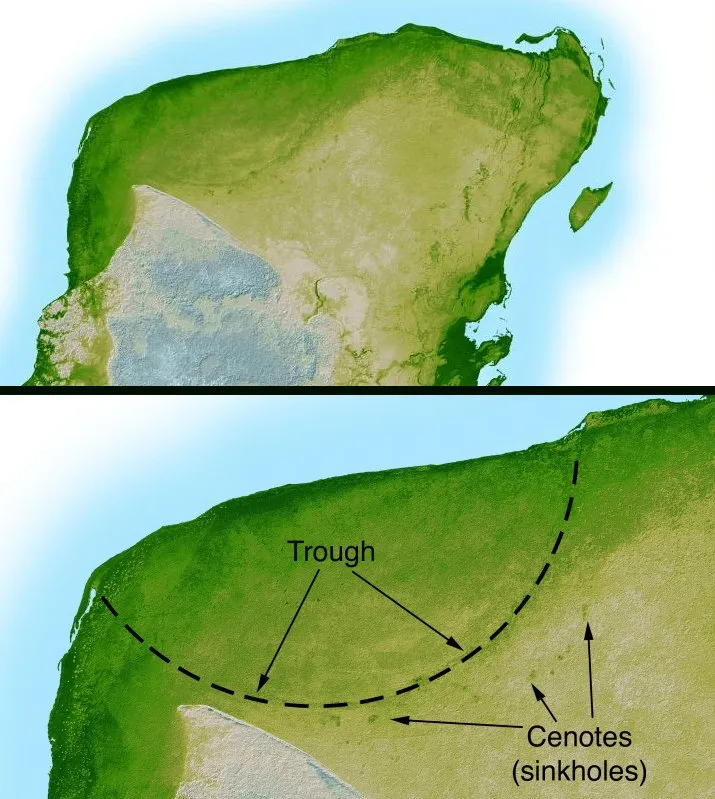
NASA/JPL-Caltech · Public domain · Source
About 66 million years ago an asteroid some 10 km across slammed into the sea off what is now Mexico’s Yucatán Peninsula, leaving a crater about 180 km wide. The impact set off huge earthquakes and tsunamis, and the dust, sulphate haze and soot from wildfires thrown into the sky blocked the sunlight, bringing years of dark and cold. Around the same time great eruptions (the Deccan Traps) were under way in India.
All the dinosaurs except birds, the ammonites of the sea and about three-quarters of all species disappeared. In 1980 Luis and Walter Alvarez proposed the impact after finding the boundary layer rich in iridium, an element common in asteroids, and around 1990 the crater was found buried at Chicxulub. The small mammals that survived went on to fill the empty land — and in time came the ancestors of humans.