Politics48 – 47 BC

Cleopatra and Caesar

Also called: Alexandrian War

Caesar, pursuing Pompey to Alexandria, took the side of Cleopatra, who had been ousted in a struggle for the throne. After the Alexandrian War she regained the crown of Egypt.
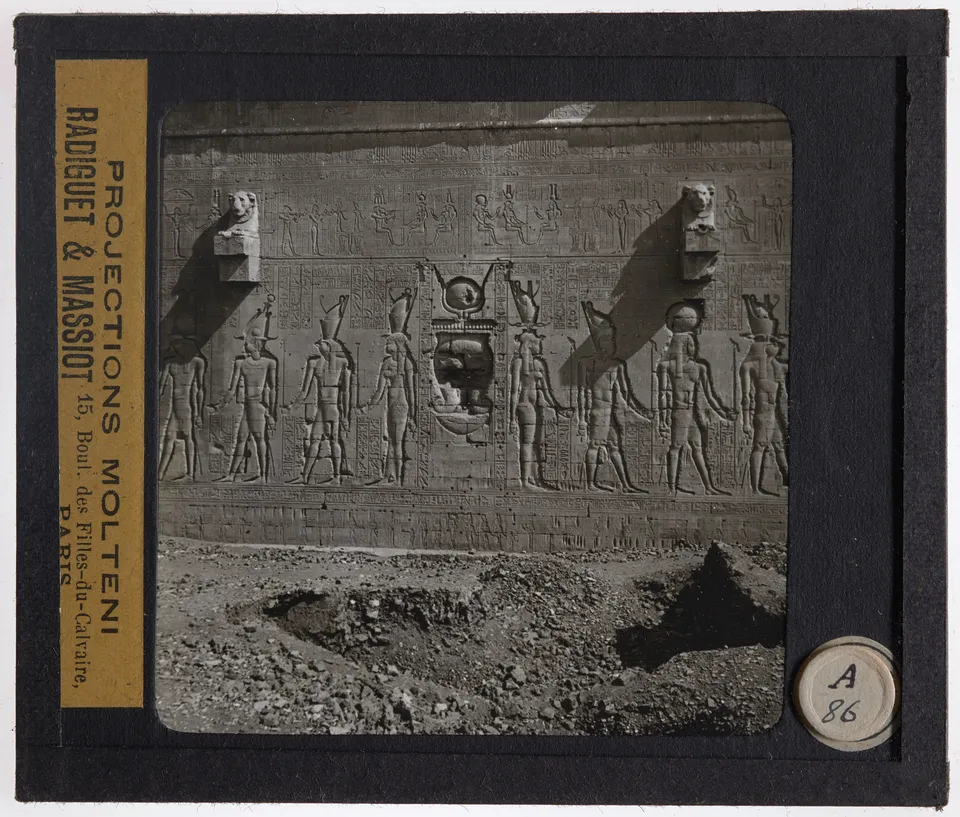
Relief on the south wall of the Temple of Hathor at Dendera — Cleopatra VII and her son Caesarion making offerings to the gods

Unknown author · Public domain · Source

The Ptolemies were a Greek dynasty founded by one of Alexander’s generals, and by the first century BC they ruled at Rome’s sufferance. When Ptolemy XII died in 51 BC, the eighteen-year-old Cleopatra VII took the throne jointly with her younger brother Ptolemy XIII, but the courtiers around her brother drove her out of the capital, Alexandria.

In 48 BC Pompey, beaten in Rome’s civil war, fled to Egypt and was murdered by Ptolemy XIII’s ministers; Caesar, in pursuit, entered Alexandria. Plutarch tells that Cleopatra had herself smuggled into the palace in a bedding sack to meet him. When Caesar took her side the Egyptian army besieged the palace (the Alexandrian War), and a fire that spread in the fighting is said to have burned some of the books at the harbour. The next year Roman reinforcements arrived, and Ptolemy XIII was defeated in a battle on the Nile and drowned.

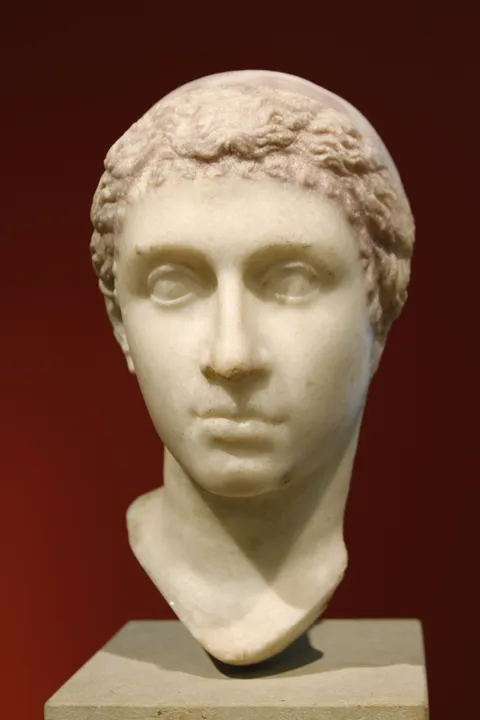
Cleopatra made her younger brother Ptolemy XIV nominal co-ruler and held real power herself, and in 47 BC bore Caesarion, known as Caesar’s son. She was staying in Rome when Caesar was assassinated in 44 BC, and returned to Egypt.
The map in 48 BC

OpenFreeMap © OpenMapTiles © OpenStreetMap contributors

States at the time
Ptolemaic Kingdom
Roman Republic
Places
Alexandria

People

  • Cleopatra VII69 BC – 30 BC

    monarch · Last queen of Ptolemaic Egypt (r. 51–30 BC); she sought to preserve her kingdom through alliances with Caesar and Antony, but after defeat at Actium took her own life, and Egypt became a Roman province

  • Julius Caesar100 BC – 44 BC

    commander · Statesman and general of the late Roman Republic who conquered Gaul, won the civil war and became dictator for life, and was assassinated in 44 BC

Before and after

Earlier
323 BC Hellenistic Culture

Related works

  • Film: CleopatraDramatizedFilm · 1963 · Joseph L. Mankiewicz
  • Book: Parallel LivesBook · 100 · Plutarch · Βίοι Παράλληλοι

Dramatized works (films, dramas, novels) may differ from the historical record.

Themes that include this event

  • Greece and Rome2000 BC – AD 476

    From the Aegean civilisation to the fall of the Western Roman Empire — the classical civilisation built by the democracy of the polis and the Roman republic and empire