Clovis Founds the Frankish Kingdom and Converts to Catholicism
Also called: Baptism of Clovis, Merovingian dynasty
Clovis, who became king of the Franks around 481, conquered most of Gaul to found the Frankish kingdom and converted to Roman Catholicism around 496.
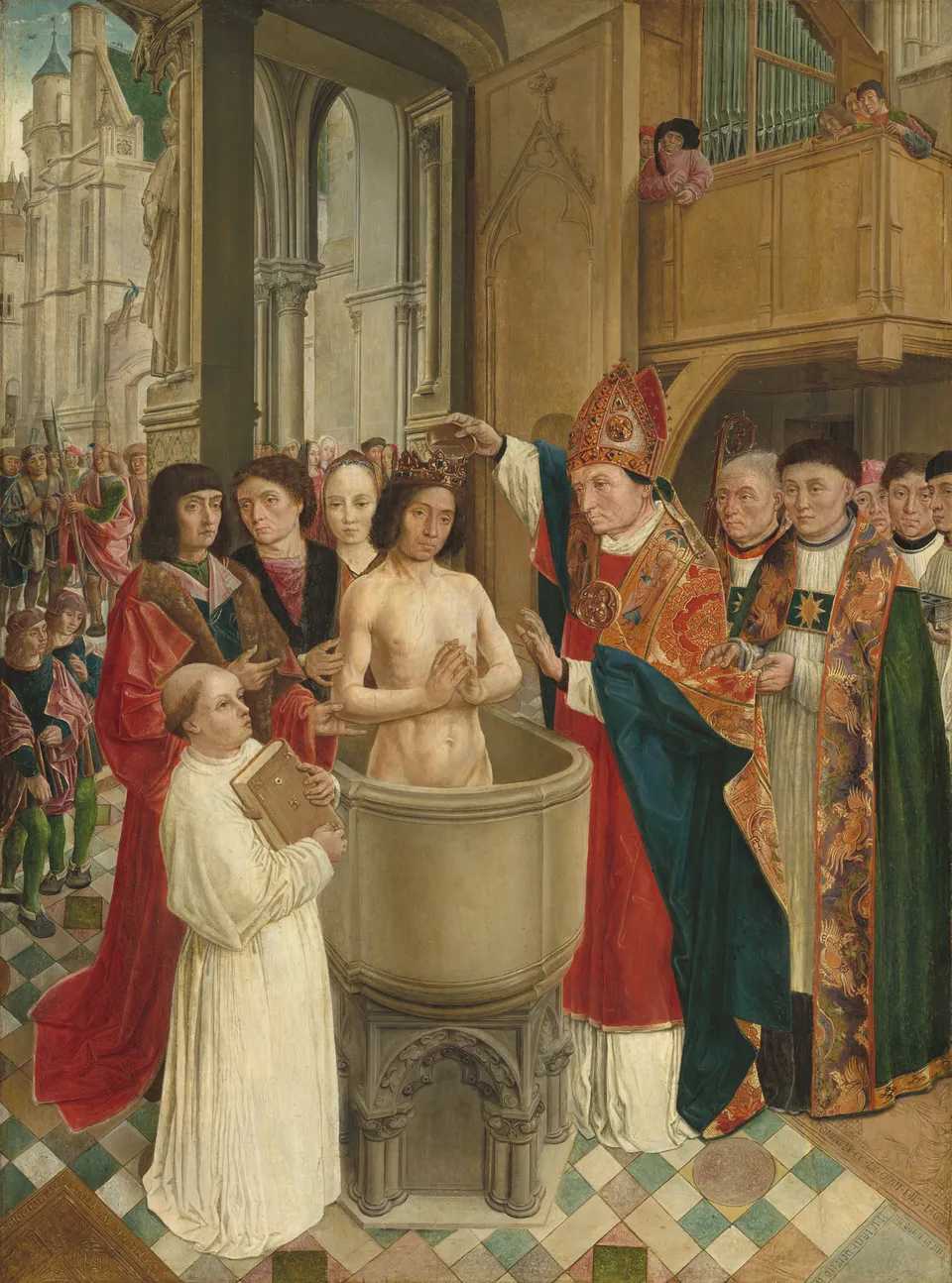
After the fall of the Western Roman Empire, several Germanic kingdoms arose on former imperial soil. Clovis of the Merovingian dynasty became king of the Salian Franks around 481; in 486 he destroyed the last Roman power in Gaul at Soissons, and in 507 he drove the Visigoths south at Vouillé. He made Paris his capital.
Whereas most Germanic peoples followed Arian Christianity, condemned as heresy at the Council of Nicaea, Clovis was baptised at Reims after a war with the Alemanni and converted to Roman Catholic (Athanasian) Christianity. The baptism is traditionally dated to 496, though some scholars place it later. The Frankish kingdom thus won the support of its numerous Roman subjects and of the Roman Church, and unlike the short-lived Germanic kingdoms it endured to become the leading power of Western Europe. At this time Goguryeo under King Jangsu, having moved its capital to Pyongyang, was pushing south and had taken Hanseong (475).