World historyAD 476 – 107723 events

Medieval Europe and Byzantium

From the fall of Rome in the West to Canossa — the feudal West built by the Franks and the papacy, Byzantium as heir of Rome, and a church divided east and west
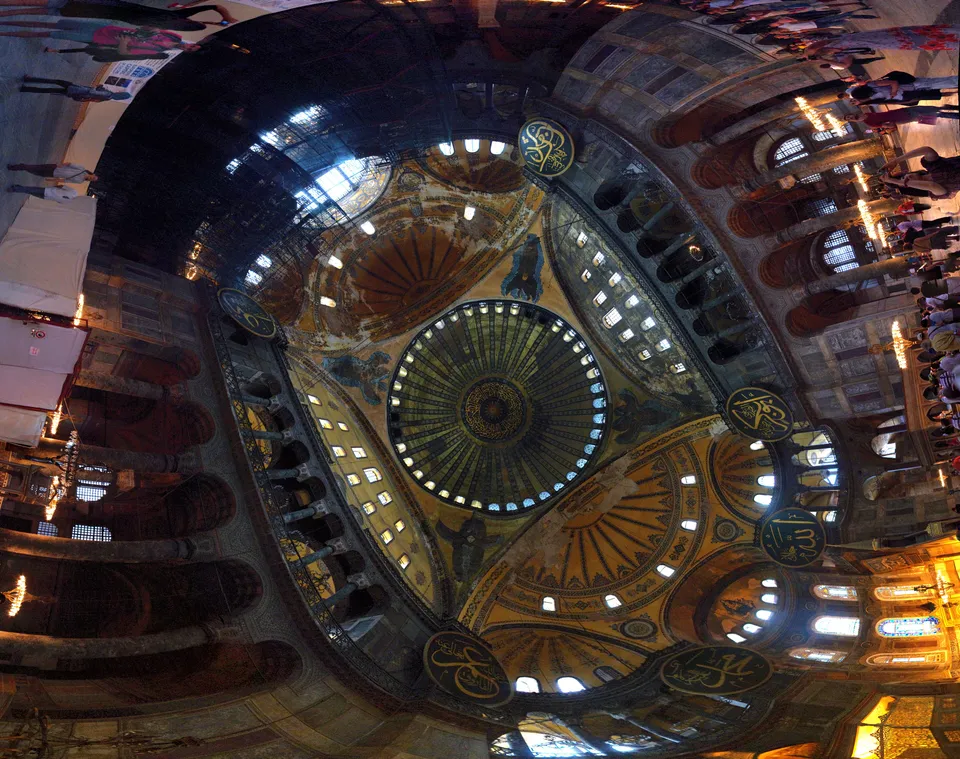
하기아 소피아의 내부 — 유스티니아누스 황제가 537년에 봉헌한 비잔티움 제국의 대성당

Ronan Reinart · CC BY-SA 3.0 · Source

At a glance

YearStateEventKey point
476Western Roman EmpireFall of the WestOdoacer; Germanic kingdoms arise
481 · 496Frankish kingdomConversion of ClovisCatholic, not Arian → allied with Rome
527–565ByzantiumJustinianCorpus Juris Civilis, reconquest, Hagia Sophia
529Western ChurchBenedictine orderPoverty, chastity, obedience; “pray and work”
610–641ByzantiumReforms of HeracliusThemes, soldier-farmers, Greek official
726ByzantiumIconoclasmLeo III → pope objects, turns to Franks
751 · 756Frankish kingdomCarolingians; Donation of PepinOrigin of the Papal States
793–11th c.NorsemenViking expansionNormandy, Kievan Rus’, Sicily
800Frankish kingdomCoronation of CharlemagneLatin West formed; Carolingian Renaissance
843 · 870Frankish kingdomVerdun and MeerssenOrigins of Germany, France, Italy
9th–13th c.Western EuropeFeudalism and manorsReciprocal contract; serfs, immunity
910Western ChurchAbbey of ClunyAgainst simony and clerical marriage
962GermanyCoronation of Otto IHoly Roman Empire (–1806)
988Kievan Rus’Conversion of Vladimir IOrthodoxy and Cyrillic adopted
1054ChurchEast–West SchismRoman Catholic ↔ Greek Orthodox
1077Empire and papacyWalk to CanossaInvestiture Controversy → papal supremacy

The theme on the map

OpenFreeMap © OpenMapTiles © OpenStreetMap contributors

23 events in this theme

  1. AD 375 – AD 568Germanic Migrations

    Beginning around 375, when Visigoths driven by the Huns from Asia crossed the Danube into the Roman Empire, many Germanic peoples moved onto Roman soil and founded kingdoms there.

  2. The Germanic commander Odoacer deposed the last emperor, Romulus Augustulus, ending the Western Roman Empire.

  3. Clovis, who became king of the Franks around 481, conquered most of Gaul to found the Frankish kingdom and converted to Roman Catholicism around 496.

  4. AD 527 – AD 565Reign of Justinian

    The Byzantine emperor Justinian recovered former Western Roman lands such as North Africa and Italy and issued the Corpus Juris Civilis, seeking to restore the Roman Empire.

  5. Around 529 Benedict founded a monastery at Monte Cassino in Italy and wrote a rule stressing poverty, chastity, obedience and work, which became the model for Western monasticism.

  6. AD 532 – AD 537Building of Hagia Sophia

    Justinian rebuilt Constantinople’s cathedral, burned in the Nika riots, as Hagia Sophia with a vast dome, dedicating it in 537.

  7. Pope Gregory I protected Rome from the Lombards and sent missionaries to the Anglo-Saxons, laying the foundations for the Roman Church to become the spiritual centre of Western Europe.

  8. Emperor Heraclius defeated Sasanian Persia and saw the empire through crisis by dividing it into military districts (themes) whose commanders also ran civil government.

  9. AD 726 – AD 843Byzantine Iconoclasm

    Iconoclasm, begun in 726 when the Byzantine emperor Leo III banned the veneration of images, provoked the opposition of the Roman Church and drove the eastern and western churches apart.

  10. The army of Abd al-Rahman al-Ghafiqi, governor of al-Andalus, advancing north across the Pyrenees, was defeated between Tours and Poitiers by the Frankish mayor of the palace Charles Martel.

  11. Pepin, who founded the Carolingian dynasty in 751 with papal backing, gave the pope the lands around Ravenna taken from the Lombards in 756, laying the foundation of the Papal States.

  12. From the late 8th century the Norse (Vikings) of Scandinavia sailed across Europe raiding and settling, founding the Duchy of Normandy, Kievan Rus’ and the Kingdom of Sicily, among others.

  13. Charles, the Frankish king who had united most of Western Europe, was crowned Emperor of the Romans by Pope Leo III in Rome on Christmas Day 800.

  14. In 843 Charlemagne’s three grandsons divided the Frankish empire into East, West and Middle Francia by the Treaty of Verdun, and in 870 the Treaty of Meerssen divided the north of Middle Francia again.

  15. From about the 9th century Western Europe developed feudalism, in which lords and vassals exchanged land (fiefs) for loyalty, and manorialism, in which lords ran estates worked by serfs.

  16. The Rus’, a branch of the Norsemen, settled at Novgorod around 862, and in 882 Oleg moved their centre to Kyiv, founding Kievan Rus’, a state of the Eastern Slavs.

  17. Founded in Burgundy in 910, the abbey of Cluny, free from lay control, led a movement of church reform against simony and clerical marriage.

  18. In 911 King Charles III of West Francia granted the lower Seine to the Norse leader Rollo, creating the Duchy of Normandy.

  19. Otto I, king of East Francia (Germany), who had defeated the Magyars, was crowned emperor by the pope in Rome in 962, beginning the Holy Roman Empire.

  20. In 988 Vladimir I of Kievan Rus’ converted to Orthodox Christianity on marrying the Byzantine emperor’s sister, bringing Rus’ into the Byzantine cultural world.

  21. In 1054 the papal legate and the patriarch of Constantinople excommunicated each other, splitting Christianity into Roman Catholicism in the west and Greek Orthodoxy in the east.

  22. In 1066 Duke William of Normandy defeated King Harold II of England at the Battle of Hastings and took the throne, founding the Norman dynasty.

  23. Excommunicated in a dispute with Pope Gregory VII over the right to appoint clergy (investiture), Holy Roman Emperor Henry IV begged forgiveness at the castle of Canossa in January 1077.

Key people

  • Justinian IAD 482 – AD 565

    Byzantine emperor (r. 527–565) who reconquered former Roman lands, issued the Corpus Juris Civilis and rebuilt Hagia Sophia

  • Charles MartelAD 688 – AD 741

    Mayor of the palace of the Frankish kingdom who defeated the Muslim army at Tours–Poitiers in 732; his authority paved the way for his son Pepin to found the Carolingian dynasty

  • Clovis IAD 511

    Merovingian king who founded the Frankish kingdom, uniting the Franks, conquering Gaul and converting to Catholic Christianity

  • Benedict of NursiaAD 480 – AD 547

    Italian monk who founded Monte Cassino and wrote the Rule of Saint Benedict, the framework of Western monastic life

  • Pope Gregory IAD 604

    Pope (590–604) who defended Rome by negotiating with the Lombards and sent missionaries to the Anglo-Saxons, laying the foundations of papal power

  • HeracliusAD 641

    Byzantine emperor (r. 610–641) who defeated Sasanian Persia but lost Syria and Egypt to the Arab Muslims

  • Leo III the IsaurianAD 741

    Byzantine emperor (r. 717–741) who repelled the Arab siege of Constantinople and began iconoclasm in 726

  • Abd al-Rahman al-GhafiqiAD 732

    Governor of al-Andalus who crossed the Pyrenees into Francia in 732 and was killed at the Battle of Tours–Poitiers

  • Pepin the ShortAD 714 – AD 768

    Son of Charles Martel and first Carolingian king of the Franks, who gave lands taken from the Lombards to the pope (the Donation of Pepin)

  • CharlemagneAD 814

    King of the Franks (r. 768–814) who united most of Western Europe and was crowned Emperor of the Romans by the pope in 800

  • Pope Leo IIIAD 816

    Pope (795–816) who crowned Charlemagne emperor in St Peter’s, Rome, on Christmas Day 800

  • Otto IAD 912 – AD 973

    King of East Francia (Germany) who defeated the Magyars at the Lechfeld in 955 and was crowned emperor by the pope in 962, founding the Holy Roman Empire