Columbus Reaches the Americas
Sponsored by Spain, Christopher Columbus crossed the Atlantic and landed in the Bahamas.
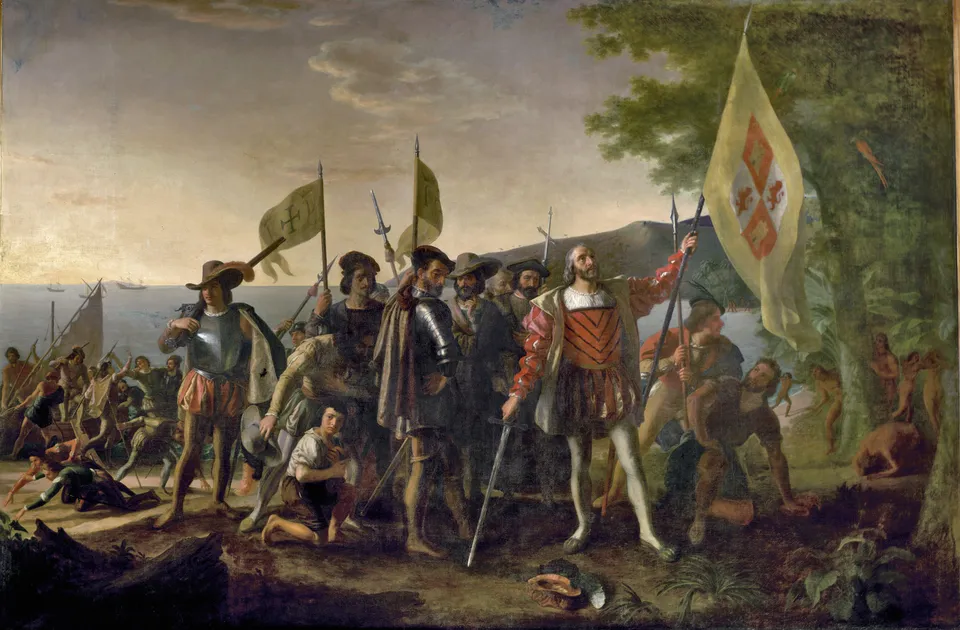
John Vanderlyn · Public domain · Source
In 15th-century Europe interest in the East grew, fed by works such as Marco Polo’s Travels. But spices and other eastern goods became very expensive as they passed through Ottoman and Italian hands, so Europeans sought a new route straight to Asia. While Portugal worked its way around Africa, the Genoese Christopher Columbus believed that sailing west across the Atlantic would reach Asia sooner.
Portugal turned his plan down, but Queen Isabella and King Ferdinand of Spain, who had just completed the Reconquista by taking Granada, backed him. Leaving Palos with three ships in August 1492, he reached an island in the Bahamas on 12 October and named it San Salvador. He went on to explore Cuba and Hispaniola and made three more voyages, but believed to the end of his life that he had reached Asia.
Spanish conquistadors who followed brought down the Aztec and Inca empires. European diseases such as smallpox and brutal forced labour drastically reduced the native population, and the Atlantic slave trade from Africa grew to replace their labour. In the "Columbian Exchange" of crops, animals and diseases between the two worlds, potatoes and maize spread around the globe.
A Europe-centred world trade began, bringing the Commercial Revolution and the Price Revolution, and marking the start of a connected world. Chili peppers, tobacco and sweet potatoes from the Americas later reached Joseon Korea as well.