Compilation of the Qur’an
Also called: Koran, Uthmanic codex
Caliph Uthman had the revelations, until then handed down in scattered forms, gathered into one standard text and sent to the provinces — the Qur’an used to this day.
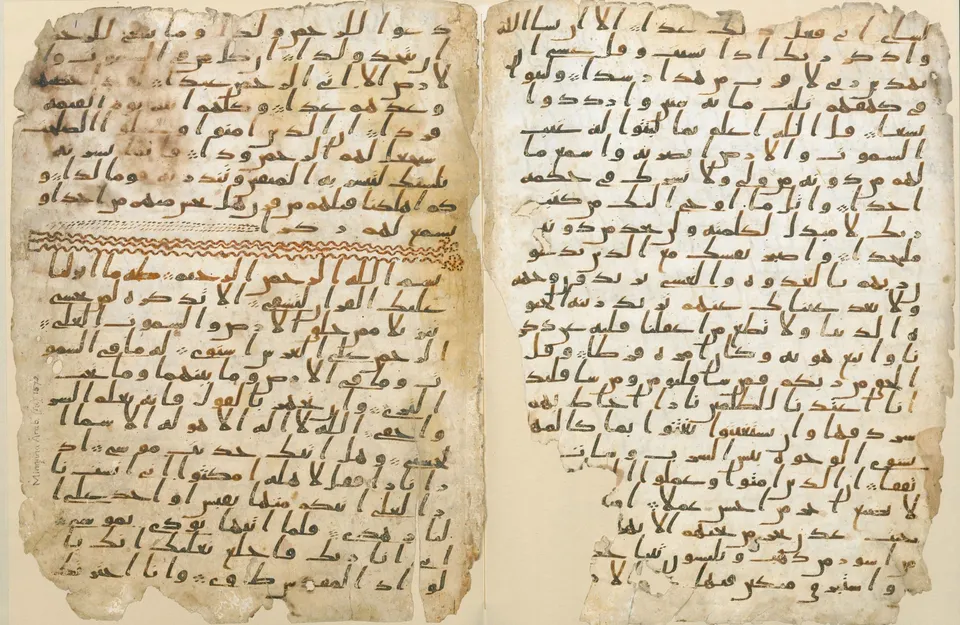
Unknown author · Public domain · Source
The revelations Muhammad received were memorised by believers or written on parchment, bones and palm leaves. As the conquests spread and readings began to differ from place to place, Uthman is said to have had Zayd ibn Thabit, once Muhammad’s scribe, and others prepare a standard text around 650, sending copies to Kufa, Basra, Damascus and elsewhere and ordering other versions destroyed.
The Qur’an has 114 chapters (suras). Held to be the very word of God, it is scripture only in the original Arabic. Arabic thus became the common and learned language of the Muslim world, and the Qur’an, together with the sayings and deeds of Muhammad (hadith), became the basis of Islamic law (sharia).