World historyAD 570 – 105520 events

The Rise of the Islamic World

From the revelation to Muhammad to the Seljuk entry into Baghdad — 450 years in which a new faith from Arabia built a civilisation stretching from Iberia to Central Asia and reached as far as Silla by sea
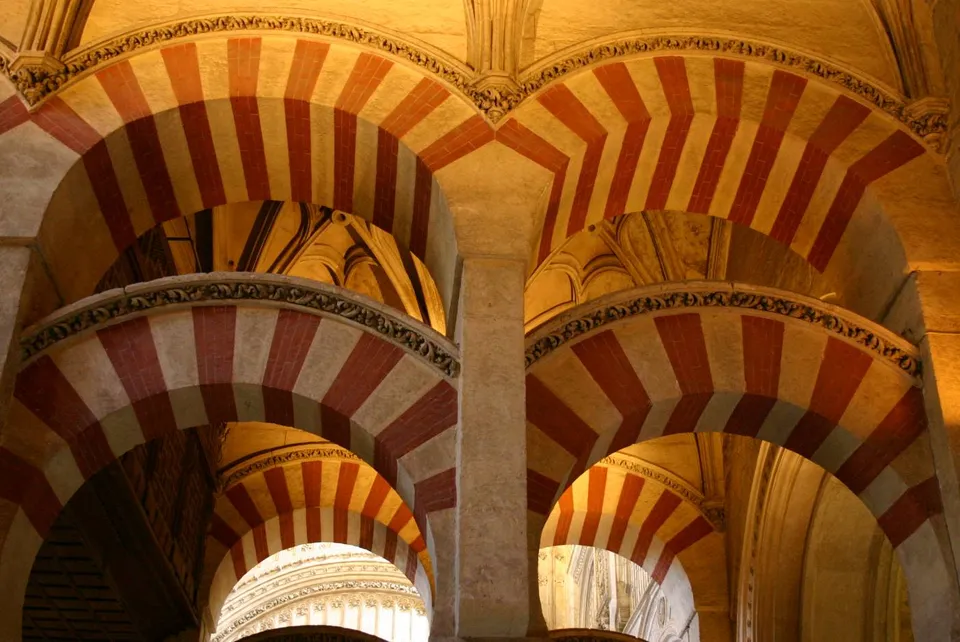
코르도바 대모스크(메스키타)의 아치 숲 — 후우마이야 왕조가 785년부터 지었다

Frank Kovalchek from USA · CC BY 2.0 · Source

At a glance

YearDynasty · stateEventKey point
c. 610MeccaRevelation to MuhammadOne God, no idols, Five Pillars
622MedinaHijraYear 1 of Islamic calendar; umma
632–661RashidunFour elected caliphsFaith kept by paying jizya
636–651RashidunFall of the SasaniansQadisiyya, Nahavand; Syria, Egypt too
661UmayyadDynasty foundedDamascus, hereditary, Arabs favoured
680UmayyadBattle of KarbalaHusayn killed → Shia vs Sunni
711UmayyadConquest of IberiaVisigoths fall; al-Andalus
732Umayyad ↔ FranksBattle of Tours–PoitiersDefeated by Charles Martel
750AbbasidDynasty foundedMuslims equal; converts spared poll tax
751Abbasid ↔ TangBattle of TalasGao Xianzhi beaten; paper goes west
756 · 929Umayyads of CórdobaCórdoba stateCaliph in 929 → three caliphs
762AbbasidBaghdad foundedRound city, hub of east–west trade
Early 9th c.AbbasidHouse of WisdomGreek classics translated; al-Khwarizmi
9th c.Abbasid ↔ Tang, SillaMaritime tradeGuangzhou; Ibn Khordadbeh on Silla
909 · 969FatimidCaliphate; Cairo foundedIsmaili Shia; al-Azhar
1055SeljukBaghdad takenSultan holds power; caliph religious only

The theme on the map

OpenFreeMap © OpenMapTiles © OpenStreetMap contributors

20 events in this theme

  1. Around 610 Muhammad, a merchant of Mecca, began preaching what he proclaimed were revelations from the one God, Allah. A new religion of the Arabs, Islam, was born.

  2. AD 622Hijra

    Muhammad moved from Mecca to Medina. The Islamic calendar counts its years from this event.

  3. After a long struggle, Muhammad and the Muslims of Medina entered Mecca with little resistance and cleared the idols from the Kaaba, which became the sanctuary of Islam.

  4. AD 632 – AD 661The Rashidun Caliphate

    After Muhammad’s death four caliphs, from Abu Bakr to Ali, led the Muslim world. In this period the Arabs conquered Byzantine Syria and Egypt and Sasanian Persia.

  5. Arab armies defeated the Sasanians at Qadisiyya (636) and Nahavand (642), and with the death of the last king, Yazdegerd III, in 651 Sasanian Persia came to an end.

  6. Caliph Uthman had the revelations, until then handed down in scattered forms, gathered into one standard text and sent to the provinces — the Qur’an used to this day.

  7. Muawiya, governor of Syria, became caliph with Damascus as his capital and founded the Umayyad dynasty. The caliphate became hereditary.

  8. Husayn, son of Ali, who resisted Umayyad succession, was killed at Karbala by the army of Caliph Yazid. The event set the Shia firmly apart as a distinct branch of Islam.

  9. The Umayyad general Tariq ibn Ziyad crossed the straits from North Africa and overthrew the Visigothic kingdom. Most of the Iberian Peninsula came under Muslim rule.

  10. The Silla monk Hyecho sailed to India, toured the five Indian kingdoms and Central Asia, and returned to Tang to write the Wang ocheonchukguk jeon.

  11. The army of Abd al-Rahman al-Ghafiqi, governor of al-Andalus, advancing north across the Pyrenees, was defeated between Tours and Poitiers by the Frankish mayor of the palace Charles Martel.

  12. Descendants of Muhammad’s uncle al-Abbas harnessed the grievances of Persian converts and the Shia to overthrow the Umayyads and found the Abbasid dynasty.

  13. On the Talas River in Central Asia a Tang army led by Gao Xianzhi, a general of Goguryeo descent, was heavily defeated by the Abbasids. Chinese papermakers taken prisoner are said to have brought papermaking to the Islamic world.

  14. AD 756 – AD 929The Umayyads of Córdoba

    Abd al-Rahman I, an Umayyad who survived the Abbasid revolution, founded the Umayyad state of Córdoba in Iberia. In 929 Abd al-Rahman III proclaimed himself caliph.

  15. The Abbasid caliph al-Mansur founded a new capital, Baghdad, with circular walls on the Tigris. It became the centre of east–west trade and of Islamic culture.

  16. In Abbasid Baghdad a great movement translated Greek, Persian and Indian learning into Arabic, and scholars such as al-Khwarizmi made major advances in mathematics and astronomy.

  17. In the Abbasid age Muslim merchants rode the monsoons from the Persian Gulf via India and Southeast Asia to Guangzhou in China. Ibn Khordadbeh recorded Silla beyond it.

  18. The Ismailis, a branch of the Shia, founded the Fatimid dynasty in North Africa and claimed the caliphate; in 969 they conquered Egypt and built a new capital, Cairo.

  19. Merchants from Song, the Khitans, the Jurchens, Japan and even Arabia came to Byeongnando at the mouth of the Yeseong River, carrying the name "Corea" to the West.

  20. Tughril Beg of the Seljuk Turks entered Baghdad, drove out the Shia Buyids, and was recognised by the Abbasid caliph as sultan.

Key people

  • UmarAD 584 – AD 644

    Second caliph (634–644), whose armies conquered Syria, Egypt, Iraq and Persia, and who fixed the Islamic calendar from the year of the Hijra

  • AliAD 600 – AD 661

    Fourth caliph (656–661), Muhammad’s cousin and son-in-law, whom the Shia revere — with his descendants — as the only rightful successors (imams); assassinated at Kufa

  • UthmanAD 576 – AD 656

    Third caliph (644–656), of the Umayyad clan, who had the standard text of the Qur’an compiled; resented for favouring his kin, he was killed by rebels in Medina

  • MuhammadAD 570 – AD 632

    Prophet of Islam, who began preaching in Mecca around 610 after what he proclaimed were revelations from the one God, Allah; moving to Medina, he built a community of believers and united Arabia

  • Abu BakrAD 573 – AD 634

    First caliph (632–634), Muhammad’s close companion and father-in-law, chosen to lead the community after Muhammad’s death (the Shia hold that Ali should have succeeded); he reunited Arabia

  • Muawiya IAD 602 – AD 680

    Founder of the Umayyad caliphate (661–680); as governor of Syria he opposed Ali, made Damascus his capital and named his son as heir, making the caliphate hereditary

  • Abd al-Rahman IAD 731 – AD 788

    Founding emir of the Umayyads of Córdoba (756–788), who escaped the Abbasid massacre of his family and set up his own state at Córdoba in 756

  • Harun al-RashidAD 809

    Fifth Abbasid caliph (786–809), under whom Baghdad reached its height; he often appears in the Thousand and One Nights

  • Yazdegerd IIIAD 651

    Last king of Sasanian Persia (632–651), who fled east after a string of defeats by the Arabs and was killed near Merv, ending the dynasty

  • Husayn ibn AliAD 626 – AD 680

    Son of Ali and grandson of Muhammad, killed at Karbala in 680 while resisting Umayyad succession; the Shia honour him as their greatest martyr

  • Tariq ibn ZiyadAD 720

    Umayyad general, probably of Berber origin, who crossed the straits in 711 and overthrew the Visigothic kingdom; Gibraltar (“Tariq’s mountain”) bears his name

  • HyechoAD 704 – AD 787

    Silla monk who sailed to India, travelled the five regions of India and Central Asia and wrote the Wang ocheonchukguk jeon