Compromise of 1850
Also called: Fugitive Slave Act of 1850
As North and South clashed over slavery in the lands won from Mexico, Congress compromised in five laws, admitting California as a free state but passing a harsher Fugitive Slave Act.
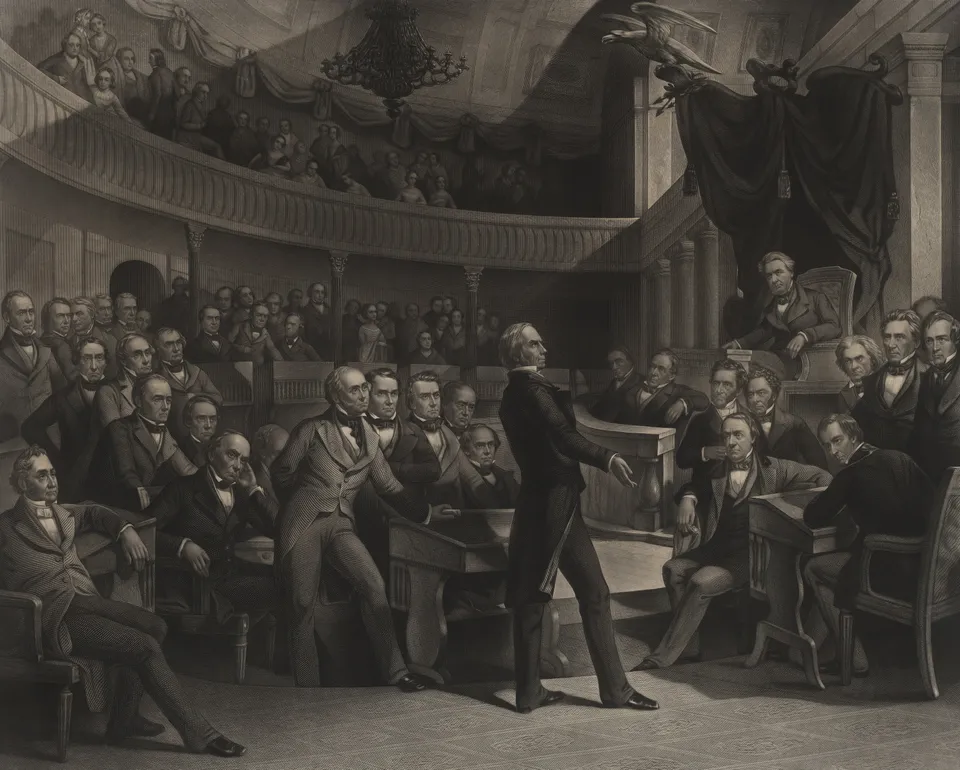
Drawn by Peter F. Rothermel / engraved by Robert Whitechurch (1814-ca. 1880) · Public domain · Source
The Mexican War (1846–1848) brought the United States California and the Southwest. When California, filled by the gold rush of 1849, sought admission as a free state, Southerners who feared losing the balance between free and slave states spoke openly of secession. Henry Clay proposed a compromise in January 1850; after the single omnibus bill failed, Stephen Douglas split it into five laws and carried them in September.
California entered as a free state, the territories of New Mexico and Utah were left to decide on slavery themselves (popular sovereignty), and the slave trade was banned in Washington. In return a strengthened Fugitive Slave Act required the capture and return of escaped slaves even in the North, bringing slavery home to Northerners and stirring resentment. The compromise delayed war by a decade but did not resolve the conflict.