ReligionJanuary 630

Conquest of Mecca

Also called: Fath Makkah

After a long struggle, Muhammad and the Muslims of Medina entered Mecca with little resistance and cleared the idols from the Kaaba, which became the sanctuary of Islam.
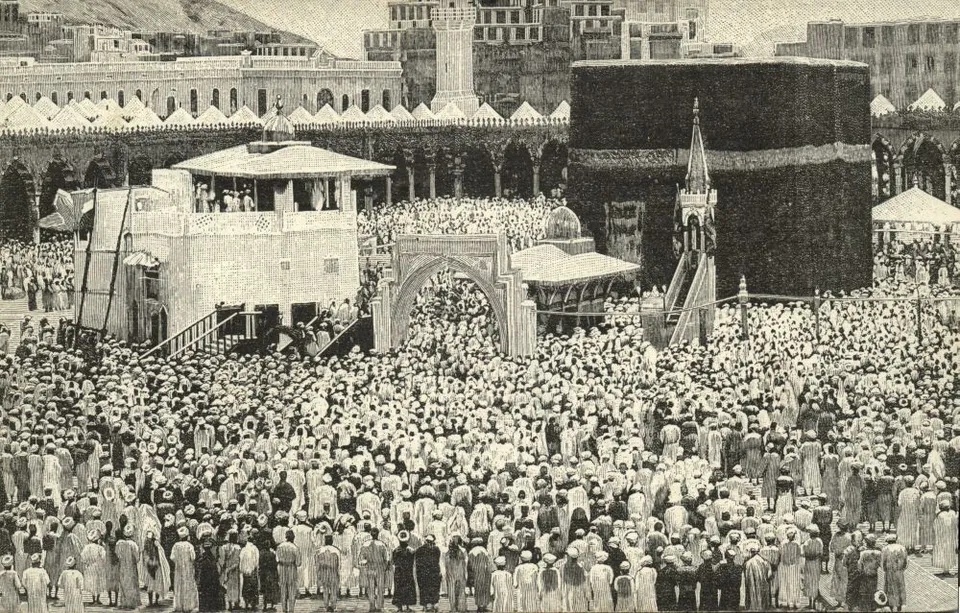
The Kaaba during the hajj, photographed in 1886. In 630 Muhammad cleared it of idols

Post of Switzerland · Public domain · Source

After the Hijra the Muslim community of Medina fought the Quraysh of Mecca. It won at Badr in 624 and lost at Uhud in 625, and in 627 it held off a Meccan coalition by digging a trench around the city. In 628 at Hudaybiyya it agreed a ten-year truce with Mecca and was allowed to make the pilgrimage the next year.

When an ally of Mecca broke the truce, Muhammad marched in January 630 with some ten thousand men and entered the city almost without bloodshed. He destroyed the idols in and around the Kaaba and pardoned most of his old enemies, and the Meccans accepted Islam. The Kaaba became the direction of Muslim prayer (qibla) and the centre of pilgrimage. Arabian tribes sent delegations to submit one after another, and by Muhammad’s death in 632 most of the peninsula was united under Islam.

The map in AD 630

OpenFreeMap © OpenMapTiles © OpenStreetMap contributors

Places
Mecca, Medina

People

  • MuhammadAD 570 – AD 632

    leader · Prophet of Islam, who began preaching in Mecca around 610 after what he proclaimed were revelations from the one God, Allah; moving to Medina, he built a community of believers and united Arabia

  • Abu BakrAD 573 – AD 634

    participant · First caliph (632–634), Muhammad’s close companion and father-in-law, chosen to lead the community after Muhammad’s death (the Shia hold that Ali should have succeeded); he reunited Arabia

  • UmarAD 584 – AD 644

    participant · Second caliph (634–644), whose armies conquered Syria, Egypt, Iraq and Persia, and who fixed the Islamic calendar from the year of the Hijra

  • AliAD 600 – AD 661

    participant · Fourth caliph (656–661), Muhammad’s cousin and son-in-law, whom the Shia revere — with his descendants — as the only rightful successors (imams); assassinated at Kufa

Before and after

Earlier
AD 622 Hijra

Themes that include this event

  • The Rise of the Islamic WorldAD 570 – 1055

    From the revelation to Muhammad to the Seljuk entry into Baghdad — 450 years in which a new faith from Arabia built a civilisation stretching from Iberia to Central Asia and reached as far as Silla by sea