Crucifixion of Jesus
Also called: Death of Jesus, Passion of Christ, Calvary
At Passover around AD 30 Jesus was crucified in Jerusalem on the sentence of the Roman governor Pontius Pilate. The Roman historian Tacitus and the Jewish historian Josephus also recorded it.
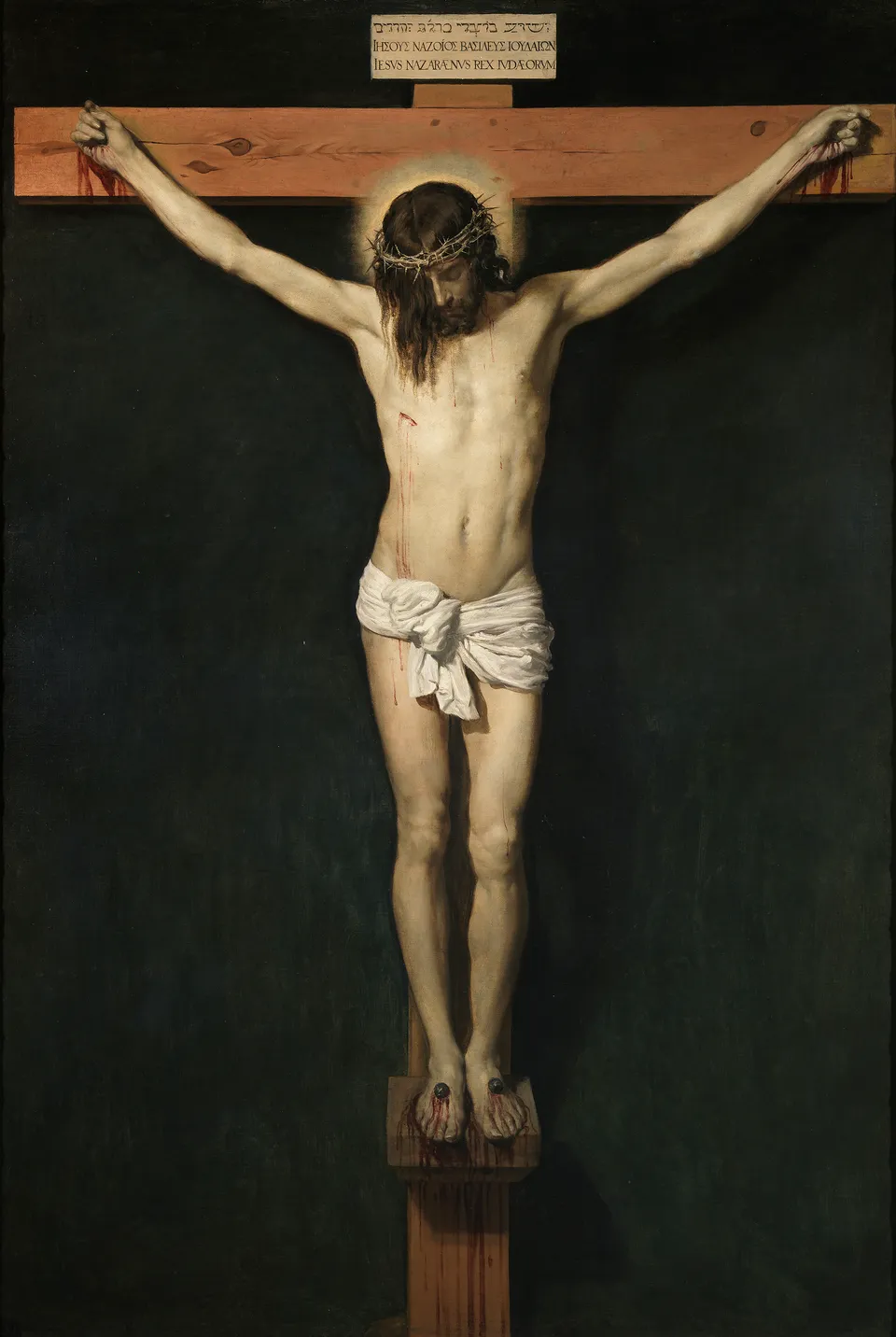
Diego Velázquez · Public domain · Source
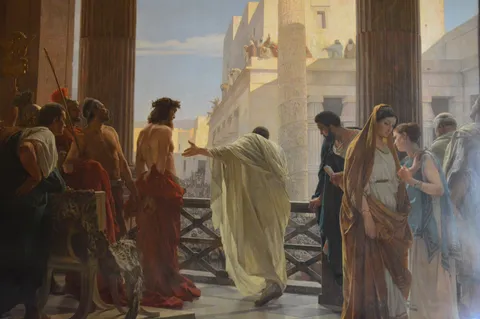
According to the Gospels, in Jerusalem, crowded with Passover pilgrims, Jesus clashed with the Temple authorities, driving the traders out of the Temple courts; he was arrested at night, questioned before the Jewish council (Sanhedrin) under the high priest Caiaphas, and handed over the next day to the Roman governor Pilate. Crucifixion was the most shameful punishment Rome inflicted on rebels and slaves, and the charge “King of the Jews” is said to have been fixed to the cross. Jesus was nailed to it at Golgotha outside the city wall and died that afternoon.
The execution is attested outside Christian sources. The Roman historian Tacitus, in his Annals (c. 116), writes that Christus, from whom the Christians took their name, “suffered the extreme penalty during the reign of Tiberius at the hands of the procurator Pontius Pilate”. The Jewish historian Josephus, in his Antiquities of the Jews (c. 93), also writes that Pilate condemned Jesus to the cross; the passage contains phrases added later by Christians, but many scholars accept that its core, recording the execution, is genuine. In 1961 a stone inscribed “Pontius Pilate, prefect of Judaea” was found at Caesarea on the Mediterranean coast, confirming that Pilate was a real official.
Matching Pilate’s term of office (26–36) with the days given in the Gospels, many date the execution to AD 30 (7 April) or 33 (3 April). Along with his baptism, the crucifixion is counted the most certain fact of Jesus’ life. In the 4th century Constantine built the Church of the Holy Sepulchre over the site identified as Golgotha and Jesus’ tomb, and excavation has shown that in the 1st century the spot was indeed a disused quarry with tombs outside the city wall.