Politics12th lunar month, 1863 – 11th lunar month, 1873(Lunar)

Reforms of the Heungseon Daewongun

When Gojong took the throne at twelve, his father the Daewongun seized power and attacked the abuses of in-law government, seeking to strengthen the crown and relieve the people.
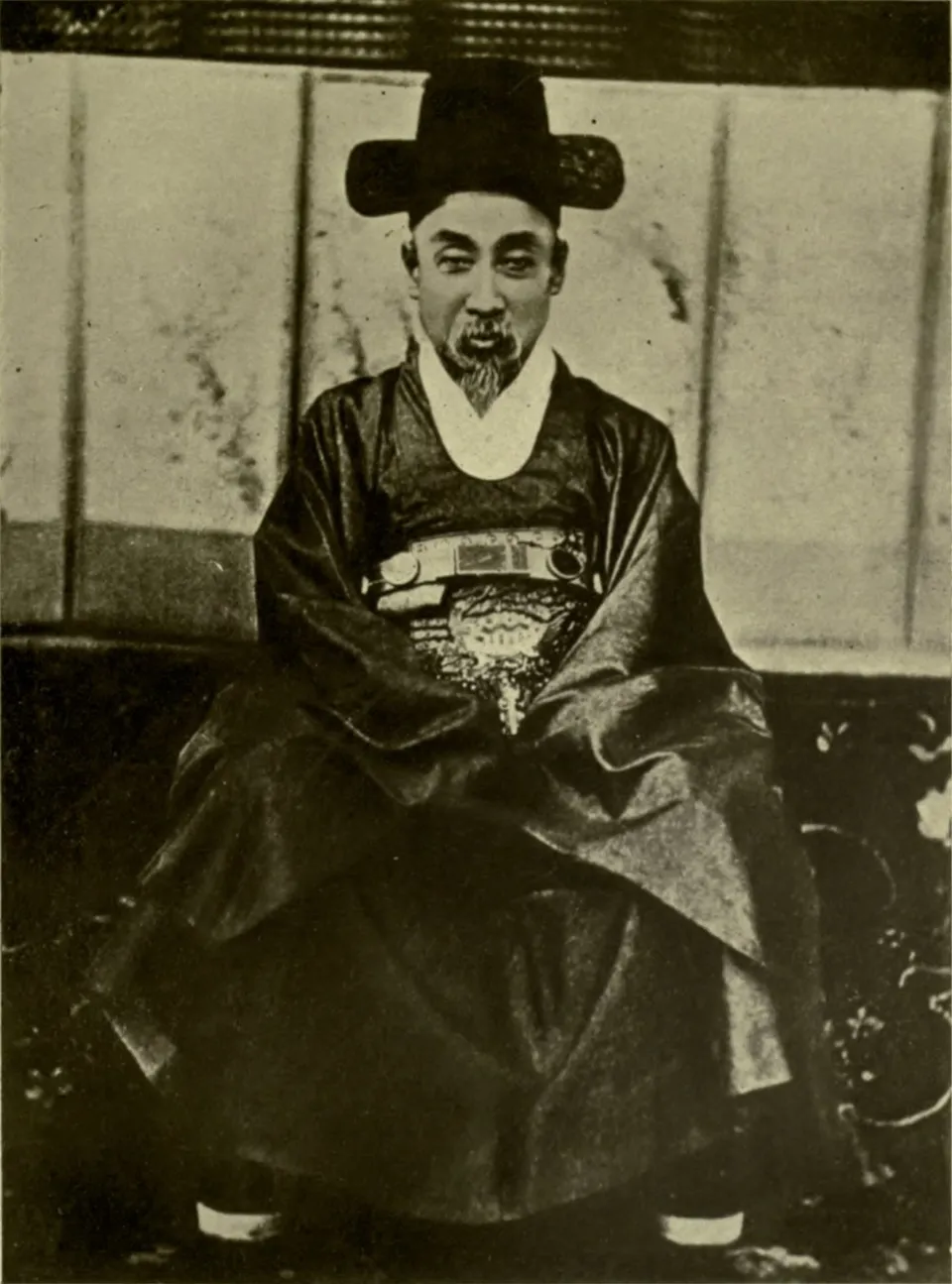
Heungseon Daewongun, photographed by Homer Hulbert before 1898

Hulbert, Homer B. · Public domain · Source

When Cheoljong died without an heir in 1863, the second son of Yi Ha-eung, Prince Heungseon, became king. The Daewongun drove out the Andong Kim in-law clan and appointed men by ability. He curtailed and in 1865 abolished the Border Defence Council (Bibyeonsa), returning politics to the State Council and military affairs to the Samgunbu, and compiled the Daejeon hoetong (1865) and Yukjeon jorye law codes. He rebuilt Gyeongbokgung to restore royal prestige.

He also attacked the corruption of the three taxes: surveying hidden land, making yangban households pay the military cloth tax (hopoje, 1871), and replacing the abused state grain loans with village-run granaries (sachangje). In 1871 he closed all but 47 of the seowon academies that had become bases of factionalism.

The reforms were popular with commoners, but forced contributions and debased coins for the palace and the closing of the academies angered the yangban. Abroad he refused trade and diplomatic ties with the West. After Choe Ik-hyeon’s memorial of impeachment in 1873, Gojong began to rule in person and the Daewongun withdrew.

The map in 1863

OpenFreeMap © OpenMapTiles © OpenStreetMap contributors

States and rulers at the time
Joseon — Gojong
Places
Gyeongbokgung

People

  • Heungseon Daewongun1820 – 1898

    leader · Gojong's father and regent, who rebuilt Gyeongbokgung and rejected Western trade

  • Gojong1852 – 1919

    monarch · Twenty-sixth king of Joseon and first emperor of the Korean Empire

  • Choe Ik-hyeon1833 – 1907

    related figure · Confucian loyalist whose memorials toppled the Daewongun and opposed opening to Japan; raised a righteous army in 1906 and died in captivity on Tsushima

1 part of this event

  1. The Daewongun closed all but 47 of the country’s private Confucian academies, having already abolished the Mandongmyo shrine of the Noron faction in 1865.

Before and after

Earlier
1862 Jinju Uprising

Themes that include this event

  • Central Government Through the AgesAD 250 – 1899

    From the noble councils of the Three Kingdoms to the State Council, the Border Defense Council and the Gabo cabinet — how central government shifted between aristocratic consensus and royal power

  • Military Systems Through the AgesAD 685 – 1907

    From the Nine Oath Banners to the Two Armies and Six Guards, the Five Commands and garrison system, the Five Army Camps and the Board of Marshals — armies rebuilt at every crisis

  • Seoul18 BC – 1988

    From Hanseong Baekje to the June Democratic Struggle — the Han River land every kingdom fought for, and Joseon’s capital for five centuries