The Death of Laocoön
Also called: Laocoon, Timeo Danaos et dona ferentes
A legend handed down over the centuries.
A Greek myth and legend best known from Book 2 of Virgil’s Aeneid. When the Trojan priest Laocoön warned against bringing the wooden horse into the city and hurled a spear at it, two great serpents came out of the sea and crushed him and his two sons.
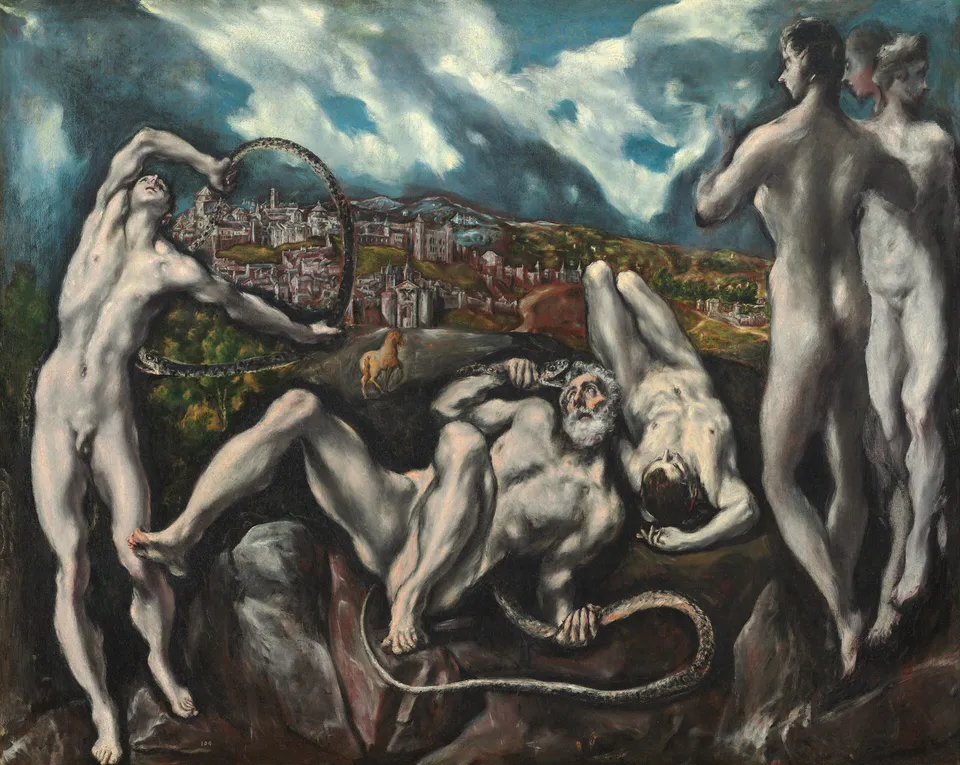
El Greco · Public domain · Source
This Greek myth and legend is best known from Book 2 of the Roman poet Virgil’s Aeneid. As the Trojans hesitated over the wooden horse, the priest Laocoön ran up crying “I fear the Greeks, even when they bring gifts” and drove a spear into its side. Later, as he sacrificed to Neptune (Poseidon), two great serpents came over the sea from Tenedos and crushed first his two sons and then Laocoön himself. The Trojans took this as punishment for harming the horse and hauled it into the city.
Versions differ. In the lost epic Sack of Ilion (known from a summary) the serpents kill Laocoön and one son, and Aeneas and his followers, seeing this, leave Troy. Sophocles also wrote a tragedy Laocoön, now lost. The marble Laocoön group showing the scene came out of the ground in Rome in 1506 and deeply influenced Renaissance art.