CultureDecember 14, 771(Lunar)

Completion of the Divine Bell of King Seongdeok

King Hyegong completed the great bell begun by Gyeongdeok in memory of his father Seongdeok; it is also known as the Emille Bell.
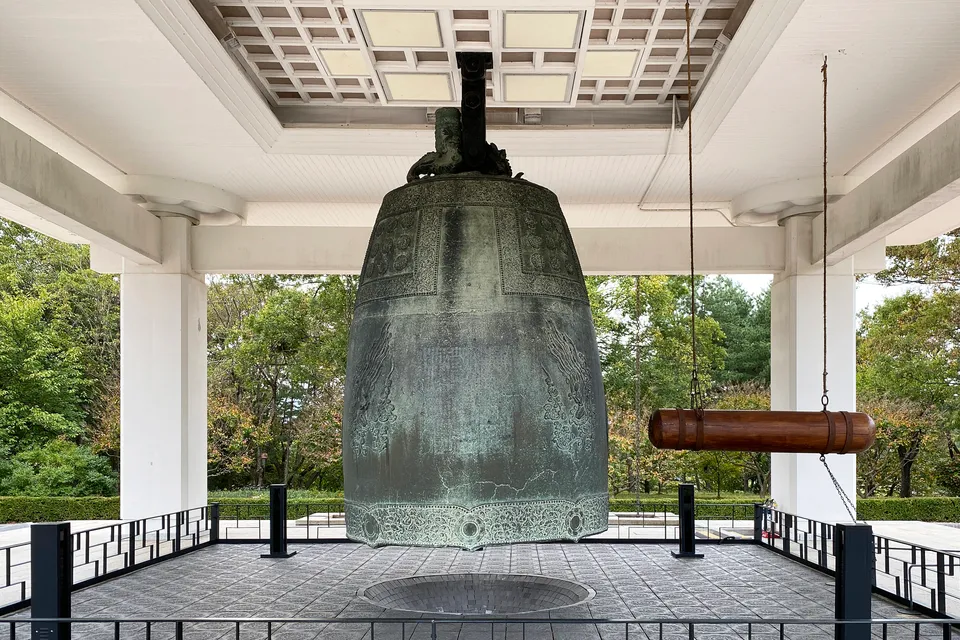
Sacred Bell of King Seongdeok, completed in 771, Gyeongju National Museum

Bernard Gagnon · CC0 · Source

At 3.66 m tall and 18.9 tonnes it is the largest surviving bell in Korea. Kneeling celestial figures holding censers decorate its body, and a sound tube on top clears its tone. An inscription of over a thousand characters records why and by whom it was made.

It first hung at Bongdeoksa, hence the name Bongdeoksa Bell; the "Emille" legend tells of a child cast into the metal. It is now in the Gyeongju National Museum.

The map in AD 771

OpenFreeMap © OpenMapTiles © OpenStreetMap contributors

States and rulers at the time
Silla — King Hyegong
Places
Gyeongju National Museum (Bell of King Seongdeok)

People

  • King HyegongAD 780

    monarch · 36th king of Silla, enthroned at eight and killed amid aristocratic revolts, ending the direct line of King Muyeol

  • King GyeongdeokAD 765

    related figure · 35th king of Silla, who sinicized official titles and place names but restored the nogeup stipend villages; Bulguksa and Seokguram were begun in his reign

  • King SeongdeokAD 737

    related figure · 33rd king of Silla, who granted jeongjeon fields to commoners and restored relations with Tang

Before and after

Themes that include this event

  • Crafts and MetalworkAD 346 – 1392

    From the Seven-Branched Sword to mother-of-pearl lacquer — Three Kingdoms crowns, censers and daggers, the great bell of Unified Silla, Goryeo silver inlay and najeon

  • Gyeongju57 BC – 1860

    Silla’s capital for a thousand years — tombs, pagodas, temples and bells from every age of Silla, and the birthplace of Donghak