The Eleusinian Mysteries
Also called: Mysteries of Eleusis, Eleusinia
For more than a thousand years, secret rites in honour of Demeter and Persephone were held at the sanctuary of Eleusis north-west of Athens. Initiates swore never to reveal what they had seen, and the heart of the rite is still unknown.
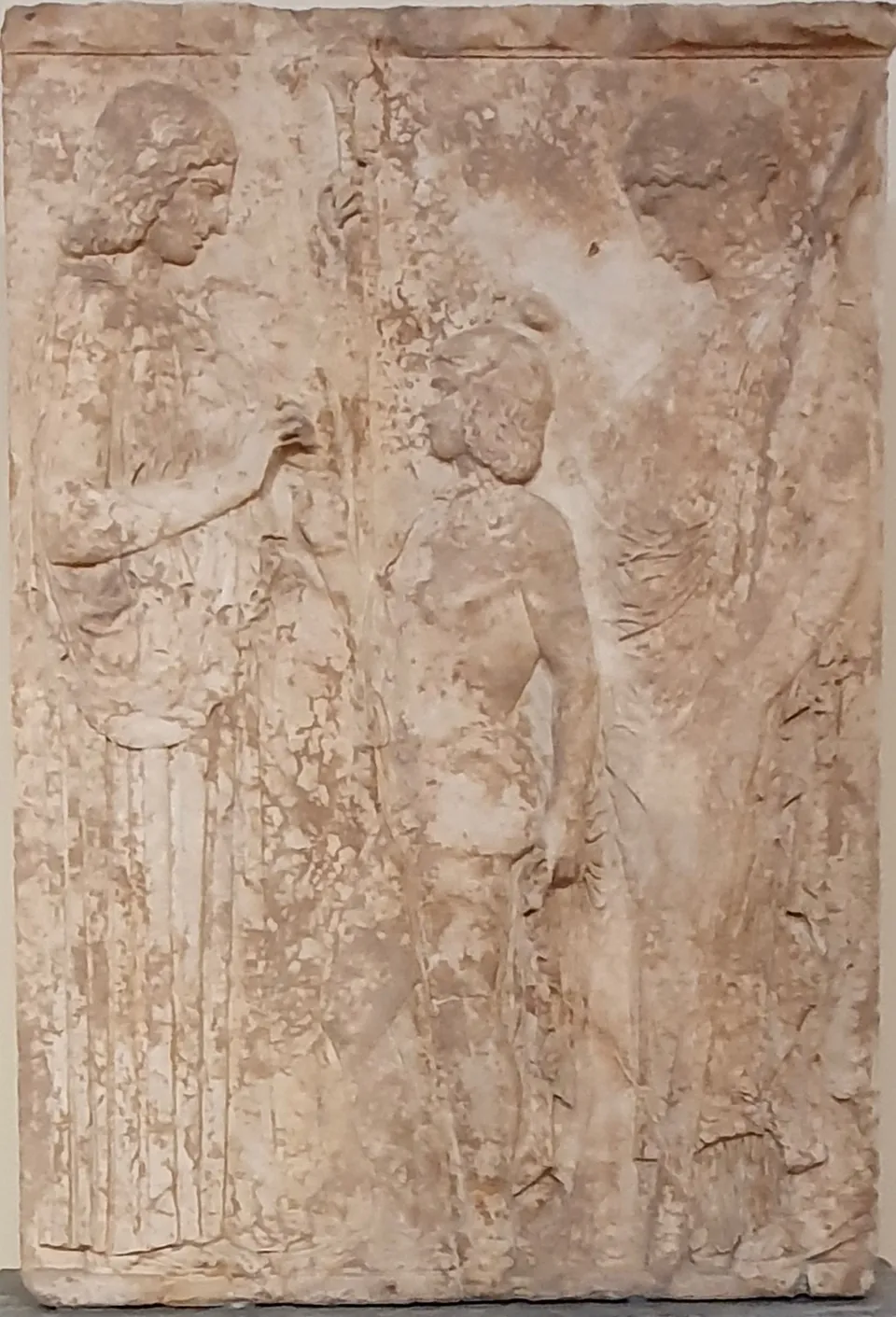
Yair-haklai · CC BY-SA 4.0 · Source
The Eleusinian Mysteries were secret rites of Demeter, goddess of grain, and her daughter Persephone (Kore). The Homeric Hymn to Demeter, of about the 7th century BC, already tells how Demeter taught her rites at Eleusis, so the Mysteries existed by then at the latest. A Mycenaean building found beneath the sanctuary has led some scholars to trace them back to the Bronze Age, but the evidence is slight. The Telesterion, the great hall where initiates gathered, was rebuilt on a larger scale in the 6th century BC and again under Pericles in the 5th.
Each autumn, in the Attic month of Boedromion, the Greater Mysteries began with a procession of initiates along the Sacred Way from Athens to Eleusis, some 20 km away. Men and women, slaves and foreigners could be initiated as long as they spoke Greek; the Roman emperors Hadrian and Marcus Aurelius were initiates. Initiates drank the kykeon, made from barley and mint; the claim that it contained a hallucinogen remains unproven.
The secret was kept to the end, so what was shown and said inside the Telesterion is unknown. The Mysteries were closed around 392 under Theodosius I, who made Christianity the state religion, and according to the historian Eunapius the Visigoth Alaric plundered the sanctuary in 396.