February 26 Incident
Also called: 2.26 Incident
On 26 February 1936 young officers of the army’s Imperial Way faction seized central Tokyo with about 1,400 troops and murdered senior ministers in an attempted coup. After its suppression the rival Control faction took over and military dominance of politics was entrenched.
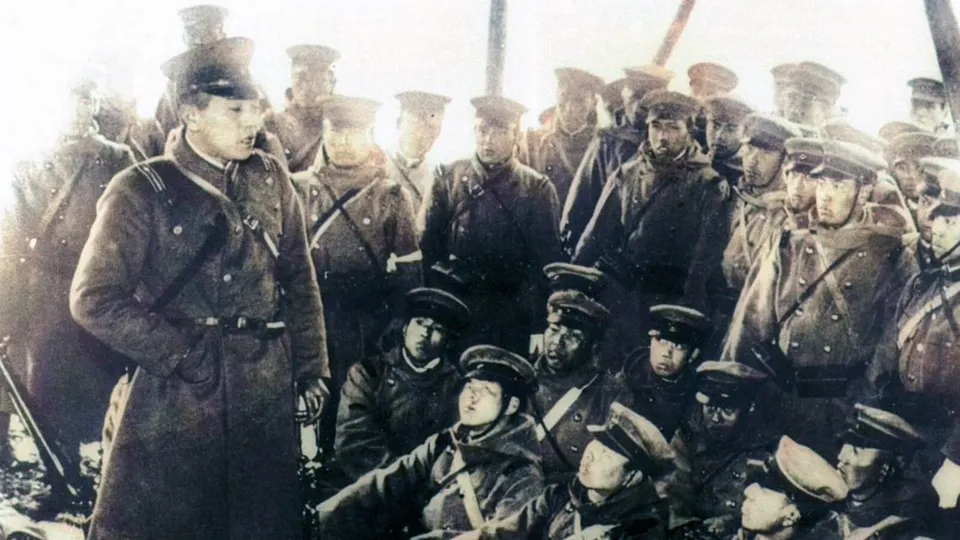
Unknown author · Public domain · Source
The army was split between the Imperial Way faction, which wanted national reconstruction under direct imperial rule, and the Control faction, which sought to build a total-war state together with bureaucrats and business. Before dawn on 26 February 1936, in snow-covered Tokyo, Imperial Way officers led troops to kill Finance Minister Takahashi Korekiyo, Lord Keeper of the Privy Seal Saitō Makoto and Inspector-General of Military Education Watanabe Jōtarō, and occupied the area around the prime minister’s residence and the Diet. Prime Minister Okada Keisuke narrowly escaped.
When Emperor Shōwa ordered the rebels crushed, the troops returned to barracks on the 29th, and the ringleaders were executed after closed courts-martial. But the Control faction then took charge of the army and restored the rule that service ministers must be officers on active duty, giving the military a hold over cabinets. That year Japan signed the Anti-Comintern Pact with Germany and greatly expanded its armaments, and the following year it launched the war with China.