The First Soviet Atomic Bomb
Also called: RDS-1, First Lightning
On 29 August 1949 the Soviet Union tested its first atomic bomb at Semipalatinsk in Kazakhstan. America’s nuclear monopoly ended after four years, and the nuclear arms race between the two powers began.
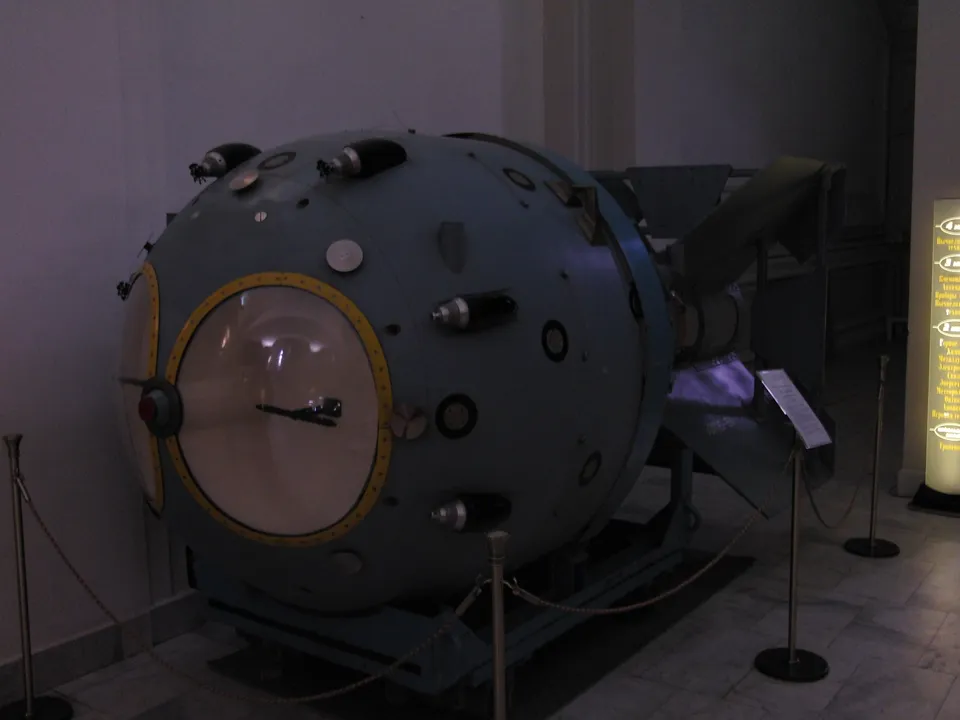
Mikhail (Vokabre) Shcherbakov · CC BY-SA 2.0 · Source
After Hiroshima Stalin ordered the bomb rushed, with the secret-police chief Beria in charge. Using design information stolen by spies inside the Manhattan Project such as Klaus Fuchs, Soviet scientists built RDS-1, a plutonium bomb almost identical to America’s Fat Man.
It exploded on the Semipalatinsk steppe on 29 August 1949, and the United States detected it in September from radioactive particles in the air. Shaken by a Soviet success years earlier than expected, the US decided the next year to build the hydrogen bomb; Oppenheimer, who opposed it, lost his security clearance in 1954. Some 450 more tests followed at Semipalatinsk until 1989, leaving its people with lasting harm.