Science4 October 1957
Launch of Sputnik 1
Also called: Sputnik crisis
The Soviet Union launched Sputnik 1, the world’s first artificial satellite. Shocked, the United States founded NASA, and the space race between the two powers began.
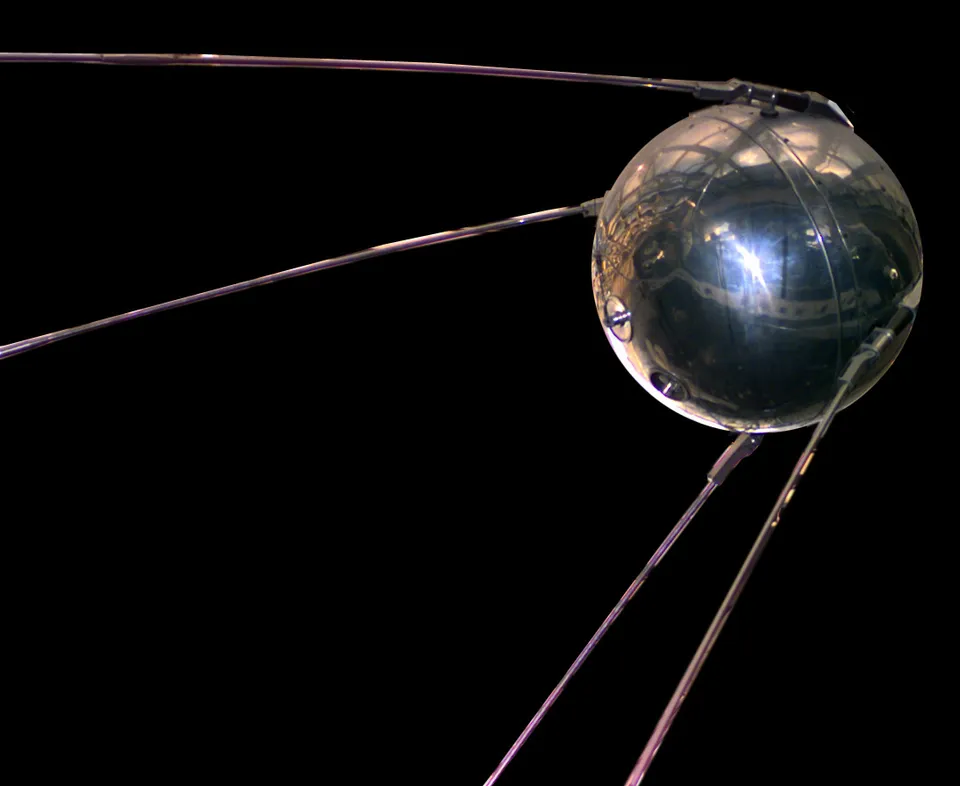
NSSDC, NASA [1] · Public domain · Source
On 4 October 1957 a rocket adapted from an intercontinental ballistic missile lifted a 58-centimetre sphere into orbit from Baikonur. The satellite circled the Earth sending signals for three months.
Because it also meant Soviet rockets could carry nuclear weapons to America, the launch caused great alarm (the “Sputnik crisis”). The United States founded NASA in 1958 and expanded science education. The Soviet Union sent Gagarin into space in 1961, and the US landed men on the Moon with Apollo 11 in 1969.