Politics17 July 1392(Lunar)

Founding of Joseon

Yi Seong-gye overthrew Goryeo and founded Joseon, moving the capital to Hanyang in 1394.
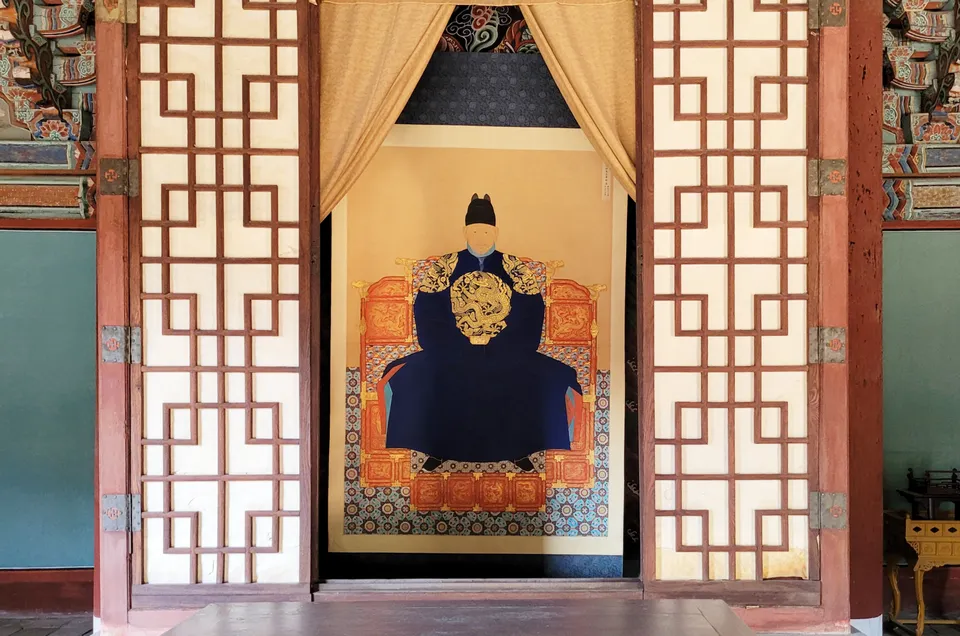
Portrait of King Taejo enshrined in the main hall of Gyeonggijeon, Jeonju

Bernard Gagnon · CC0 · Source

Yi Seong-gye was a rising military man who made his name fighting the Red Turbans and Japanese pirates (Battle of Hwangsan, 1380). Sent to attack Liaodong in 1388, he turned his army back at Wihwado, ousted Choe Yeong and took power. Allied with radical Neo-Confucian officials such as Jeong Do-jeon and Jo Jun, he enacted the Rank Land Law (gwajeon-beop) in 1391, destroying the economic base of the old aristocracy. When the moderate Jeong Mong-ju was killed by Yi Bang-won’s men at Seonjukgyo in 1392, organised opposition vanished.

In the seventh month that year King Gongyang was made to step down, and Yi, acclaimed by Bae Geuk-ryeom and other ministers, took the throne at Suchang Palace in Gaegyeong. At first he kept the name "Goryeo". He offered Ming two names, "Joseon" and "Hwaryeong", and "Joseon" was adopted in 1393, claiming the legacy of Gojoseon. The new state took Neo-Confucianism as its ruling ideology, favouring Confucianism over Buddhism, agriculture over commerce, and "serving the great (Ming) and befriending neighbours" in foreign policy.

The map in 1392

OpenFreeMap © OpenMapTiles © OpenStreetMap contributors

States and rulers at the time
Goryeo · fell — King Gongyang
Joseon · founded — Taejo

People

  • Taejo (Yi Seong-gye)1335 – 1408

    leader · Founder and first king of Joseon, formerly a general who fought Japanese pirates and the Red Turbans

  • Jeong Do-jeon1342 – 1398

    participant · Neo-Confucian architect of the new dynasty who named the palace and capital gates; killed in the First Strife of Princes

  • Taejong (Yi Bang-won)1367 – 1422

    participant · Third king of Joseon, who seized power in the Strifes of Princes and strengthened royal authority

Before and after

Related works

Dramatized works (films, dramas, novels) may differ from the historical record.

Themes that include this event

  • Song, Ming and Samurai JapanAD 960 – 1500

    The age when the civil-minded Song bought peace from Liao, Western Xia and Jin while the lower Yangtze boomed and Neo-Confucianism took shape, and the Ming, having driven out the Yuan, rebuilt the East Asian order through imperial autocracy, the sea ban and tribute — as Japan passed through the Kamakura and Muromachi warrior governments into the Warring States era, and Korea from Goryeo to Joseon

  • GaeseongAD 901 – 2003

    From Wang Geon, lord of Songak, to the Kaesong Industrial Complex — Gaegyeong, Goryeo’s capital for five centuries, and home of the Song merchants
