Emperor Guangwu Founds the Later Han
Also called: Eastern Han, Later Han
Liu Xiu (Emperor Guangwu), a descendant of the Han house, ended the turmoil after Xin, took the throne and restored the Han with its capital at Luoyang (the Later or Eastern Han).
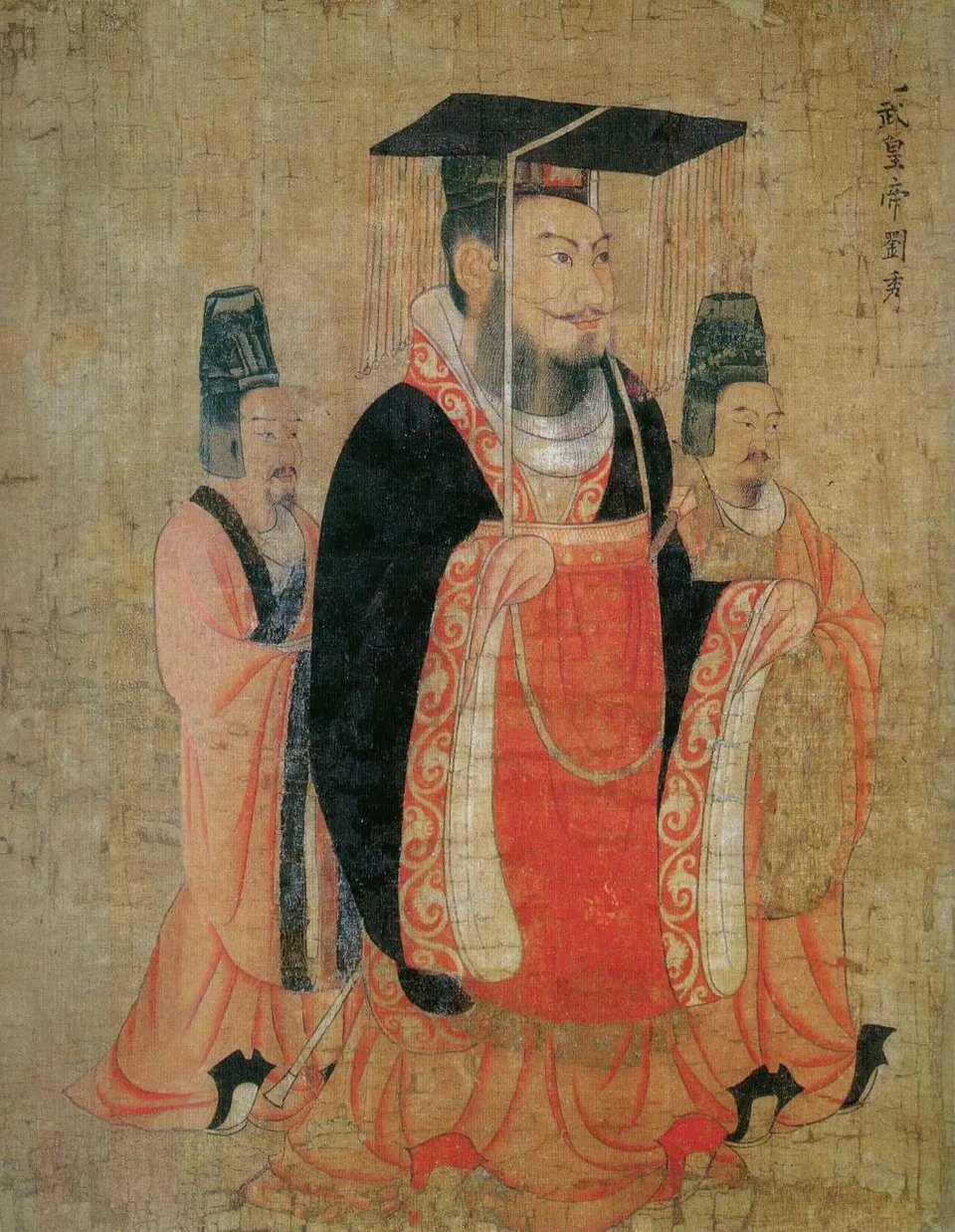
Yan Li-pen · Public domain · Source
In the chaos at the end of Xin, Liu Xiu — a distant descendant of the Han royal house and a magnate of Nanyang — won fame by routing Wang Mang’s great army at Kunyang in 23. In 25 he took the throne as Emperor Guangwu and restored the Han with its capital at Luoyang; this is called the Later (Eastern) Han, and the earlier period the Former (Western) Han. By 36 he had subdued his rivals and reunited the realm; he freed slaves, cut taxes and promoted Confucian learning. Because the Later Han rested on the support of the great families, the magnates remained powerful.
When Goguryeo sent envoys in 32, Guangwu restored the title of "king" to its ruler, and in 57 he gave a gold seal to an envoy of the Na state of Wa (the "King of Na of Wa of Han" seal). From the 2nd century consort families and eunuchs took turns in power, and the Proscriptions of the Partisans crushed officials and scholars; government collapsed, and after the Yellow Turban Rebellion of 184 the dynasty ended in 220.