Founding of the Society of Jesus
Also called: Jesuits, Society of Jesus
In 1540 Pope Paul III approved Ignatius of Loyola’s Society of Jesus, which through education and overseas missions became the spearhead of the Catholic Reformation (Counter-Reformation).
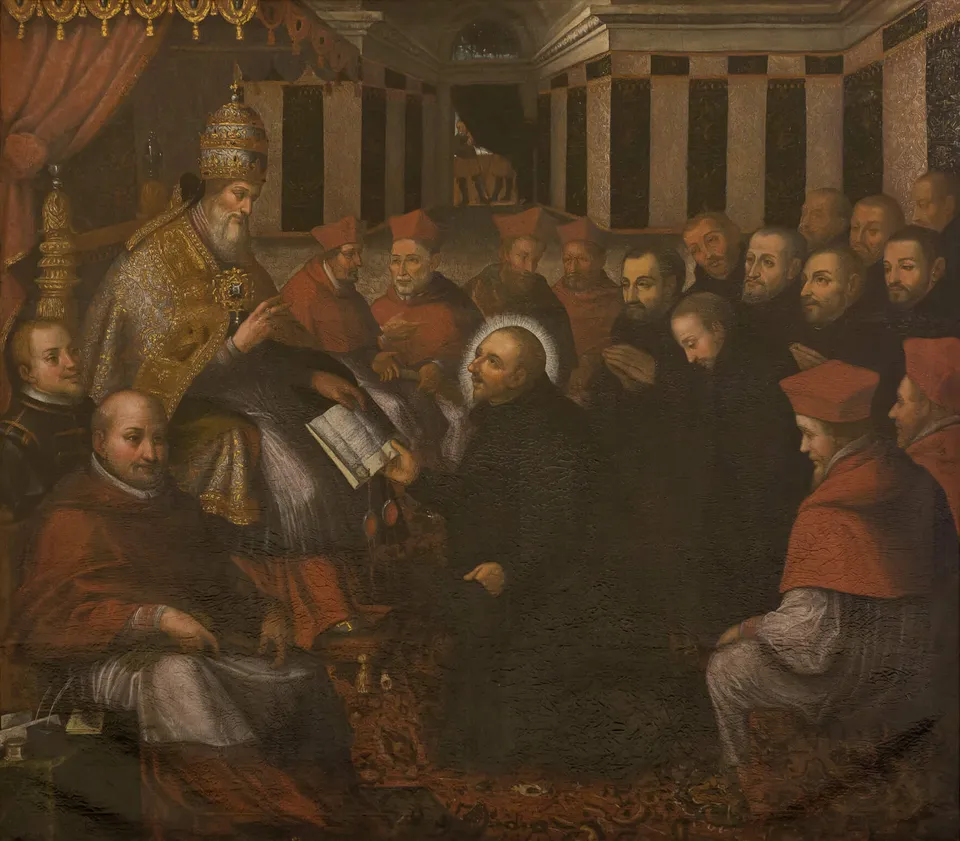
Domingos da Cunha · Public domain · Source
Ignatius of Loyola, a Spaniard whose soldiering ended with a wound, wrote the Spiritual Exercises and in 1534 in Paris took vows of poverty and chastity with companions including Francis Xavier. Approved by a bull of Paul III on 27 September 1540, the Jesuits swore special obedience to the pope and kept a discipline as strict as an army’s.
The Jesuits founded schools across Europe to win back lands lost to Protestantism and sent missionaries to Asia and the Americas along the new sea routes. Xavier brought Christianity to Japan in 1549, and Matteo Ricci published The True Meaning of the Lord of Heaven in Ming China. That book, noted in Yi Su-gwang’s Jibong yuseol (1614), became a starting point of Western Learning (seohak) in Joseon.