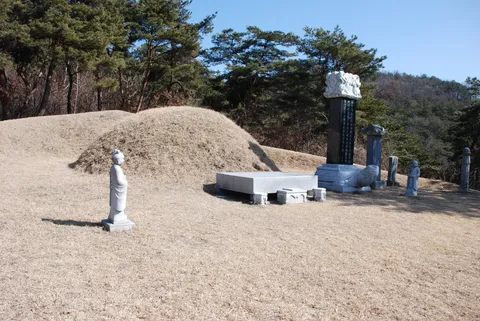
Four Commanderies and Six Garrisons
Choe Yun-deok set up four commanderies on the upper Yalu and Kim Jong-seo six garrisons on the lower Tumen, laying the basis of Korea's northern border.
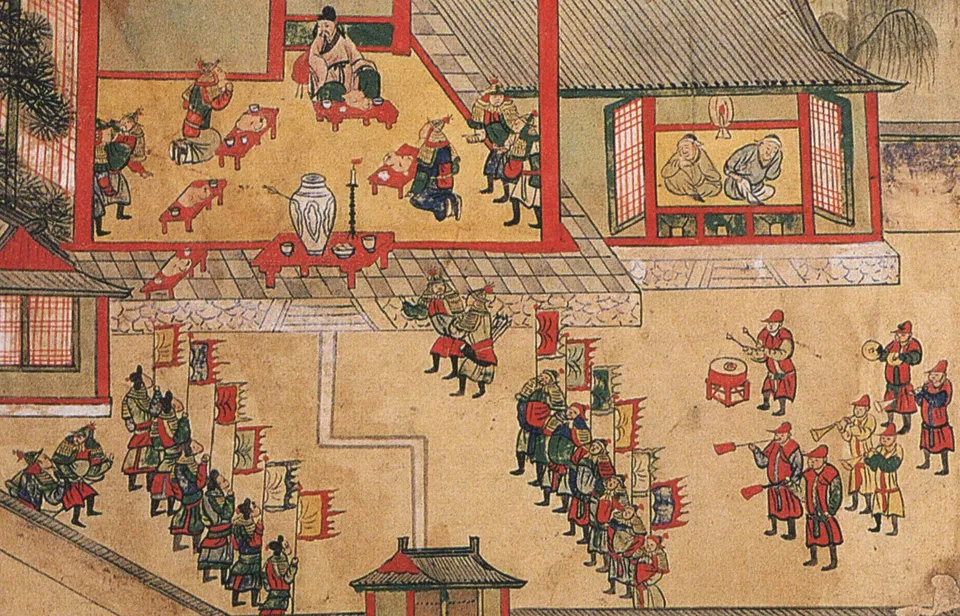
Unknown author · Public domain · Source
Jurchens living along the Yalu and Tumen often crossed the border to raid. Sejong pursued a northern policy to drive them out and extend Joseon territory.
In 1433 Choe Yun-deok campaigned against the Jurchens along the Pajeo, a tributary of the Yalu, and four commanderies were set up at Yeoyeon, Jaseong, Muchang and Uye. From 1434 Kim Jong-seo built six garrisons on the lower Tumen at Jongseong, Onseong, Hoeryeong, Gyeongwon, Gyeongheung and Buryeong. This fixed, almost exactly, the Yalu–Tumen border of today.
Joseon resettled people from the three southern provinces in the north (samin policy) and appointed local men as officials there (the tokwan system). It also courted the Jurchens, allowing trade at border markets and at the Bukpyeonggwan in Hanyang and granting office and land to those who submitted. The four commanderies proved hard to hold, however, and were abandoned under Danjong and Sejo.