1936 Garmisch-Partenkirchen Winter Olympics
Also called: IV Olympic Winter Games, 1936 Winter Olympics
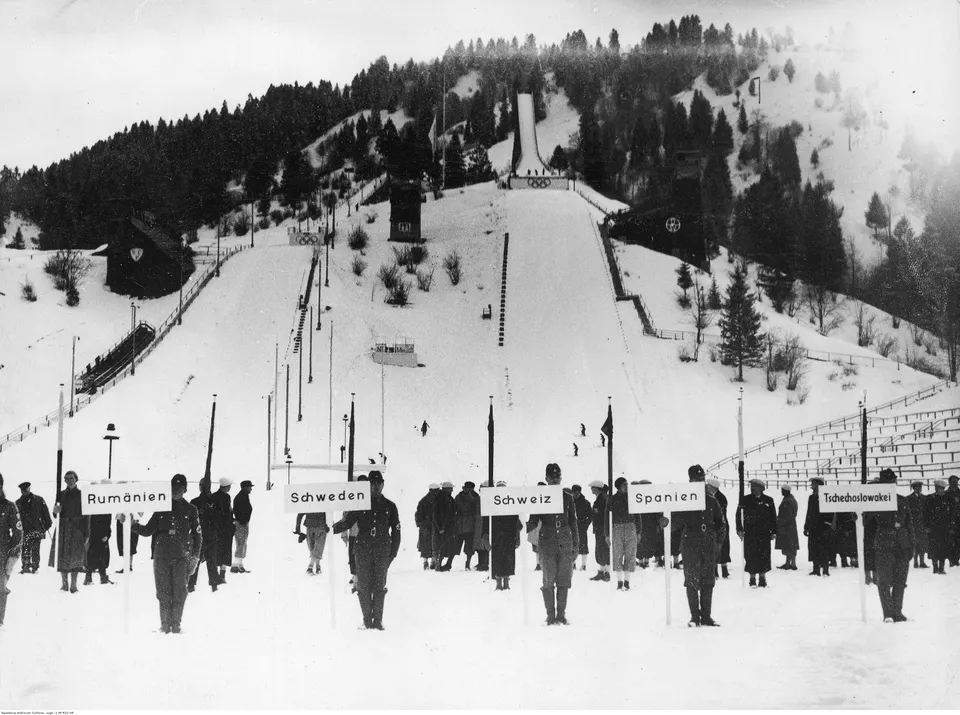
Nazi Germany held the Winter Olympics at Garmisch-Partenkirchen in the Bavarian Alps; Hitler opened the Games, and Alpine skiing became an Olympic event for the first time.
Unknown author · Public domain · Source
Ahead of the Berlin Summer Olympics that year, Germany merged the villages of Garmisch and Partenkirchen to host the Winter Games from 6 to 16 February. Some 640 athletes from 28 nations took part, and Hitler declared the Games open. Mindful of world opinion, and at the insistence of IOC president Baillet-Latour, the Nazi government removed anti-Jewish signs from the streets during the Games and recalled the Jewish ice-hockey player Rudi Ball to the German team.
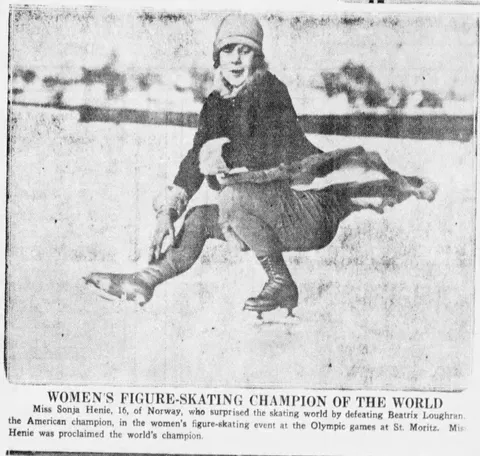
Alpine skiing (men’s and women’s combined) made its debut, but because ski instructors were ruled professionals, the Swiss and Austrian Alpine skiers stayed away. Norway topped the medal table and Sonja Henie won her third straight figure-skating title. In ice hockey Great Britain beat Canada to take the gold.
Korean athletes under Japanese colonial rule competed for Japan: Kim Jeong-yeon, Lee Seong-deok and Jang U-sik skated in speed skating, Kim finishing 13th in the 10,000 m. The next Games, moved from Sapporo to Garmisch-Partenkirchen for 1940, were cancelled because of the Second World War, and the 1944 Games at Cortina d’Ampezzo were never held.