Winter Olympics
From the “International Winter Sports Week” at Chamonix to PyeongChang and Milano Cortina — a century on snow and ice, with Korea’s first appearance and first gold
Unknown author · Public domain · Source
From the “International Winter Sports Week” at Chamonix to PyeongChang and Milano Cortina — a century on snow and ice, with Korea’s first appearance and first gold

Unknown author · Public domain · Source
| Year | Host | Highlights | Korea |
|---|---|---|---|
| 1924 | Chamonix (France) | First Winter Games (recognized in 1925) | — |
| 1936 | Garmisch-Partenkirchen (Germany) | Nazi Germany; Alpine skiing debuts | Kim Jeong-yeon and others skate for Japan |
| 1948 | St. Moritz (Switzerland) | First post-war Games; Germany and Japan excluded | First appearance — “KOREA” and the Taegukgi |
| 1964 | Innsbruck (Austria) | Luge debuts | North Korea’s Han Pil-hwa silver — first Korean Winter medal |
| 1980 | Lake Placid (USA) | Miracle on Ice; Heiden’s five golds | — |
| 1992 | Albertville (France) | Last in the same year as the Summer Games; short track added | Kim Yoon-man first medal, Kim Ki-hoon first gold |
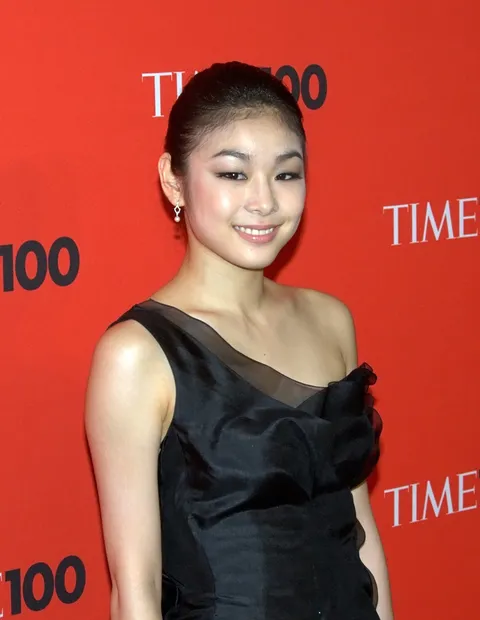
| 2010 | Vancouver (Canada) | Canada wins 14 golds | Kim Yu-na gold; 5th overall |
| 2018 | PyeongChang (South Korea) | Joint Korean march and unified team | First home Winter Games; 7th overall |
| 2022 | Beijing (China) | Diplomatic boycott; COVID-19 closed loop | Two golds (short track) |
| 2026 | Milan–Cortina d’Ampezzo (Italy) | First Games co-hosted by two cities | Choi Ga-on, first snowboard gold |
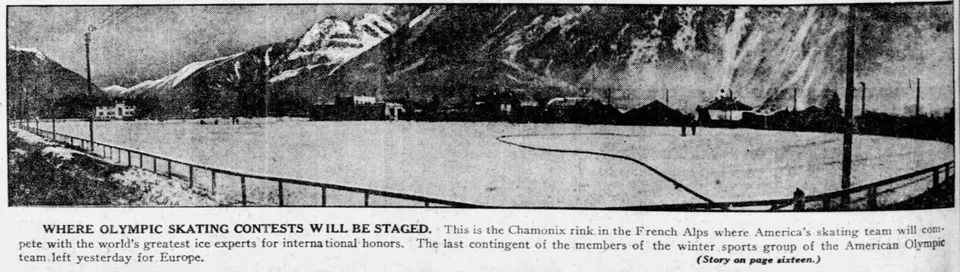
An “International Winter Sports Week” was held at Chamonix, France; the following year the International Olympic Committee (IOC) recognized it as the first Winter Olympic Games.
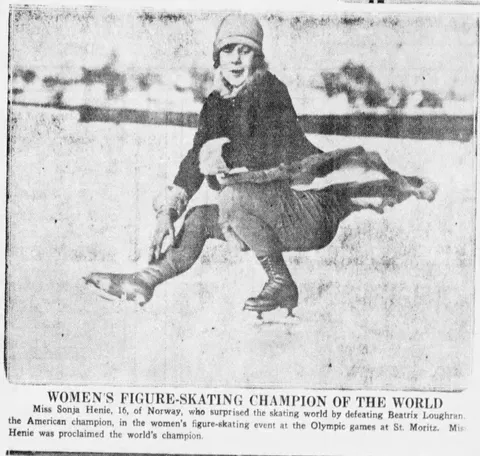
The Swiss Alpine resort of St. Moritz hosted the first Games planned from the outset as Winter Olympics; 15-year-old Sonja Henie won the figure-skating title.
The small town of Lake Placid in New York State hosted the first Winter Olympics outside Europe; with the Depression and the long sea voyage, only 17 nations came.
Nazi Germany held the Winter Olympics at Garmisch-Partenkirchen in the Bavarian Alps; Hitler opened the Games, and Alpine skiing became an Olympic event for the first time.
Twelve years after war had interrupted them, the Winter Olympics resumed at St. Moritz in neutral Switzerland; Korea made its first Olympic appearance under the name “KOREA” and the Taegukgi flag.
Oslo, capital of the skiing nation of Norway, hosted the first Winter Olympics in Scandinavia, with the first torch relay of the Winter Games.
Games at Cortina d’Ampezzo in the Italian Dolomites, where the Soviet Union competed for the first time and went straight to the top of the medal table.
Games at Squaw Valley in California’s Sierra Nevada, with the first athletes’ village and the first use of a computer to process results.
Games at Innsbruck in the Austrian Tyrol, where North Korea made its Olympic debut and Han Pil-hwa won a speed-skating silver, the first Winter Olympic medal for a Korean.
Games at Grenoble in the French Alps, where Jean-Claude Killy won all three Alpine events and doping tests were held at the Winter Games for the first time.
Sapporo in Hokkaido, Japan, hosted the first Winter Olympics in Asia; Japan swept gold, silver and bronze in the normal-hill ski jump.
When Denver, USA, gave up the Games, Innsbruck hosted the Winter Olympics again after twelve years.
Lake Placid’s second Winter Olympics, remembered for the “Miracle on Ice”, in which a US ice-hockey team of mostly college players beat the mighty Soviet Union at the height of the Cold War.
Sarajevo in Yugoslavia hosted the first Winter Olympics in a socialist country; eight years later its venues were wrecked in the Bosnian War.
Canada’s first Winter Olympics, at Calgary, Alberta — the first to last sixteen days and the first with indoor speed skating.
The last Winter Olympics held in the same year as the Summer Games; short track became an Olympic sport and Kim Ki-hoon won South Korea’s first Winter Olympic gold.
The first Winter Olympics held two years after the last, out of step with the Summer Games; Lillehammer, Norway, became known for its environmentally minded Games.
Games at Nagano, Japan, the first with more than 2,000 athletes, at which snowboarding, curling and women’s ice hockey became Olympic sports.
Games held under tight security in Salt Lake City, Utah, five months after the 9/11 attacks, shadowed by a bidding bribery scandal and judging controversies.
Games at Turin, Italy, where short-track skaters Ahn Hyun-soo and Jin Sun-yu each won three golds.
Games at Vancouver, Canada, where Kim Yu-na won the women’s figure skating with a world-record score.
Russia’s first Winter Olympics, at Sochi on the Black Sea coast; state-directed doping later came to light and Russia was stripped of many medals.
South Korea’s second Olympics, thirty years after Seoul, and its first Winter Games. The two Koreas marched together and fielded a joint women’s ice-hockey team, and a visit by a high-level North Korean delegation led on to inter-Korean summits.
Beijing became the first city to host both the Summer (2008) and Winter Olympics; the United States and others staged a diplomatic boycott over human rights in Xinjiang, and the Games were held sealed off from the outside world amid COVID-19.
The first Olympics co-hosted by two cities, with venues spread across northern Italy from Milan to Cortina d’Ampezzo; ski mountaineering made its Olympic debut.

Norwegian figure skater who won three successive Olympic titles in women’s singles (1928, 1932, 1936) and then became a Hollywood film star in the United States

South Korean figure skater who won the women’s singles at the 2010 Vancouver Winter Olympics with a world-record score, Korea’s first Olympic figure-skating medal, and took silver at Sochi in 2014; she lit the cauldron at the 2018 PyeongChang opening ceremony
South Korean short-track speed skater who won Korea’s first Winter Olympic gold in the 1000 m at Albertville in 1992 and retained the title at Lillehammer in 1994
Nazi leader and Führer of Germany (1934–1945) who started the Second World War and perpetrated the Holocaust; he killed himself as Berlin fell
19th President (2017–2022). Held three inter-Korean summits in 2018, beginning at Panmunjom
Son of Kim Jong Il and leader of North Korea since 2011; his birth year is unconfirmed