The Gosforth Cross
Also called: Gosforth Viking cross
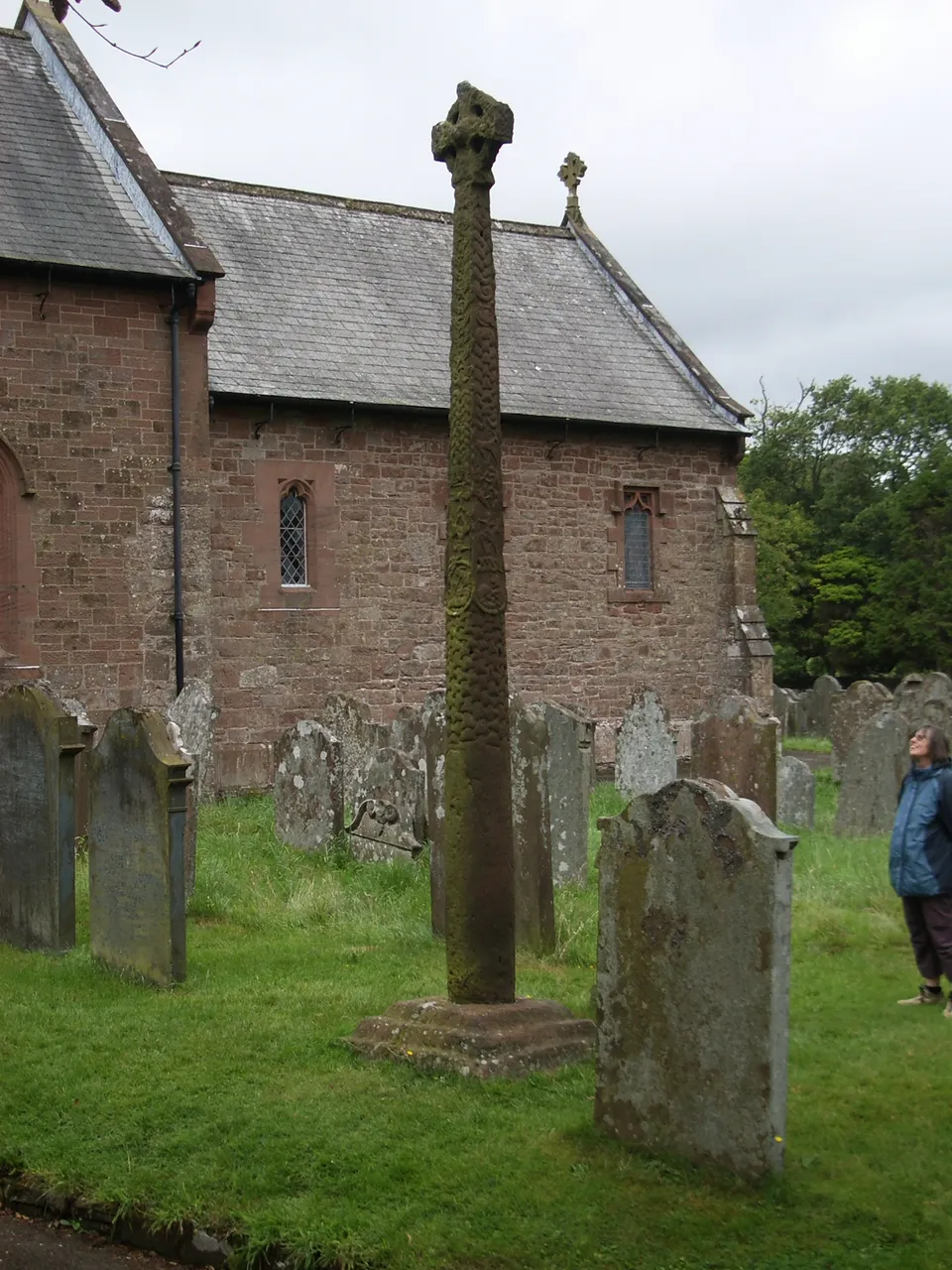
In the first half of the 10th century a stone cross 4.4 m tall was raised at Gosforth in Cumbria, north-west England. Alongside the Crucifixion it bears scenes read as Ragnarök — Loki bound, Víðarr tearing the wolf’s jaws, Heimdall with his horn — showing where pagan myth and Christianity met among Viking settlers.
English Lakes (English Wikipedia) · Public domain · Source
The Gosforth Cross is a red sandstone cross about 4.4 m tall still standing in its original place in the churchyard of St Mary’s, Gosforth, Cumbria. It is thought to have been raised around 920–950 by Norse (Viking) settlers who had come across the Irish Sea. Its lower shaft is round like a tree trunk, and it is crowned by a ring-headed cross.
All four sides are densely carved with beasts and figures. One side shows the Crucifixion with Christ pierced by a spear; the others bear scenes read as Norse myth — a man setting one foot on a wolf’s lower jaw and tearing its upper jaw (Víðarr killing Fenrir), a man holding a horn (Heimdall), and a woman with a bowl beside a bound figure (Loki and Sigyn). Inside the church is another carved stone showing Thor’s fishing trip.
Setting Ragnarök — the fall of the old world and the coming of a new one — beside the victory of Christ is often read as a way of explaining the new faith to converting settlers through familiar stories, though individual scenes are interpreted differently. The carvings predate the 13th-century Icelandic records by nearly three centuries, showing that the Ragnarök story already existed in the Viking Age.