Greater East Asia Co-Prosperity Sphere
Also called: New Order in East Asia, Greater East Asia Conference
In 1940 Japan proclaimed a Greater East Asia Co-Prosperity Sphere binding Japan, Manchukuo, China and Southeast Asia, claiming to liberate Asia from Western imperialism; in reality it was a slogan for conquest and domination to secure resources for war.
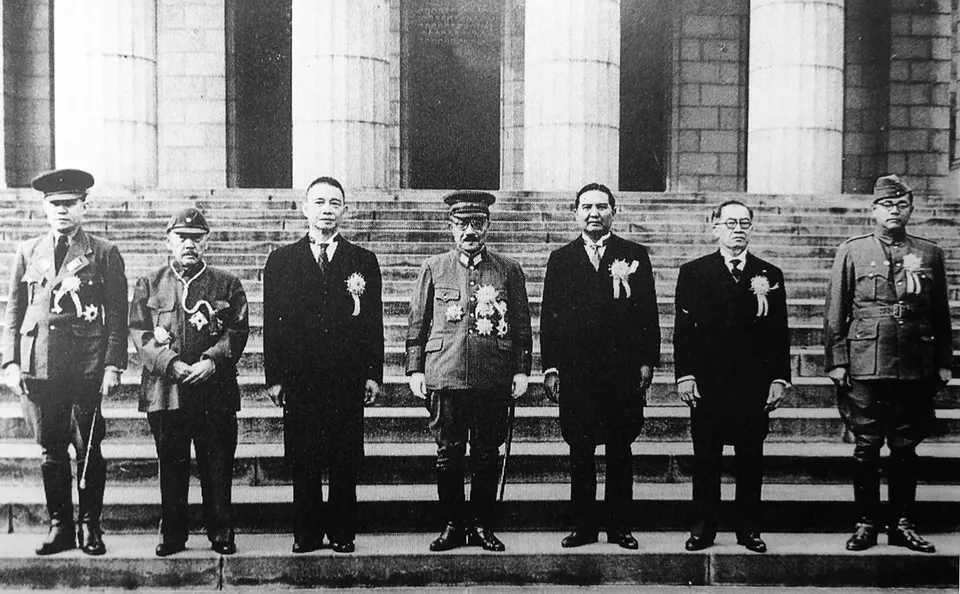
Unknown author · Public domain · Source
As the war in China dragged on, the Konoe cabinet in 1938 put forward a “New Order in East Asia” linking Japan, Manchukuo and China, and in August 1940 Foreign Minister Matsuoka Yōsuke announced a “Greater East Asia Co-Prosperity Sphere” extending it to Southeast Asia. After Germany defeated France and the Netherlands, Japan moved into northern French Indochina in September and signed the Tripartite Pact with Germany and Italy; the United States responded with an oil embargo.
Having started the Pacific War in December 1941, Japan occupied the Philippines, Malaya, Indonesia and Burma, and in November 1943 hosted the Greater East Asia Conference in Tokyo with representatives of Manchukuo, the Wang Jingwei regime, Thailand, the Philippines and Burma. In the occupied lands, however, it seized oil, rubber and rice, conscripted people as labourers, and imposed the Japanese language and shrine worship. In Korea and Taiwan the same logic drove the imperial-subject policies, forced labour and conscription. The slogan vanished with Japan’s defeat in 1945.