Stone Standing Maitreya Bodhisattva of Gwanchoksa, Nonsan
Also called: Eunjin Maitreya
A colossal stone figure over 18 m tall, begun under King Gwangjong in 968 and finished in 1006. Called the "Eunjin Maitreya", it typifies the distinctive regional sculpture of early Goryeo.
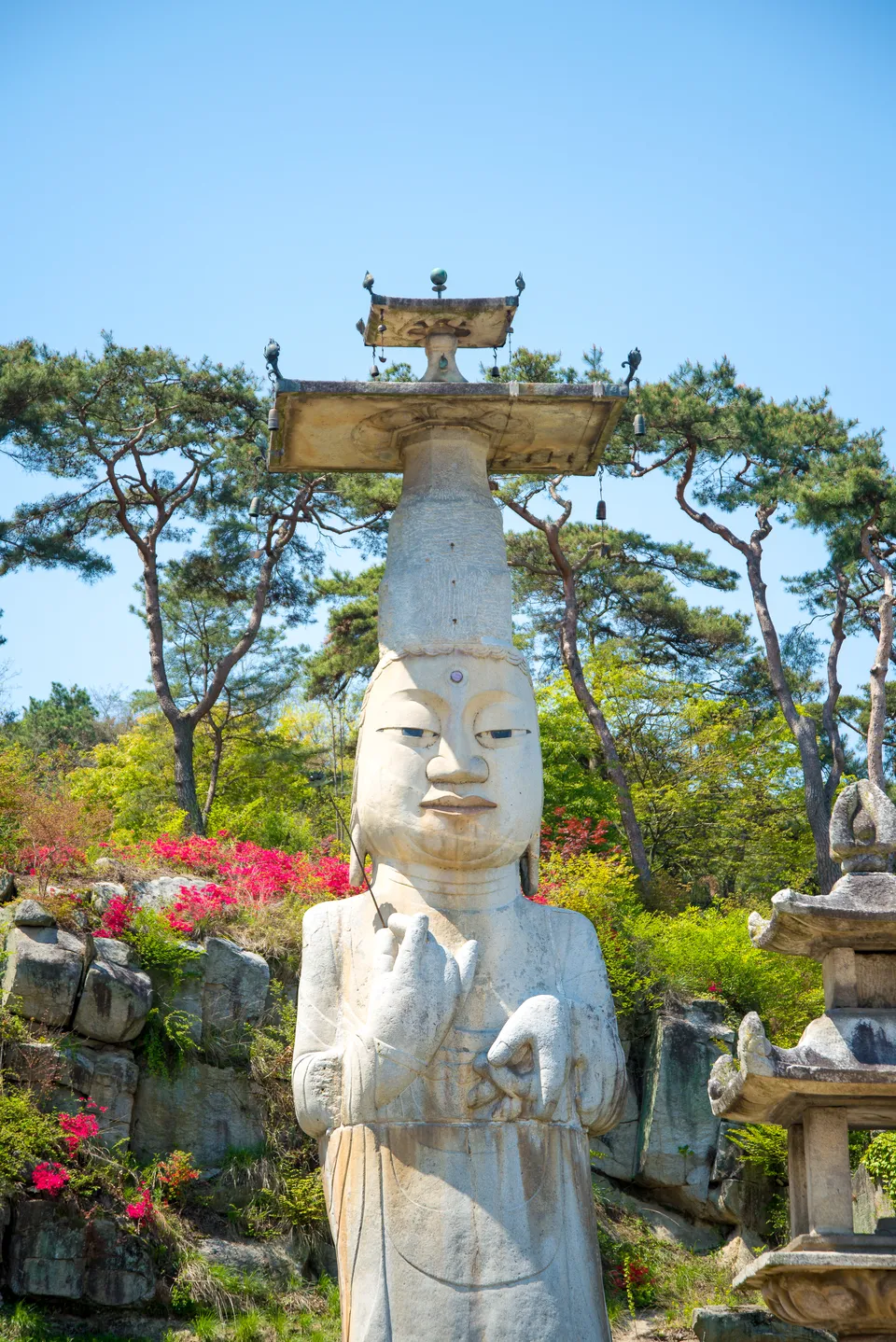
Kwkhh · CC BY-SA 4.0 · Source
Tradition says the monk Hyemyeong began it in 968, the 19th year of King Gwangjong, and finished it in 1006, the 9th year of King Mokjong. At over 18 m it is the largest stone Buddhist statue in Korea, and is called the "Eunjin Maitreya" after the old county of Eunjin. It was built up from several great blocks of stone for the body and head.
The head and tall crown are far too big for the body, and the broad face has oversized eyes, nose and mouth — lacking balance but overwhelming in force. Breaking with the refined proportions of Unified Silla, it is the leading example of the colossal statues that expressed the power and regional character of early Goryeo’s local magnates, alongside the rock-carved Buddhas of Icheon-dong in Andong and Yongmi-ri in Paju. It was raised from Treasure to National Treasure in 2018.