Hahoe Village, Andong and Yangdong Village, Gyeongju
Also called: Hahoe Village, Yangdong Village
Yangban clan villages founded in early Joseon. With their geomantic sites and surviving yangban and thatched houses, they became a World Heritage Site in 2010 as the "Historic Villages of Korea".
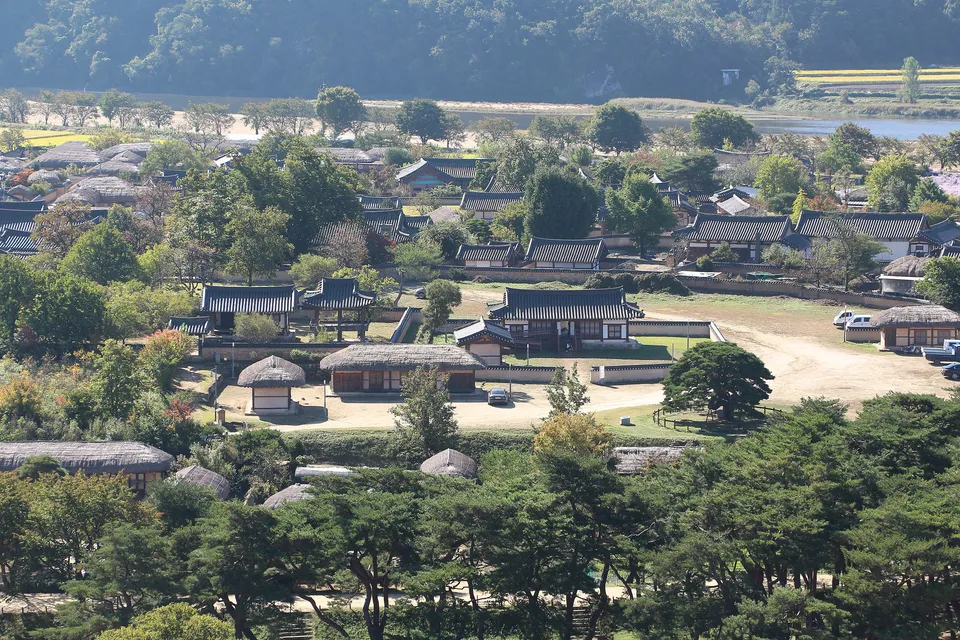
Hahoe is the village of the Pungsan Ryu clan, and Yangdong of the Gyeongju Son and Yeogang (Yeoju) Yi clans; both single-clan villages took shape in early Joseon, in the 15th and 16th centuries. Their sites follow geomantic principles, with hills behind and water in front, and the tiled houses of the head family and other yangban sit at the centre with the thatched houses of their dependants around them, so the social order can be read in the layout. Shrines, pavilions, seowon and village schools survive together, showing a yangban culture rooted in Neo-Confucianism.
Hahoe takes its name from the Nakdong River curving around the village in an S shape. It is the home of the brothers Ryu Un-ryong and Ryu Seong-ryong, with the Yangjindang and Chunghyodang houses, and Byeongsan Seowon, which honours Ryu Seong-ryong, is nearby. The Hahoe Byeolsingut mask play and the Hahoe masks (a National Treasure) are famous. Yangdong is the birthplace of Son Jung-don and Yi Eon-jeok, with Gwangajeong, Hyangdan and Mucheomdang, and Oksan Seowon, honouring Yi Eon-jeok, is nearby.
The two villages were inscribed together as a UNESCO World Heritage Site in 2010 as "Historic Villages of Korea: Hahoe and Yangdong".