Iron Seated Sakyamuni Buddha from Hasachang-dong, Hanam
Also called: Hasachang-dong Iron Buddha
An early Goryeo iron Buddha some 2.8 m tall from a temple site in Hanam. It follows the style of the Seokguram Buddha and represents the iron Buddhas popular from late Silla into early Goryeo.
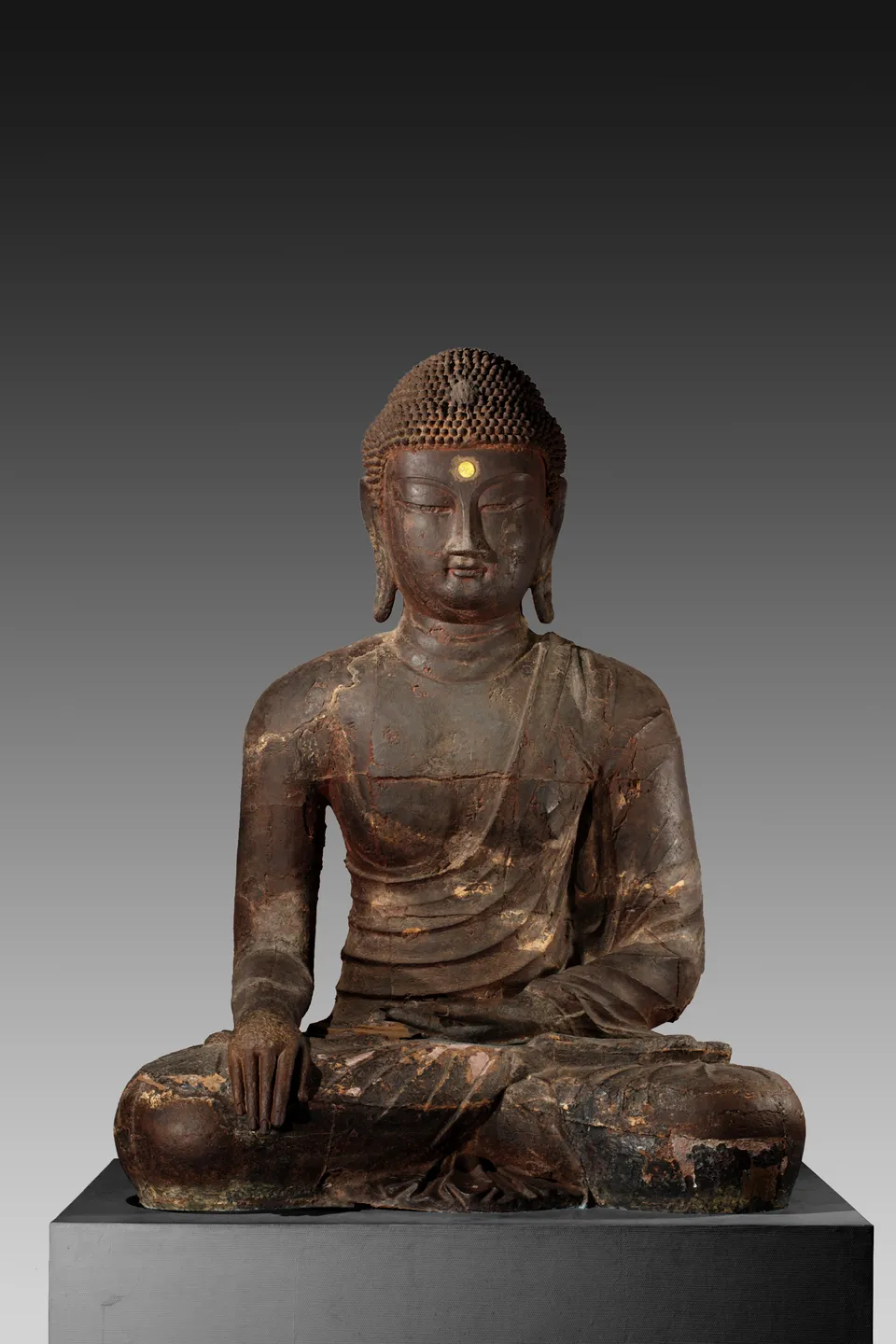
Korea Heritage Service / National Museum of Korea · CC BY-SA 4.0 · Source
This iron Buddha stood at a temple site in Hasachang-dong, Hanam, Gyeonggi Province, and is now in the National Museum of Korea. At about 2.8 m it is the largest iron Buddha to survive. The earth-touching gesture of the right hand reaching below the knee, the robe covering one shoulder and the imposing body recall the main Buddha of Seokguram, so it is dated to early Goryeo (10th century), carrying on the Unified Silla style.
Casting Buddhas in iron was in fashion from late Silla into early Goryeo. Iron was easier to obtain than copper, and Seon monasteries and the local magnates who backed them made many iron Buddhas. Those of Borimsa in Jangheung and Silsangsa in Namwon are late Silla examples, and this statue shows the trend continuing into early Goryeo. It is a Treasure.