The Holocaust
Also called: Shoah
Nazi Germany systematically murdered about six million European Jews; Roma, disabled people, prisoners of war and others were also victims.
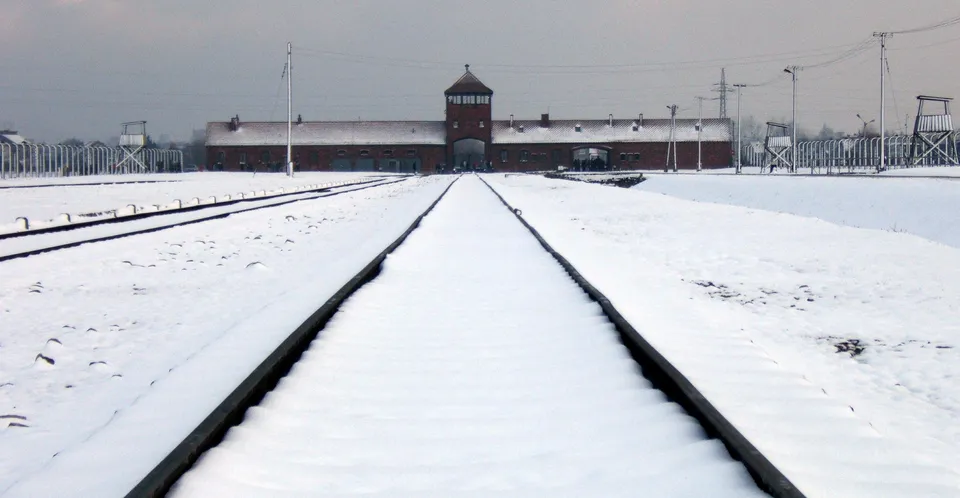
Logaritmo · Public domain · Source
After taking power in 1933 the Nazis stripped Jews of citizenship (the Nuremberg Laws, 1935) and persecuted them. Once the war began, Jews in occupied Eastern Europe were confined to ghettos, and with the invasion of the Soviet Union in 1941 mobile killing units (Einsatzgruppen) carried out mass shootings.
At the Wannsee Conference in January 1942 officials coordinated the “Final Solution”, the murder of all European Jews. Vast numbers died in the gas chambers of extermination camps such as Auschwitz-Birkenau and Treblinka. Soviet troops liberated Auschwitz on 27 January 1945, now International Holocaust Remembrance Day. The Nuremberg trials followed, and in 1948 the UN adopted the Genocide Convention.