The Huang Chao Rebellion
Also called: Rebellion of Huang Chao
The peasant revolt launched in 875 by the salt smuggler Huang Chao swept across China; it took Chang’an in 880 and was put down in 884, but it effectively destroyed the Tang.
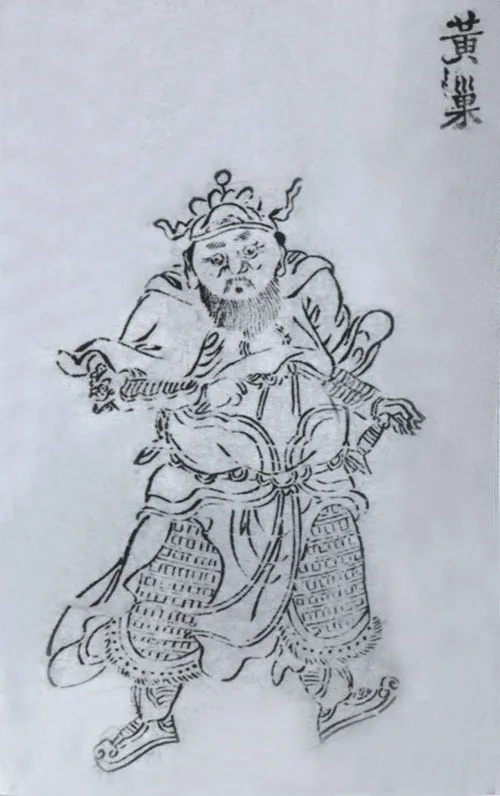
Unknown author · Public domain · Source
In the late Tang the salt monopoly drove prices sky-high, and with bad harvests and heavy taxes peasants took to the roads. Wang Xianzhi rose in 874 and the salt smuggler Huang Chao joined him the next year. The rebels swept from north China to the Yangtze lands and down to Guangzhou, growing as they went, and in 880 took Luoyang and then Chang’an, where Huang Chao proclaimed himself emperor of Qi. Choe Chi-won of Silla, who had passed the Tang examination for foreigners and was serving as an official, won fame with his “Proclamation against Huang Chao”.
Pressed by the Shatuo Turk Li Keyong and by Zhu Wen (Zhu Quanzhong), who had defected from the rebels, the rebels were driven out of Chang’an in 883 and Huang Chao died in 884. The revolt was over, but the court had lost its power and the governors who had suppressed it divided the country among themselves; the great aristocratic families, too, were broken.