Hundred Flowers and the Anti-Rightist Campaign
Also called: Hundred Flowers Campaign, Anti-Rightist Movement, Anti-Rightist Campaign
In spring 1957 the Communist Party invited intellectuals to criticise it under the slogan “Let a hundred flowers bloom, let a hundred schools of thought contend”. When criticism grew fierce it turned in June to an Anti-Rightist Campaign in which, by official count, over 550,000 people were labelled “rightists” and lost their jobs or were sent to labour camps.
In May 1956 Mao Zedong proclaimed the policy of “letting a hundred flowers bloom and a hundred schools of thought contend”. After his February 1957 speech “On the Correct Handling of Contradictions among the People”, the party announced at the end of April a rectification campaign against its own bureaucratism, sectarianism and subjectivism and welcomed criticism from outside. From May leaders of the minor democratic parties, professors and students poured out criticism, and a “Democracy Wall” of big-character posters appeared at Peking University. Some critics went as far as questioning one-party rule itself.
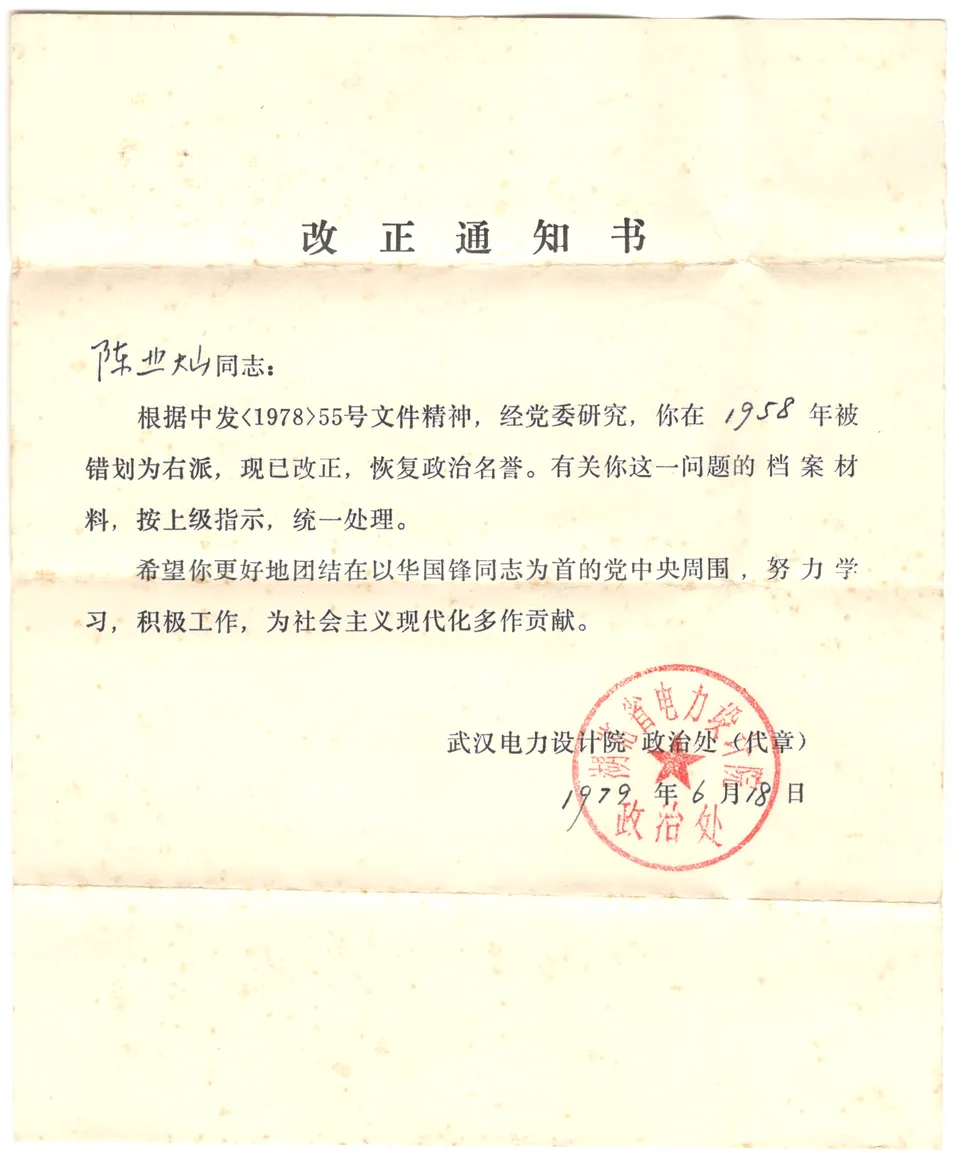
A People’s Daily editorial on 8 June, “What Is This For?”, signalled the start of the Anti-Rightist Campaign. In this campaign, run day to day by the party’s General Secretary Deng Xiaoping, 552,877 people were officially classed as “rightists” (some studies argue the real number was higher), and many lost official and teaching posts and were sent to re-education-through-labour camps and frontier farms.
Afterwards intellectuals fell silent, which is often cited as one reason why few dared to question the unrealistic targets of the Great Leap Forward the following year. Most rightist verdicts were reversed in 1978–1980, though a handful, such as Zhang Bojun and Luo Longji, were never rehabilitated.