Indonesian Nationalist Party and the Youth Pledge
Also called: Youth Pledge, Sumpah Pemuda, PNI
Sukarno founded the Indonesian Nationalist Party in Bandung, calling for non-cooperation with the Dutch and full independence. The next year a youth congress pledged "one motherland, one nation, one language".
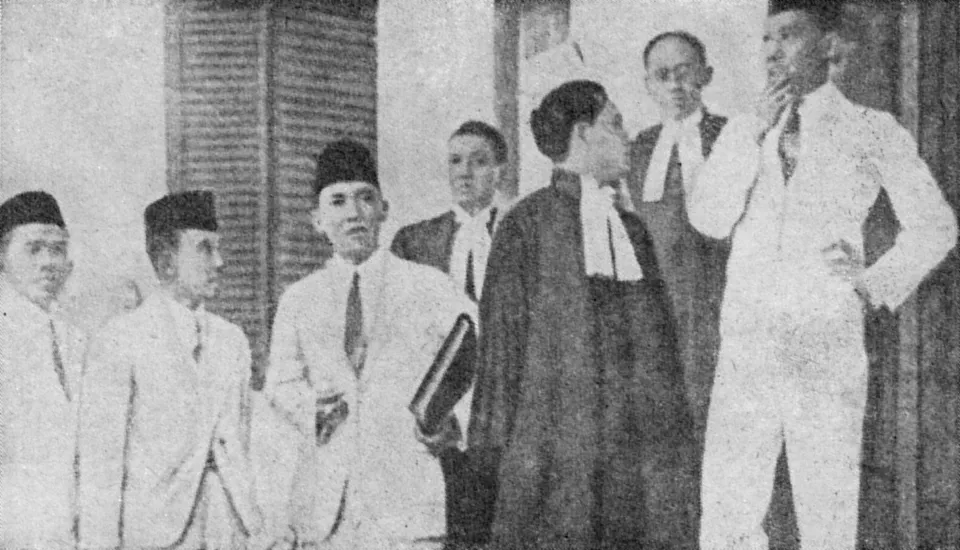
Uncredited · Public domain · Source
In the Dutch East Indies the national movement began in the early twentieth century with Budi Utomo (1908) and Sarekat Islam (1912), while a rising by the Communist Party founded in 1920 was crushed in 1926–1927. On 4 July 1927 Sukarno, a graduate of the Bandung technical college, founded the Indonesian Nationalist Party (PNI), calling for independence through a mass movement that refused to cooperate with the Dutch.
On 28 October 1928 the Second Youth Congress in Batavia (now Jakarta) brought together young people from many islands and peoples to pledge one motherland, Indonesia; one nation; and one language, Indonesian (the Youth Pledge). "Indonesia Raya", later the national anthem, was first played there. Sukarno was arrested in 1929, indicted colonial rule from the dock and then spent years in exile. After the Japanese occupation he and Hatta proclaimed independence on 17 August 1945, and after a war with the Netherlands independence was recognized in 1949.