Politics1793

Jeongjo’s Jangyongyeong Guard

Jeongjo created the Jangyongyeong royal guard with an inner garrison in the capital and an outer one at Hwaseong in Suwon; through the chogye munsin system he retrained young officials.
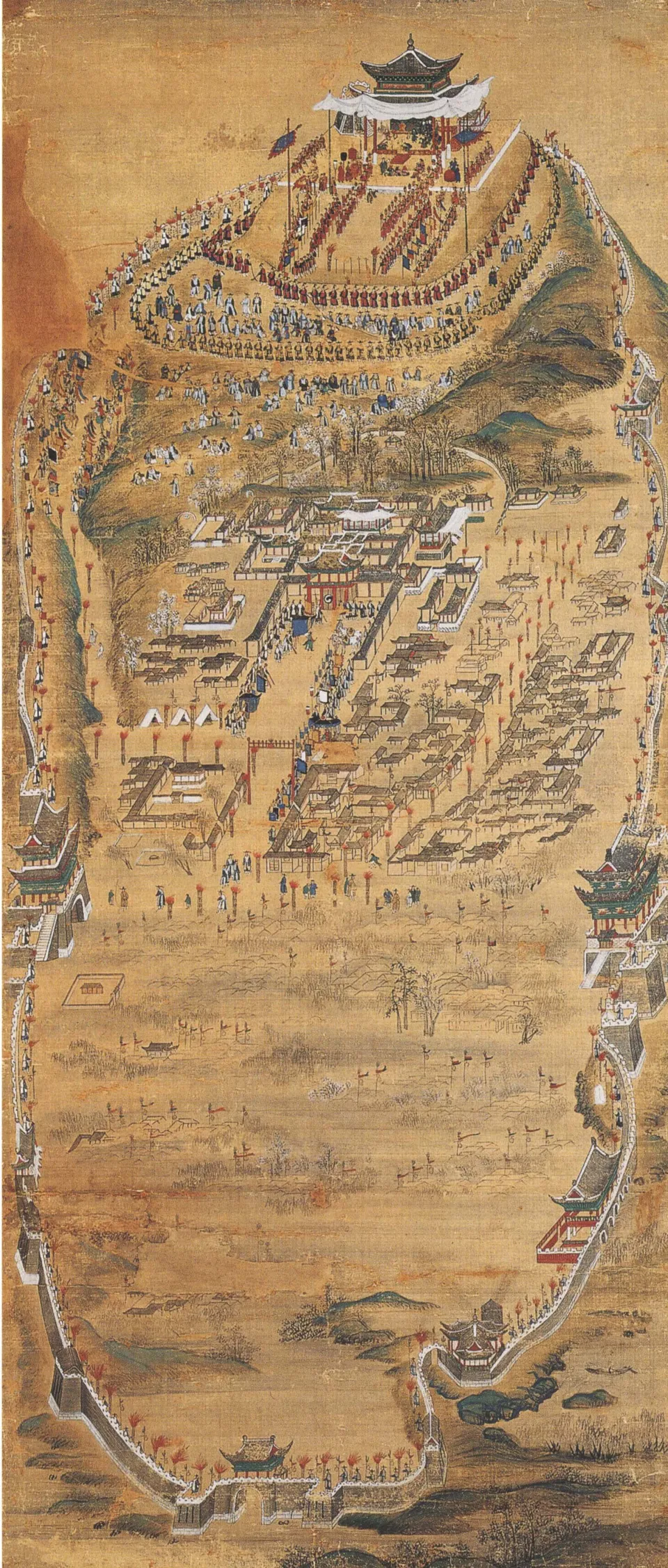
Night drill at Seojangdae, Hwaseong, commanded by King Jeongjo in 1795

Kim Deuksin & al. 김득신 · Public domain · Source

After founding the Gyujanggak (1776), Jeongjo had promising officials under thirty-seven retrained there (chogye munsin, 1781). The Jangyongwi guard of 1785 became the Jangyongyeong in 1793, a royal army to counter the other garrisons controlled by the factions.

Jeongjo appointed Park Je-ga, Yu Deuk-gong and Yi Deok-mu, sons of concubines, as Gyujanggak editors, and had magistrates run the village codes themselves to curb the local gentry. He issued the Daejeon tongpyeon code (1785), freed trade by the 1791 reform, and built Hwaseong. The guard was disbanded in 1802 after his death.
The map in 1793

OpenFreeMap © OpenMapTiles © OpenStreetMap contributors

States and rulers at the time
Joseon — Jeongjo
Places
Hanyang, Hwaseong Fortress

People

  • Jeongjo1752 – 1800

    leader · Twenty-second king of Joseon, founder of the Gyujanggak library and builder of Hwaseong Fortress

Before and after

Earlier
1791 Sinhae Tonggong

Themes that include this event

  • Factional Politics in Joseon1498 – 1863

    From the literati purges to in-law government — how Sarim factions moved from coexistence and checks to purges and one-faction rule, then through Tangpyeong to the dominance of a few clans

  • Military Systems Through the AgesAD 685 – 1907

    From the Nine Oath Banners to the Two Armies and Six Guards, the Five Commands and garrison system, the Five Army Camps and the Board of Marshals — armies rebuilt at every crisis

  • Suwon1601 – 1919

    From Jeongjo’s new city of Hwaseong to the tragedy of Jeam-ri — where a king’s filial devotion and reform politics were built into stone walls