Joseon Missions to Japan (Tongsinsa)
Also called: Korean embassies to Japan, Chōsen tsūshinshi
Diplomatic embassies Joseon sent to the Edo shogunate after the Imjin War — twelve missions to Japan between 1607 and 1811 that sustained relations and cultural exchange.
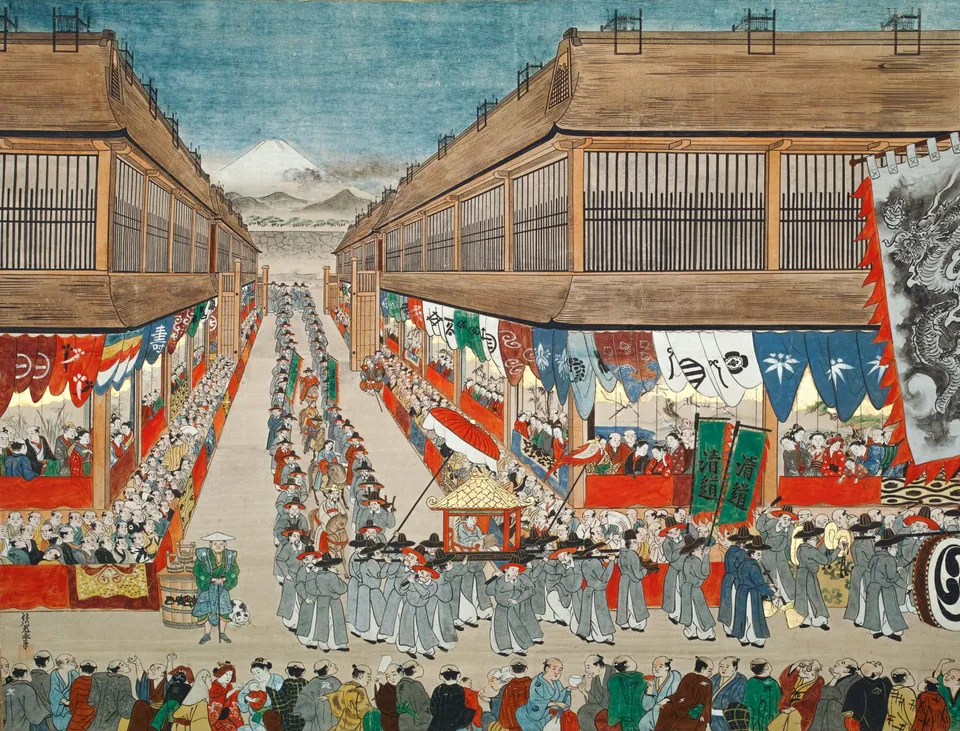
The artist is Tōei Hanegawa. Collection of The City of Kobe Museum of Art, the Hajime Ikenaga Gallery · Public domain · Source
After the Imjin War the Tokugawa shogunate wanted relations with Korea restored. Joseon sent an embassy in 1607 to answer the Japanese letter of state and bring home captives, and the Giyu Treaty of 1609 reopened trade at the Japan House in Busan. From 1636 the missions were called tongsinsa, “envoys of mutual trust”, and twelve in all went to Japan before 1811.
Missions of 300 to 500 people left Hanyang, sailed from Busan by way of Tsushima to Osaka, and usually went on overland to Edo. They generally came to congratulate a new shogun, and the shogunate made the daimyo along the route host them at great expense. Japanese scholars and writers thronged their lodgings asking for poems and calligraphy, and the processions lived on in paintings and festivals. Travel records such as Sin Yu-han’s Haeyurok informed Korea about Japan.
The last mission, in 1811, exchanged letters of state on Tsushima instead of travelling to Edo, to save cost. In 2017 the documents on the Joseon missions, nominated jointly by Korean and Japanese organisations, were inscribed on UNESCO’s Memory of the World register.