Palsangjeon Hall, Beopjusa, Boeun
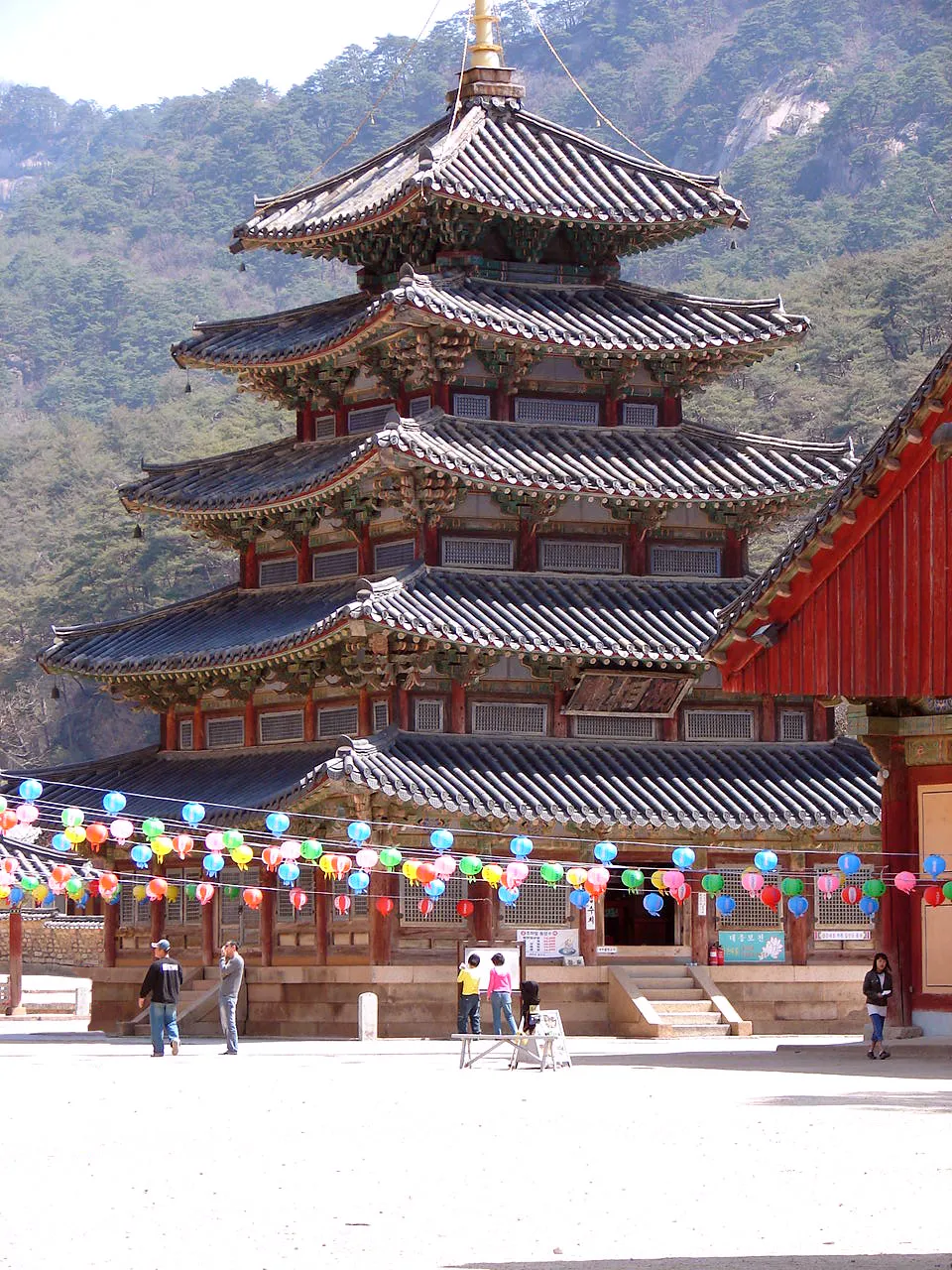
The only surviving five-storey wooden pagoda in Korea. Burned in the second Japanese invasion, it was rebuilt from 1605 to 1626.
Steve46814 · CC BY-SA 3.0 · Source
Beopjusa’s Palsangjeon burned in the Jeongyu invasion of 1597; rebuilding began in 1605 and finished in 1626. It is the only wooden five-storey pagoda surviving in Korea. It takes its name from the eight paintings (palsangdo) of the life of the Buddha inside. It is a National Treasure.
In the 17th century, after the Imjin War, temples raised several large multi-storey halls — Palsangjeon at Beopjusa, Mireukjeon at Geumsansa and Gakhwangjeon at Hwaeomsa are the best known. Several storeys outside but often one open space inside, they were built with donations from yangban landlords and commoners, showing that Buddhism had regained a social base. Beopjusa became a World Heritage Site in 2018 as one of the "Sansa, Buddhist Mountain Monasteries in Korea".