Politics10 June 1926

June Tenth Movement

On the funeral day of Emperor Sunjong, students scattered leaflets and shouted for independence. It brought nationalists and socialists together.
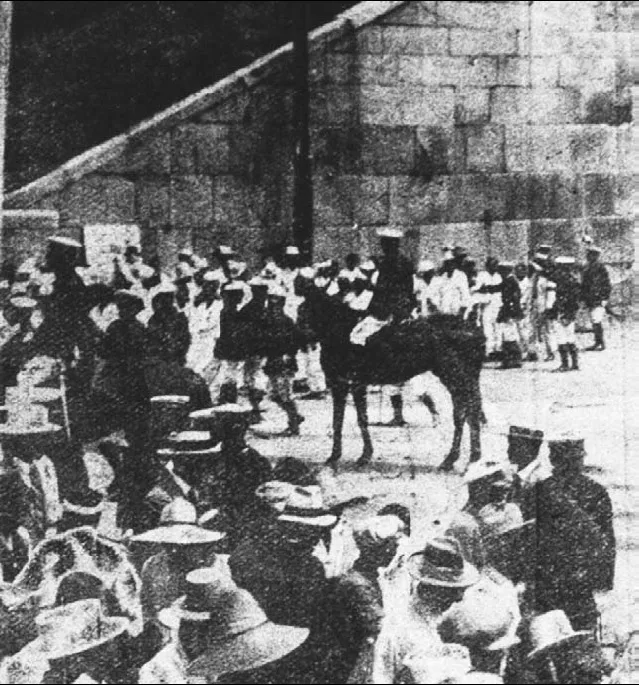
June Tenth Movement — Japanese police holding back crowds on Sunjong’s funeral day, 10 June 1926

조선일보(본 자료는 국사편찬위원회에서 퍼왔으나, 이 사진의 원출처는 1926년 6월 12일자 신문에 보도된거 재인용.) · Public domain · Source

When Sunjong, the last emperor of the Korean Empire, died in April 1926, the Korean Communist Party and Cheondogyo planned a mass demonstration for his funeral, but the plan leaked. On 10 June students, including the Korean Students’ Science Study Society, scattered leaflets and cried "Manse" along the funeral route in Seoul.

It did not spread like the March First Movement, but students emerged as a force in the movement, and the drive for a single national party that followed laid the ground for the Singanhoe.

The map in 1926

OpenFreeMap © OpenMapTiles © OpenStreetMap contributors

States and rulers at the time
Korea under Japanese rule — Governor-General Saitō Makoto
Japan · ruling power — Emperor Taishō → Emperor Shōwa

People

  • Sunjong1874 – 1926

    related figure · Second and last emperor of the Korean Empire (era Yunghui), enthroned after Gojong’s forced abdication

Before and after

Themes that include this event

  • Seoul18 BC – 1988

    From Hanseong Baekje to the June Democratic Struggle — the Han River land every kingdom fought for, and Joseon’s capital for five centuries