Conflict993–1019

Khitan Invasions of Goryeo

The Khitan Liao invaded Goryeo three times between 993 and 1019. Goryeo repelled them through Seo Hui’s diplomacy and Gang Gam-chan’s victory at Gwiju.
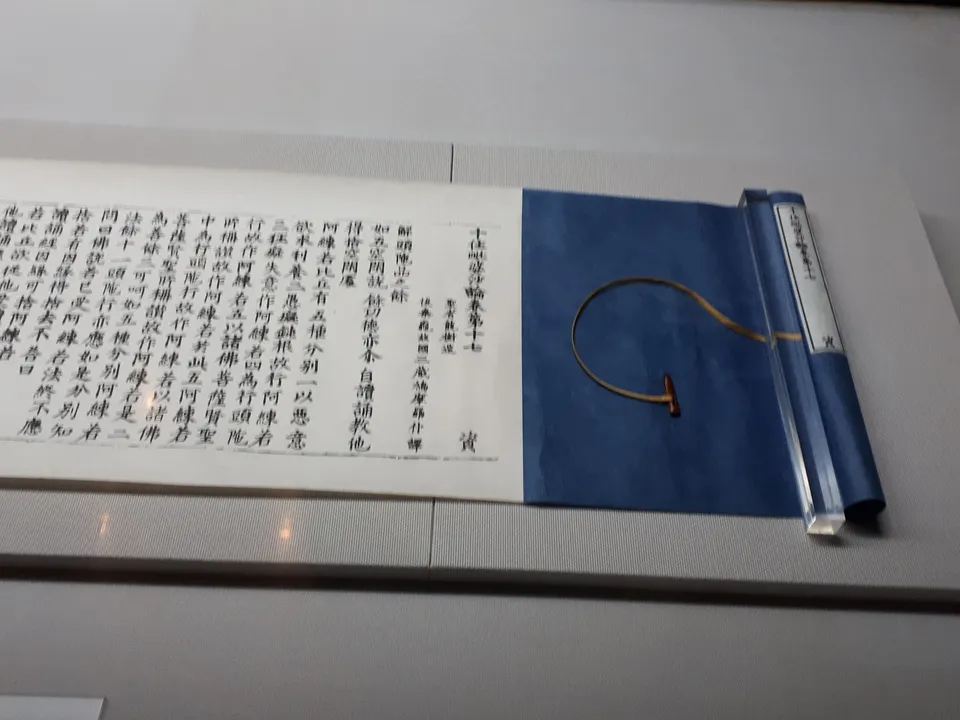
Replica of a First Tripitaka Koreana print (Dasabhumika-vibhasa, vol. 17), carved to ward off the Khitan invasions

이강철 · CC BY-SA 4.0 · Source

The Khitans destroyed Balhae in 926 and contended with Song. With Goryeo pursuing a northward policy and friendly with Song, the Khitans sought to subdue Goryeo before turning on Song.

In the first invasion (993) Seo Hui negotiated with Xiao Sunning and actually gained six garrisons east of the Yalu. In the second (1010) Emperor Shengzong, citing Gang Jo’s coup, led 400,000 men himself and burned Gaegyeong while King Hyeonjong fled as far as Naju; Yang Gyu harried the retreat and freed captives, and the Khitans withdrew on condition that Hyeonjong come to pay homage. When he did not, nor return the six garrisons, Xiao Paiya invaded with 100,000 men in 1018. Gang Gam-chan released a river dammed with cowhides at Heunghwajin and in 1019 crushed the Khitans at Gwiju.

A balance of power among Goryeo, Song and Liao followed. Goryeo built an outer wall around Gaegyeong (1029) and the Thousand-li Wall from the Yalu to Doryeonpo, and carved the first Tripitaka to protect the realm through the Buddha’s power.

The map in AD 993

OpenFreeMap © OpenMapTiles © OpenStreetMap contributors

States and rulers at the time
Goryeo · invaded — Seongjong
Liao · invader — Emperor Shengzong
Places
Songak (Kaesong), Gwiju Fortress (Kusong)

People

  • King SeongjongAD 960 – AD 997

    monarch · Sixth king of Goryeo, who adopted Choe Seung-ro’s 28-article memorial and built a Confucian central and local administration

  • King HyeonjongAD 992 – 1031

    monarch · Eighth king of Goryeo, who weathered the second and third Khitan invasions and began the first Tripitaka

  • Seo HuiAD 942 – AD 998

    diplomat · Statesman who negotiated with Xiao Sunning in 993 and won the six garrisons east of the Yalu

  • Yang Gyu1011

    commander · Defender of Heunghwajin who harried the retreating Khitans in 1011, freeing some 30,000 captives before he fell

  • Gang Gam-chanAD 948 – 1031

    commander · Commander-in-chief who won the Battle of Gwiju in 1019 and proposed the outer wall of Gaegyeong

  • Emperor Shengzong of LiaoAD 971 – 1031

    monarch · Khitan emperor who personally led 400,000 troops into Goryeo in 1010, using Gang Jo’s coup as a pretext

4 parts of this event

  1. 1

    During the first Khitan invasion Seo Hui negotiated with the enemy commander Xiao Sunning, securing the Khitan withdrawal and the six garrisons east of the Yalu.

  2. 2

    Gang Jo marched on Gaegyeong from the northwest, destroyed Kim Chi-yang’s faction, deposed King Mokjong and enthroned Hyeonjong; the Khitans used this as a pretext for their second invasion.

  3. 3

    Emperor Shengzong of Liao invaded with 400,000 men and took Gaegyeong; King Hyeonjong fled to Naju, and Yang Gyu harried the retreating enemy and freed captives.

  4. 4

    Goryeo forces under Gang Gam-chan crushed a 100,000-strong Khitan army at Gwiju.

Before and after

Related works

  • TV drama: Korea–Khitan WarDramatizedTV drama · 2023 · KBS2
  • Documentary: History Special: Time Traveler Episode 2: The Final Battle of Goryeo and the Khitan — the Battle of GwijuDocumentary · 2025 · KBS
  • TV episode: History Journal: The Day Episode 439: The Goryeo–Khitan War, Part 2 — Repelling the Khitan through DiplomacyTV episode · 2023 · Jeong Dong-hun · KBS1
  • TV episode: History Journal: The Day Episode 442: The Goryeo–Khitan War, Part 5 — A Strange War, the Battle of GwijuTV episode · 2024 · Jeong Dong-hun · KBS1

Dramatized works (films, dramas, novels) may differ from the historical record.

Themes that include this event

  • Song, Ming and Samurai JapanAD 960 – 1500

    The age when the civil-minded Song bought peace from Liao, Western Xia and Jin while the lower Yangtze boomed and Neo-Confucianism took shape, and the Ming, having driven out the Yuan, rebuilt the East Asian order through imperial autocracy, the sea ban and tribute — as Japan passed through the Kamakura and Muromachi warrior governments into the Warring States era, and Korea from Goryeo to Joseon