Politics982–997 (reigned 981–997)

Seongjong’s Confucian Government

Adopting Choe Seung-ro’s memorial, King Seongjong built the two-chancellery, six-ministry system, set up twelve provincial governorships and founded the National University.
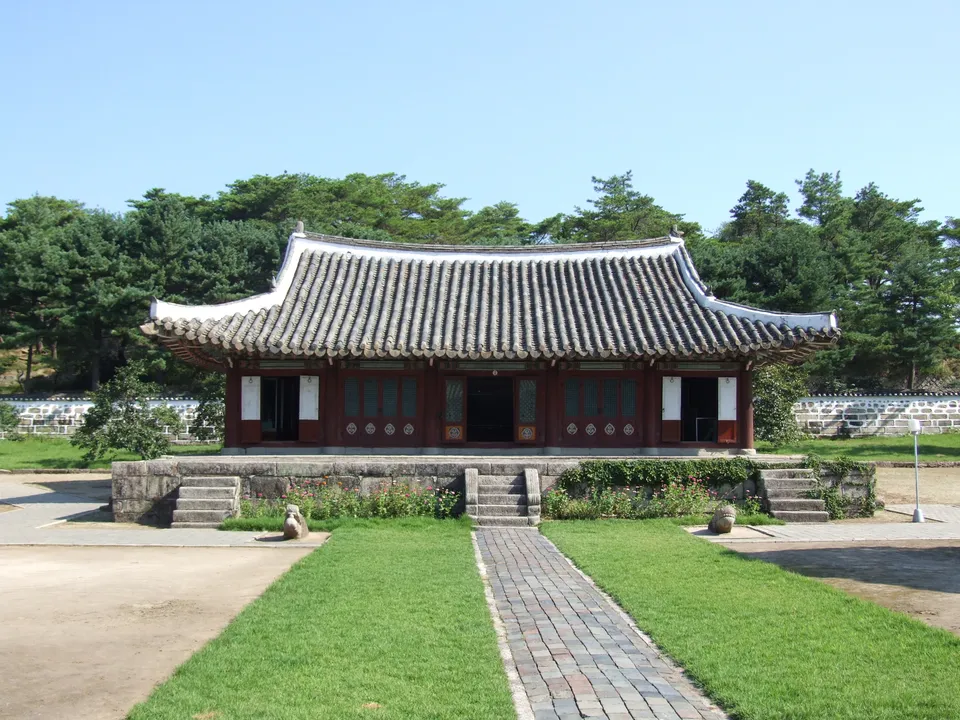
Koryo Songgyungwan in Kaesong, successor to the Gukjagam national academy founded by King Seongjong

Nicor · CC BY-SA 3.0 · Source

Adapting Tang’s three chancelleries, Goryeo set up the Secretariat-Chancellery and the Department of State Affairs over six ministries (personnel, military, revenue, justice, rites, works). From Song it borrowed the Security Council and the Finance Commission, while the Dobyeongmasa and Sigmok Dogam, where top ministers decided major matters together, were Goryeo’s own. Censorate officials checked the king and officials by reviewing appointments and remonstrating.

In 983 twelve governorships (mok) received the first centrally appointed local governors, and regional lords were turned into hereditary local clerks (hyangni). The National University (Gukjagam) opened in 992 and scholars were sent to the twelve mok. Relief granaries (uichang) and price-stabilizing granaries (sangpyeongchang) were established, and in 996 Goryeo cast its first iron coin, Geonwon jungbo. The Lantern and Palgwan festivals were curtailed.

The map in AD 982

OpenFreeMap © OpenMapTiles © OpenStreetMap contributors

States and rulers at the time
Goryeo — Seongjong
Places
Songak (Kaesong)

People

  • King SeongjongAD 960 – AD 997

    leader · Sixth king of Goryeo, who adopted Choe Seung-ro’s 28-article memorial and built a Confucian central and local administration

  • Choe Seung-roAD 927 – AD 989

    participant · Confucian scholar of Silla head-rank-six origin whose 28-article memorial shaped Seongjong’s Confucian state

1 part of this event

  1. Choe Seung-ro presented King Seongjong with an assessment of the five previous reigns and twenty-eight articles on Confucian government.

Before and after

Themes that include this event

  • Central Government Through the AgesAD 250 – 1899

    From the noble councils of the Three Kingdoms to the State Council, the Border Defense Council and the Gabo cabinet — how central government shifted between aristocratic consensus and royal power

  • Local Administration Through the AgesAD 250 – 1896

    From the five regions of the Three Kingdoms through nine provinces, the five circuits and two frontiers and the eight provinces to the thirteen — how directly the centre came to rule the regions

  • Educational Institutions Through the AgesAD 372 – 1943

    From the Taehak and Gukhak to the Gukjagam and Seonggyungwan, modern schools and the colonial education ordinances — state schools that trained officials and the private schools that filled the gaps