CultureUnified Silla (late 7th – 8th century)

Tomb of Kim Yu-sin, Gyeongju

A Unified Silla tomb said to be Kim Yu-sin’s. Its retaining stones are carved with the twelve zodiac guardians in civilian dress holding weapons.
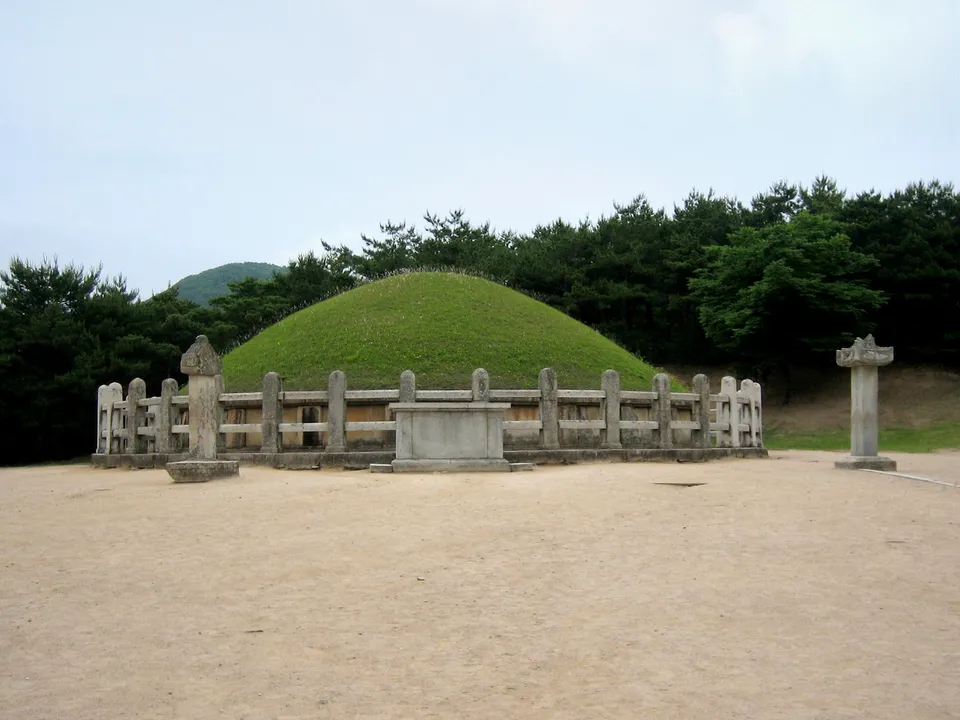
Tomb of Kim Yu-sin, Gyeongju, ringed with zodiac-carved retaining stones and a stone railing

Alain Seguin · CC BY-SA 3.0 · Source

This round earthen mound on the slope of Mt. Songhwa, Gyeongju, is said to be the tomb of Kim Yu-sin (595–673). The retaining stones around its base are carved with the twelve zodiac guardians — human bodies with the heads of the rat, ox, tiger and so on — and a stone railing runs around it.

In Unified Silla, stone-chamber tombs ringed with zodiac-carved retaining stones spread. The tomb of King Seongdeok and Gwaereung (tomb of King Wonseong), with its warrior statues of Central Asian look, are the classic examples, and the style passed through the tomb of King Gongmin of Goryeo to the royal tombs of Joseon. Because the tomb is almost royal in form, some think its occupant was a Silla king.

The map in AD 700

OpenFreeMap © OpenMapTiles © OpenStreetMap contributors

States and rulers at the time
Silla — King Hyoso

People

  • Kim Yu-sinAD 595 – AD 673

    related figure · Silla general of Geumgwan Gaya royal descent who defeated Gyebaek and led the unification wars

Before and after

Earlier
AD 698 Founding of Balhae

Themes that include this event

  • Changes in Tombs2000 BC – 1374

    From dolmens to the tomb of King Gongmin — stone-mound, stone-mound wooden-chamber, stone-chamber and brick tombs, and how burial changed by kingdom and age

  • Gyeongju57 BC – 1860

    Silla’s capital for a thousand years — tombs, pagodas, temples and bells from every age of Silla, and the birthplace of Donghak